TL;DR
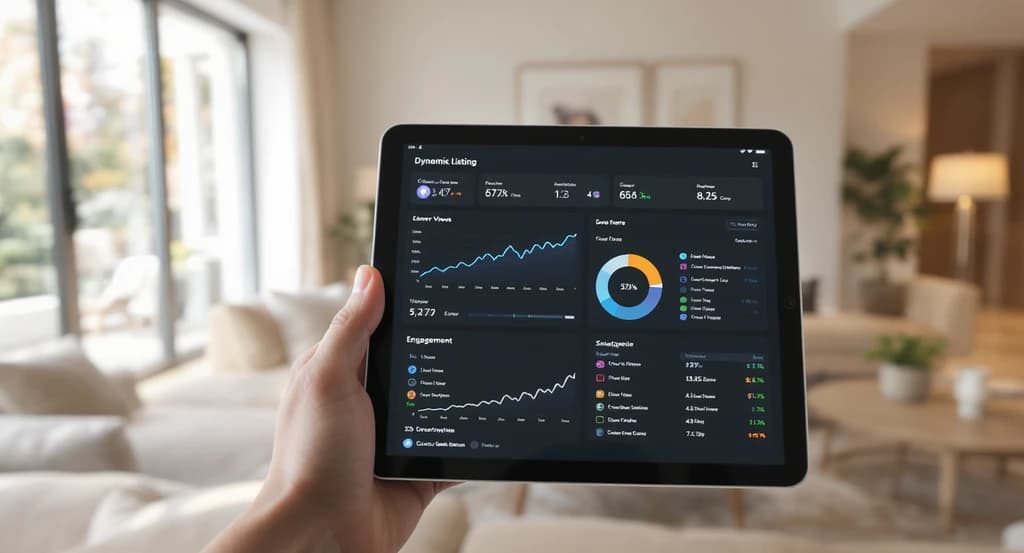
The latest data confirms AI in real estate marketing drives faster listing prep, dramatically lowers staging costs, and boosts key performance metrics while most value comes from clarity, not just creativity. Integration is growing, with measurable impact on buyer engagement, but trust and workflow gaps remain.
The Data-Driven Shift in Real Estate Marketing
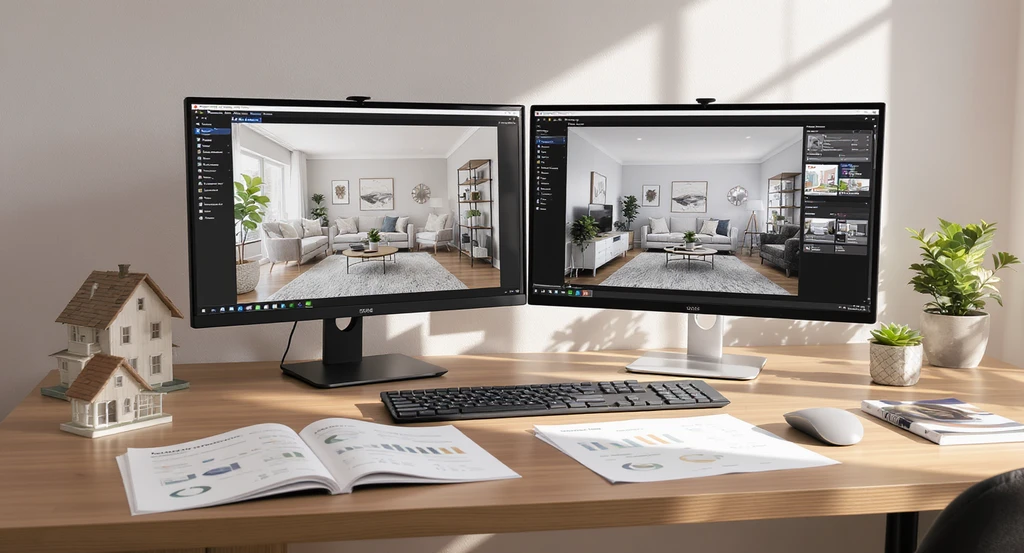
AI-driven trends in real estate visual marketing are transforming listing performance. This workspace highlights how agents analyze buyer behavior, adoption data, and the measurable impact of AI-enhanced property images.
AI in real estate marketing has decisively shifted from hype to tangible performance metrics. Agents and investors are demanding evidence that technology materially impacts listing performance. Today, the conversation is no longer about AI’s potential—it’s about the measurable reality reflected in adoption patterns, listing data, and buyer behavior. This analysis pulls directly from current, validated data to clarify where AI actually delivers value in property marketing, where risks and adoption gaps persist, and what this means for the industry moving forward.
-
What the Data Actually Confirms

AI-driven virtual staging transforms empty real estate spaces into visually appealing, market-ready listings, illustrating real data on how AI enhances listing performance and boosts buyer interest.
Industry data from sources such as the National Association of Realtors and broader real estate marketing studies indicates that AI is materially reshaping listing performance. Approximately 58% of agents have experimented with AI tools, while 68% report using them at least monthly, reflecting a shift from early adoption to routine usage. The performance impact is measurable. Virtual staging reduces marketing costs by 80%–97%, and 67% of agents report faster listing preparation timelines. AI-enhanced listings generate up to 40% more views, 31% more buyer inquiries, and as much as 74% higher engagement. These improvements indicate that AI-driven visual enhancements are not aesthetic upgrades—they directly increase visibility, buyer interest, and conversion potential in real estate marketing.
-
Why AI Is Being Adopted Faster Than It Is Integrated
While mainstream awareness is high, full integration lags: the gap between experimenting (58%) and routine use (68% monthly) shows AI is present but not fully embedded into daily workflows. Much current adoption is concentrated in visual editing, not end-to-end process automation, reflecting a performance-driven rather than hype-driven market transition.
-
The REimagineHome AI Visual Performance Model
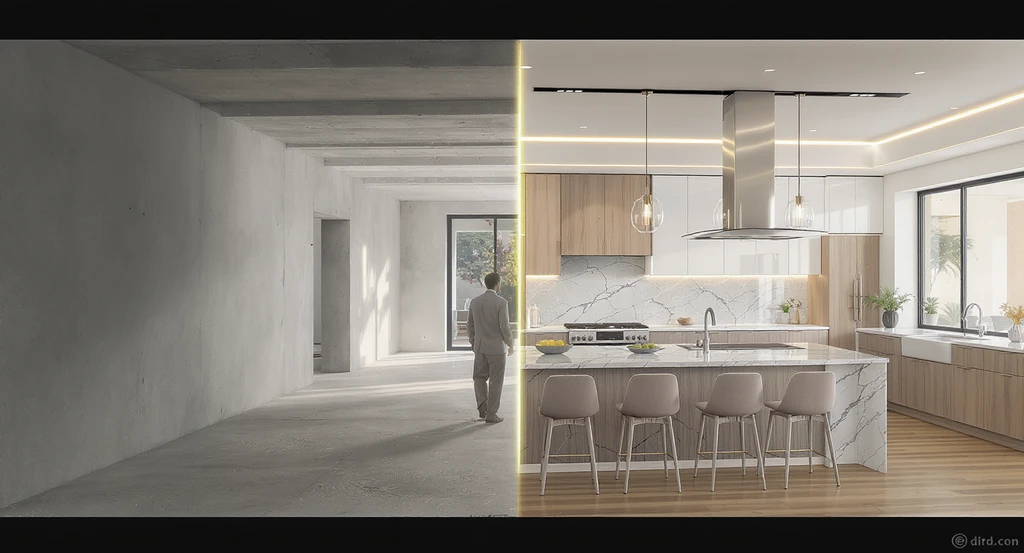
AI-driven enhancements highlight property features, improving real estate listing quality and influencing buyer behavior through clearer, optimized visuals.
The path from AI input to real estate outcomes can be defined as: Input → Visual Quality → Buyer Clarity → Engagement → Conversion → Sale Speed. Visual enhancements powered by AI make spaces clearer to buyers, reducing uncertainty and cognitive load. As a result, engagement rises, conversion sharpens, and days on market shrink proving that first-impression visual clarity drives intent and transaction speed.
-
Where AI Delivers Measurable ROI
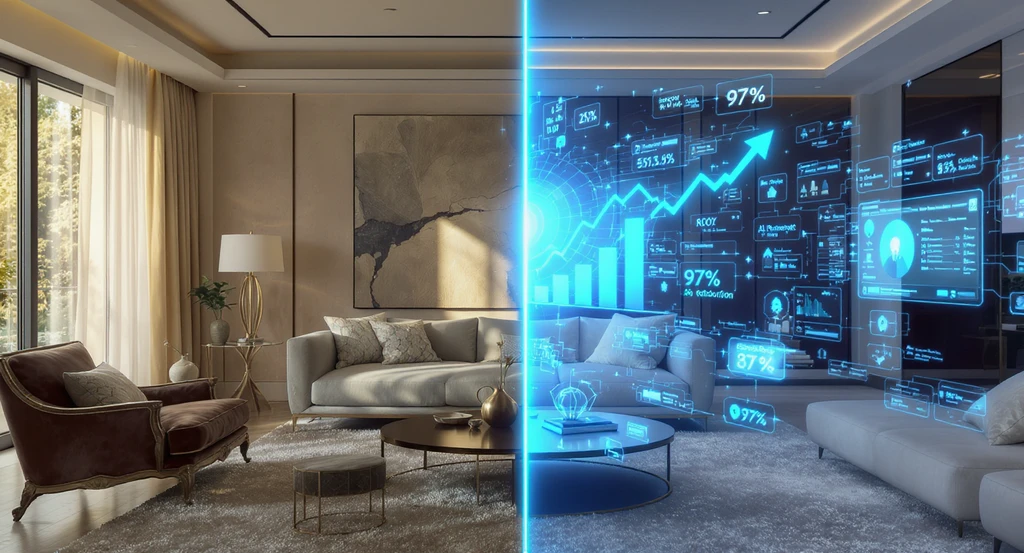
AI-driven trends in property staging deliver quantifiable ROI in real estate visual marketing, improving listings and influencing buyer behavior with AI-enhanced photos.
AI’s operational value is quantifiable: virtual staging achieves outcomes at a fraction of traditional cost (up to 97% less) and slashes prep time for agents (67% report improved speed). Listings benefit with 40% more views, up to 100% better CTR, and a 73% shorter selling cycle for staged vs. unstaged homes. The ROI is not just in cost-cutting it’s in amplifying pipeline velocity and engagement for every marketing dollar spent.
-
Why Visual Content Dominates Buyer Decisions
85% of buyers rank listing photos as the most important factor. 83% say staging helps them see themselves in the property. Empty or poorly presented spaces increase cognitive load, making interpretation and intent formation slower. Visual clarity enabled by AI removes these barriers, reducing hesitation cycles and creating stronger, faster buyer intent. Contrary to common assumptions, engagement is often led by first-visual comprehension, not by price or location alone.
-
Where AI Still Creates Risk
Trust remains a key challenge: 52% of agents report concerns AI visuals may misrepresent properties, highlighting the need for transparency and authenticity. Visual enhancements must clarify, not distort, or risk undermining buyer confidence. The lasting value of AI in real estate will depend on how well these tools balance clarity with integrity.
-
Adoption Gaps Across Workflows
AI integration is often limited to feature-specific solutions—39% of agents use AI predominantly for image editing. Other workflow areas like sourcing, collaboration, or full automation remain underused. This signals an opportunity for platforms like REimagineHome AI to deliver broader, workflow-spanning solutions and move beyond isolated features.
-
Market Growth and What It Signals
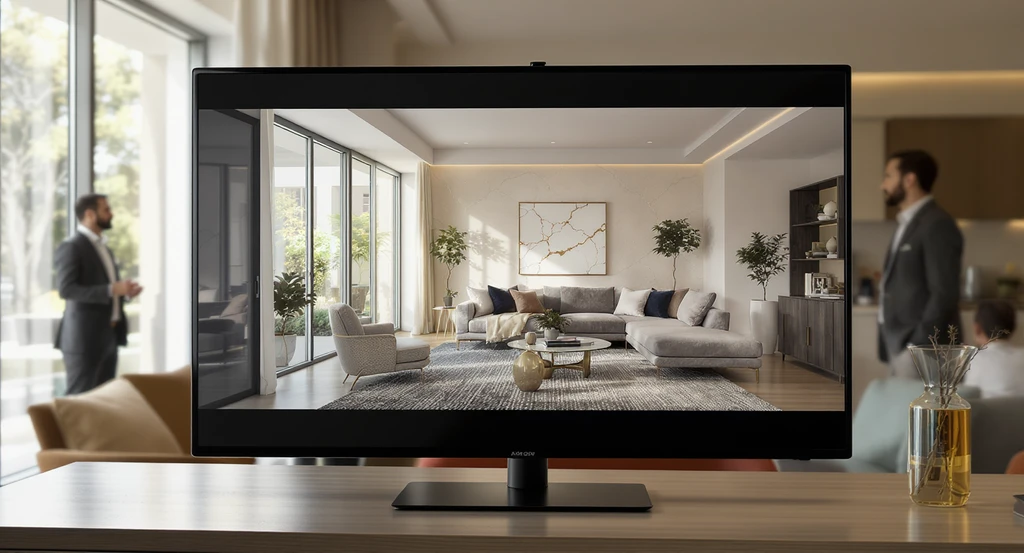
The impact of AI on real estate visual marketing is driving rapid market growth, as AI-driven interior staging transforms property listings and boosts buyer engagement.
The AI interior design and visualization market is projected to expand from $3.28B in 2025 to $15B by 2033 a compound annual growth rate (CAGR) of 20.9%. This trajectory confirms a structural shift, fueling an ecosystem where performance and efficiency—not experimentation—define competitive advantage in AI property marketing.
-
How Visualization Changes Real Estate Decisions
Before AI adoption, buyers faced empty spaces, slow interpretation, and decision drag. After AI-powered visualization, clarity is immediate: hesitation cycles shrink and intent forms earlier. AI improves interpretation as much as aesthetics, giving agents and buyers a "see it before you decide" advantage. This redefines real estate listing performance in a market where visual content leads and rapid decisions win.
Visualization Scenario
Imagine preparing a listing: before AI, the home is empty and buyers hesitate, struggling to picture its potential. With REimagineHome AI, the same property is instantly transformed by lifelike furnishings and optimal lighting, allowing buyers to immediately visualize themselves in the space. Engagement spikes, inquiries increase, and decisions accelerate—demonstrating the "see it before you decide" impact of visual AI.
Frequently Asked Questions
A1: Data shows AI-driven imagery boosts listing views by 40%, increases buyer inquiries by 31%, and improves engagement by up to 74%.
Q2: What is the primary benefit of virtual staging with AI?
A2: Virtual staging costs 80%–97% less than physical staging and significantly speeds up listing preparation time.
Q3: Do buyers trust AI-generated visuals?
A3: While performance is strong, 52% of agents worry about potential misrepresentation, making transparency and accuracy critical.
Q4: Is AI widely used across all real estate workflows?
A4: Adoption is mainly concentrated in image editing and visual enhancement; broader workflow automation remains underutilized.
Q5: What’s the outlook for AI in real estate marketing?
A5: With the AI interior design market set to 5x by 2033, AI-driven visual marketing is expected to become a standard tool, especially as platforms focus on both performance and trust.
Conclusion
AI in real estate marketing is no longer about what might be possible—the data shows it is changing listing performance today. The benefits are front-loaded: lower costs, greater engagement, and faster sales cycles stem from better, clearer visual presentation. However, as trust and integration challenges persist, the next phase will favor solutions that couple accuracy with transparency—making decision clarity and visual authenticity the defining features of tomorrow’s leading platforms.