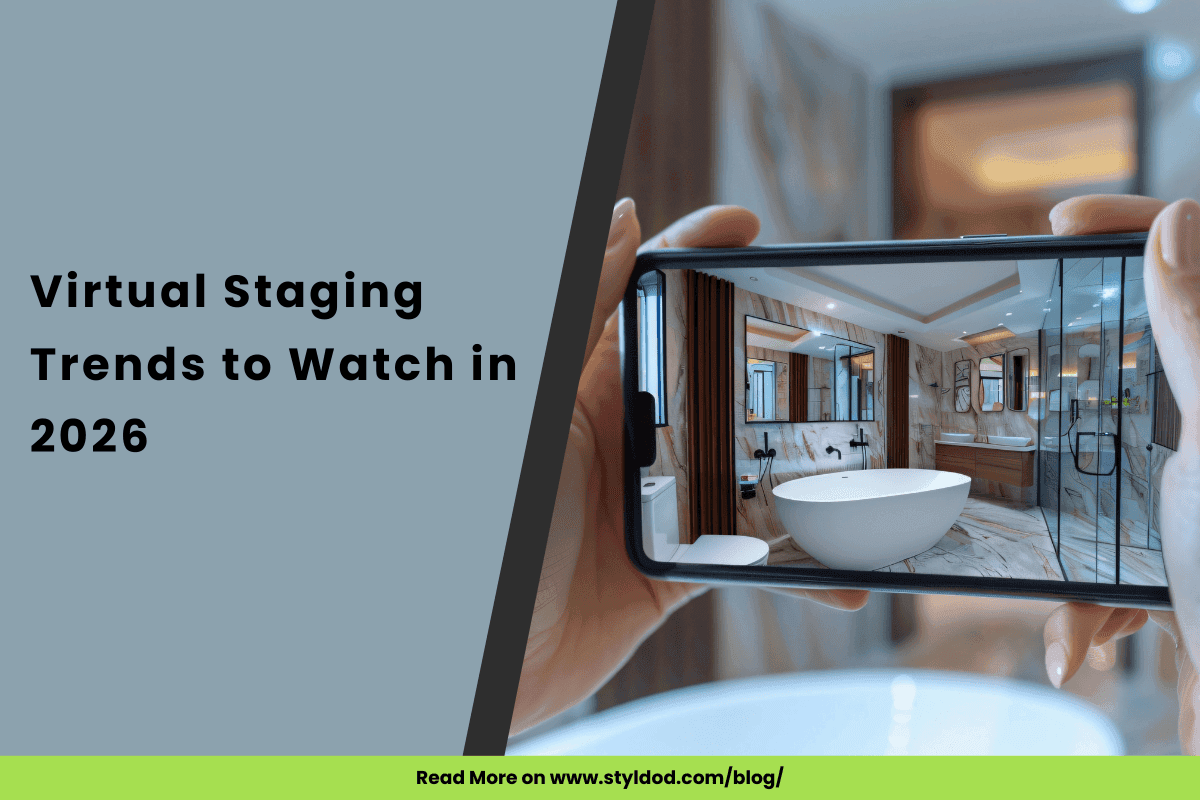
Design trends shift fast, and in 2026, buyers are showing clear preferences when it comes to what feels real and what feels off. Overdone luxury finishes and fake-looking furniture are out. Natural textures, functional layouts, and AI-generated staging that mirrors real-life living are in. For real estate agents, keeping up with these shifts is more than just a design choice. It directly affects how much trust buyers place in your listing and how close you sell to asking price. Over 50% of U.S. agents now use virtual staging as a standard part of their listing process. Staged homes sell about 4.5% closer to the list price, and 34% even sell above asking, according to a report from Done & Done Home.
The challenge is finding that balance between trend-aligned visuals and honest representation. Buyers want listings that look great, but also feel believable. In this blog, we’ll walk you through the top virtual staging trends for 2026 and how to use them in a way that builds trust while boosting your listing performance. Let's get started.
Key Takeaways:
- Virtual staging in 2026 favors warm textures, grounded colors, and subtle realism over glossy perfection.
- Buyers trust listings that feel believable, so honest editing and clear labeling matter more than ever.
- Softened minimalism, natural materials, and lifestyle-focused styling help listings connect emotionally.
- Overly coordinated looks and cold grey palettes are fading out, replaced by layered, lived-in aesthetics.
- Using modern staging trends can boost engagement, improve listing results, and help homes sell closer to asking price.
What’s Changing in Virtual Staging for 2026
Let’s walk through what’s shifting in virtual staging and how you can stay ahead while staging homes for this new mindset.
1. Anti-Gloss Is In
Shiny surfaces are fading out. In 2026, matte textures are everywhere. Walls are finished in limewash or soft plaster. Furniture leans toward unpolished wood, ceramic, or fabric that absorbs light instead of reflecting it. The goal is to create calm, not glare. In virtual staging, this shift means replacing anything overly glossy with finishes that feel softer and more organic. It photographs better and gives the space a sense of depth that feels more welcoming than sterile.
2. Neo-Deco Revival
Art Deco is making a quiet comeback, but with a modern twist. Neo-Deco brings in curved lines, sculptural shapes, and rich but muted tones. You’ll start seeing more fluted panels, arched mirrors, and rounded silhouettes in furniture. When used right in virtual staging, this style adds just the right amount of sophistication without feeling overdone. It works especially well for luxury listings or spaces where you want to hint at character and charm without going full retro.
3. Biophilia Gets Smarter
Biophilic design is no longer just about placing a plant in the corner. In 2026, it’s about creating a deeper connection to nature. Virtual staging now focuses on more natural materials like unfinished wood, stone textures, and earth-tone palettes. Adding touches like moss walls, rattan, or woven baskets can help bring that feeling into digital photos. Even window views are being staged to show greenery and light. It’s all about making spaces feel grounded and calming.
4. Tech That Blends In
Smart homes are not a novelty anymore. Buyers expect them. But in 2026, the trend is to keep that tech subtle. Virtual staging is moving toward clean interiors where speakers are hidden, air purifiers blend in with furniture, and lights adjust without visible switches. It’s about showing a home that feels ready for the future without looking like a tech showroom. You want your listing to feel smooth, sleek, and quietly intelligent.
5. Softened Minimalism with Texture and Story
Minimalism in 2026 still values clean lines and open space, but the harsh edges are fading. You’re more likely to see quiet rooms with soft textures, warm tones, and small imperfections that make the space feel lived in. Materials like raw wood, linen, and textured ceramics are everywhere. Instead of styling a space to look untouched, the focus is on adding a bit of soul. A corner with stacked books and a rough clay vase feels more inviting than a spotless shelf. Virtual staging is shifting toward this kind of subtle storytelling, where every item looks like it has a purpose or a memory behind it.
6. Earth and Lifestyle-Focused Palettes
Colours are becoming more grounded. Instead of cool greys and icy whites, staging in 2026 leans into muted greens, clay browns, soft terracotta, and warm neutrals. These tones reflect how people actually live. They’re comfortable and easy on the eyes. When styled with the right lighting and natural textures, they create a mood that feels both peaceful and intentional. The palette isn't chosen just for looks. It's thereto help potential buyers picture their own routines starting from slow mornings, quiet evenings, or time spent unplugged. The colours support the lifestyle the home is offering.
What’s Out in 2026
Trends are shifting, and some old favourites are finally being left behind. Here’s what’s fading out in virtual staging this year.
1. Matchy Minimalism
Those overly coordinated spaces where every chair, pillow, and lamp follows the same exact look? They're on their way out. Staging in 2026 is moving toward rooms that feel a bit more layered and less planned. Instead of matching sets, you’ll see mixed materials, varied textures, and items that feel collected rather than copied. The goal is to create spaces that feel relaxed, not rehearsed.
2. Millennial Gray
Cool grey walls had their moment, but that moment has passed. In today’s listings, they often make a space feel cold or dated, especially when paired with slick finishes. Warmer tones have taken their place, helping rooms feel softer and more welcoming. If you’re stil using grey as a default, it might be time to bring in a bit of warmth since it can make a big difference in photos.
3. Over-Perfected Rooms
When every pillow is perfectly fluffed, and every object looks like it was placed with a ruler, buyers notice, and not in a good way. Over-staging can make a space feel fake or stiff. In 2026, there’s a stronger focus on honesty in design. Rooms that feel slightly lived-in or styled with restraint tend to resonate more. A casually folded blanket or a book left on the table goes a long way in making a home feel real without crossing into cluttered.
Best Virtual Staging Practices in 2026
Virtual staging can make a property stand out, but it only works well when you follow a few clear practices. Let's take a closer look:
1. Label Every Edited Image and Pair with Originals
Always make it clear which photos have been virtually staged. Label every edited image clearly, so buyers and agents know what’s been digitally added. Also, include the original version of each image alongside the staged one. This builds trust and avoids confusion during walkthroughs or inspections. Buyers can see the potential of a room while still understanding its real, empty condition.
2. Cosmetic-Only Edits; Don’t Alter Layouts or Dimensions
Keep your virtual staging focused on cosmetic changes only. That means adding furniture, lighting, or decor, but not removing walls, changing room shapes, or resizing windows. When you alter layouts or structural features, it creates unrealistic expectations and could lead to disappointment during showings. Always stick to edits that reflect how the space can be styled, not how it can be rebuilt.
3. Check Market/MLS Policies and Expectations
Before uploading any virtually staged photos, make sure you understand the rules of your local MLS and market. Some MLS systems require you to label staged photos clearly or limit how many can be uploaded. Others might have specific restrictions on what kind of edits are allowed. Staying updated with these policies helps you avoid listing delays and ensures that your photos remain compliant and professional.
Impact & ROI: Why These Trends Matter
1. Online Discovery & Engagement Lift
Almost everyone starts their home search online now. In fact, 97 percent of buyers look for listings on the internet before making any moves. That means your first impression is often a digital one. Homes with high-quality visuals, virtual tours, or interactive content get noticed faster. Some listings have seen a 118 percent increase in views just by improving their online presence. This lift in engagement means more eyeballs, more interest, and more chances to convert lookers into serious buyers.
2. Speed to Market
Homes that are professionally staged and marketed with modern tools like virtual staging or 3D tours spend far less time sitting idle. In some cases, sellers have seen up to 73% fewer days on market. That kind of speed gives everyone an edge. Agents can move on to the next sale faster, sellers get their money sooner, and buyers feel more confident when the listing is well put together. In a market where timing often affects price, every saved day adds real value.
3. Adoption Momentum
The shift toward digital presentation is no longer a trend, it is becoming the common approach. More than 50 percent of professionals now use virtual staging or similar presentation assets. When half the industry is already doing it, waiting too long can place your listings behind the curve. Adoption clears doubts for buyers, gives sellers confidence, and helps you prove that your service stays updated with buyer expectations. It boosts credibility and positions you as a forward thinking agent who uses modern tools to close more deals.
How Does Styldod Implement These 2026 Virtual Staging Trends to Maximize Listing Performance?
At Styldod, we are not just following the latest 2026 virtual staging trends. We are helping real estate agents and homeowners use them in a way that makes listings more attractive, honest, and fast to market. Here's how we bring these trends to life for every client we work with.
1. Multi-Style Design Capability and Portfolio Matching
We understand that one design style does not fit every property. That is why our virtual staging covers everything from modern minimalism to warm traditional and eclectic luxury. You can request a specific style or let our team match the staging to your listing’s unique character. This makes sure your photos appeal to the right kind of buyer. If your portfolio includes high-rise condos, family homes, or vacation rentals, we can tailor the staging to match the market you serve. Our designers rarely use templates. Instead, they focus on delivering rooms that look lived-in, aspirational, and consistent with your brand.
2. Fast Turnaround and Scalable Delivery
In real estate, speed matters. We deliver most virtual staging projects within 24 to 48 hours. Even when you send us multiple properties or large sets of images, our process is built to scale. Whether you have one listing or fifty, you can count on the same quality and quick delivery. You do not need to wait for furniture rentals or photo reshoots. Our team works around the clock so your listings go live faster and sell sooner.
3. Ethical Editing and Honest Representation
At Styldod, we follow a clear ethical policy when it comes to editing photos. We never add elements that could mislead buyers, like false windows or walls that don’t exist. Our staging enhances what is already there. It helps buyers imagine what the space could look like, without hiding flaws or changing the room’s basic structure. Transparency builds trust, and buyers appreciate it when listings show the full potential of a home without stretching the truth.
4. Consistent Quality, Every Time
We’ve spent years building a team of trained interior designers and editors who know what sells. Every staged image goes through a quality check to make sure furniture placement, lighting, textures, and shadows look real and inviting. Our staging does not look computer-generated or overdone. It looks like something you could walk into and live in.
5. More Than Just Staging
We also offer other tools like virtual renovations, floor plans, 360-degree virtual tours, and object removal. These services support the full journey of a listing, from early prep to final promotion. You can mix and match what you need, and we’ll deliver it as a seamless package.
Ready to see how virtual staging can transform your listings? Try Styldod’s virtual staging services today and give your properties the professional edge they deserve.
Closing Thoughts
The virtual staging world is moving fast, and2026 is shaping up to be a year where honesty, warmth, and lifestyle-focused design take the lead. Buyers want spaces that feel real, and agents who follow these trends are able to build more trust and stronger engagement. If you stay aligned with what buyers expect and use staging tools that present homes in a clear and believable way, your listings will stand out and sell with more confidence.