TL;DR
AI home design is best for fast, low-cost visualization and idea testing, while interior designers deliver personalized expertise and real-world execution. In 2026, the most effective approach is hybrid: use AI to explore and validate ideas first, then work with a designer for final execution when needed.
Making Better Design Decisions: AI or Interior Designer?

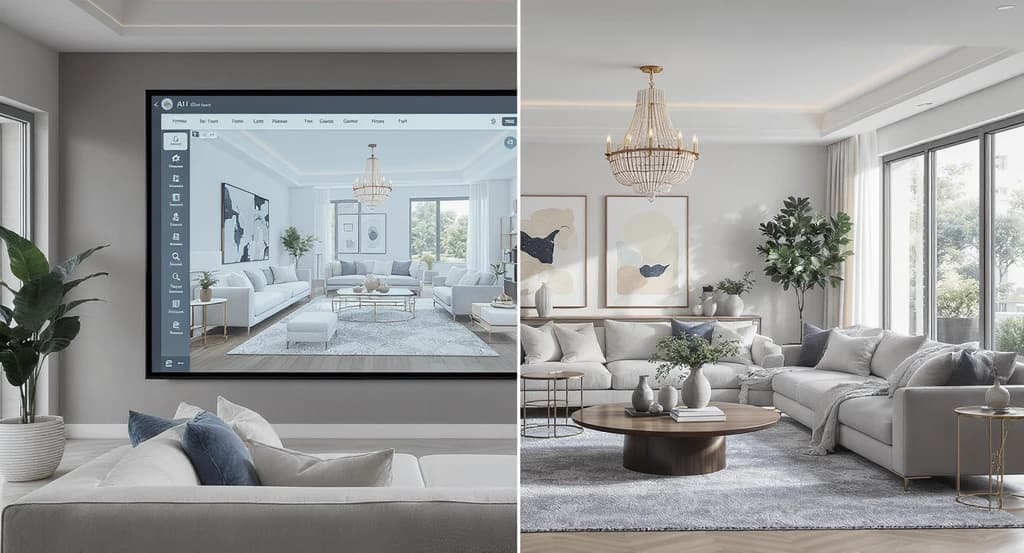
AI home design vs interior designers comparison: A real-world living room shows how best AI room visualization tools in 2026 transform real estate staging confidence and reveal the cost difference between AI design and traditional designers for homeowners.
Visually clear and staged spaces consistently outperform empty or cluttered ones in real estate listings. Multiple industry reports from platforms like Zillow and NAR show that properties with better visual presentation generate more views, saves, and buyer inquiries.
In simple terms: the easier a space is to understand visually, the faster people engage with it.
-
AI vs Interior Designers: Direct Answer Block

AI home design vs interior designers: Split-screen shows AI-generated room visualization beside a real-world setup with designer tools, highlighting 2026's best AI room visualization tools, cost difference between AI and traditional designers, and the benefits of a hybrid home design approach.
AI vs Interior Designers (Simple Answer):
AI home design is best for fast, low-cost visualization and idea generation, while interior designers are best for execution, customization, and real-world implementation. Most users benefit from using AI first, then working with a designer if needed.A simple way to decide:
- Use AI for speed, visualization, and early-stage ideas
- Use interior designers for execution, customization, and complex projects
- Combine both for the most efficient and cost-effective results
Quick Decision Rule (2026)
- If you need ideas and speed: Use AI
- If you need execution and precision: Hire a designer
- If you want the best outcome: Combine both (hybrid approach)
Expert Insight
A family considered hiring a designer but was unsure about committing to expensive fees. By testing layouts with AI home staging, they clarified what they actually liked, making their first meeting with the designer more productive and less stressful.
-
What Is AI Home Design and How Does It Work?
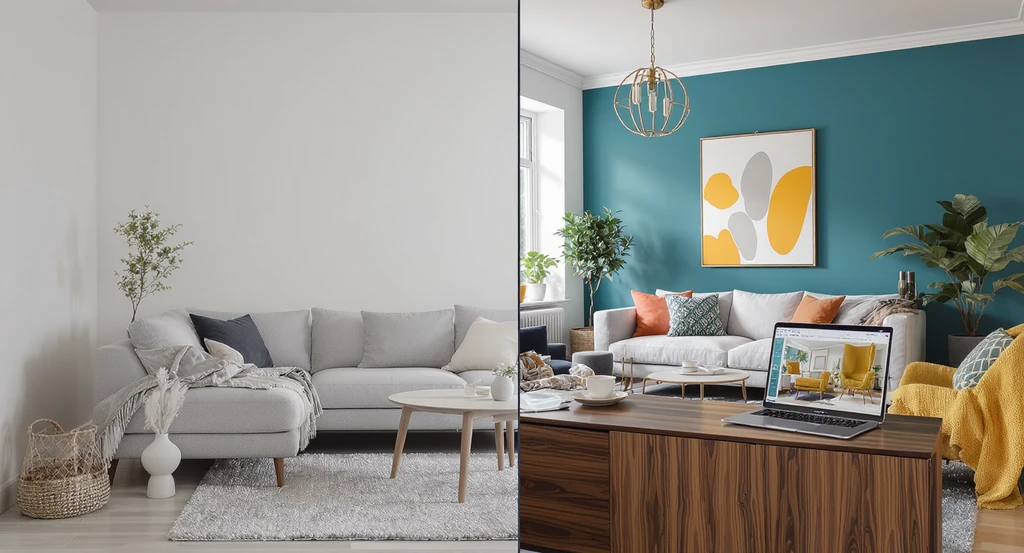
AI home design vs interior designers: This split-view of a real living room shows how the best AI room visualization tools in 2026 transform spaces instantly, illustrating cost differences and hybrid design benefits.
AI home design is a technology-driven process that uses machine learning to generate realistic interior design visuals based on photos of your actual space. It allows users to preview layout, furniture, and style changes before making real-world decisions. Platforms such as ReimagineHome | AI Interior Design Ideas & Virtual Staging enable users to upload a room, choose a design style, and instantly see multiple visually accurate transformations tailored to their space.
Unlike traditional methods, AI tools follow a visualization-first approach, helping users test ideas before investing in furniture or renovations. This reduces uncertainty and improves decision-making by showing what actually works in a real environment.
According to our guide on how AI room design tools actually work, these systems rely on training data, deep learning, and spatial awareness to produce outputs that align with real room proportions, making them practical, not just inspirational.
-
What Do Interior Designers Actually Do?
Interior designers go far beyond producing visuals. Their expertise includes:
- Precise space planning and layout optimization
- Material and product selection based on durability and usage
- Budget planning, sourcing, and vendor negotiation
- Coordinating contractors and managing project schedules
- Executing the physical transformation of your space
They synthesize client needs, lifestyle, and architectural context to deliver unique solutions. This human touch ensures your space not only looks good, but also functions well in real life, a layer where AI solutions currently have limits.
-
Why AI Home Visualization Is Gaining Rapid Adoption

AI home design vs interior designers comparison shown in a split living room, where best AI room visualization tools for 2026 preview stylish staging, highlighting how AI transforms real estate staging, lowers costs, and accelerates design choices for homeowners and real estate professionals.
The main driver behind AI’s growth is the persistent visualization gap: most people cannot reliably picture changes in an empty or unlived space. As explored in our analysis on the visualization gap in listings, both buyers and homeowners often rely on guesswork, which can lead to wasted time, budget, and poor design decisions. AI home visualization solves this by generating realistic design options based on your actual space, helping users:
- Compare multiple styles quickly
- Visualize before investing
- Reduce uncertainty and accelerate decisions
This capability is especially valuable in real estate, where visual clarity directly impacts engagement and transaction speed.
As discussed in our breakdown of how AI visualization sells homes faster, visually staged listings tend to attract more inquiries and sell faster than empty ones. Empty rooms often create confusion rather than clarity, making it difficult to judge scale, layout, and functionality.
AI staging addresses this by transforming empty spaces into fully visualized environments, helping buyers and homeowners understand real usage and make faster, more confident decisions. -
Advantages of AI Home Design (With Visual Reasoning)
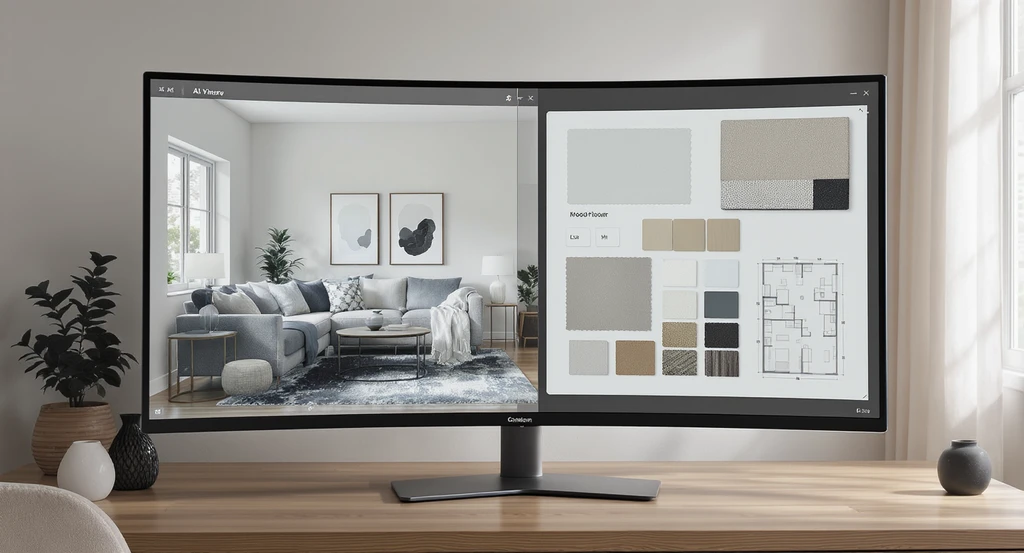
AI home design vs interior designers: This editorial image compares best AI room visualization tools in 2026 with traditional design methods, highlighting how AI transforms home design speed, cost, and actionable decision-making for real estate staging.
AI home design offers several practical advantages that make it highly effective for modern decision-making. By combining speed, affordability, and real-space visualization, it reduces friction in the design process and helps users move forward with confidence:
- Speed: AI produces instant preview images, days or even weeks faster than traditional processes.
- Affordability: These tools are often free or low-cost, making repeated experimentation accessible.
- Actionable Options: Room-specific layouts align with your wall proportions, window placement, and real-world constraints.
- Lower Risk: Visualizing before committing to purchases reduces returns and costly mistakes.
- Supports Real Estate Performance: According to our detailed review of visualization gaps in empty home sales, visually complete homes generate stronger buyer interest and fewer objections.
Unlike static mood boards or generic inspiration platforms, AI tools respond directly to your actual space, making them far more practical for real decisions. One of the biggest problems AI solves is furniture fit uncertainty, many homeowners hesitate to buy sofas, beds, or tables because they’re unsure how they will look or fit. This often leads to delays, returns, or mismatched interiors. AI visualization reduces this anxiety by showing accurate furniture placement within your room dimensions, helping you make faster, more confident buying decisions.
-
Limitations of AI Home Design (Common Mistakes and Friction Points)
While AI home design offers speed and convenience, it also comes with certain limitations that users should be aware of:
- No Real-World Execution: AI does not source furniture or handle installation logistics.
- Limited Context Awareness: AI suggests optimized layouts visually, but may miss local code, structural, or lifestyle needs.
- Aesthetics Over Function: Focusing on visuals can lead to design choices that aren't practical or comfortable.
Many users over-rely on visual appeal or assume AI accounts for all real-world constraints. In reality, AI helps you explore what’s possible, but it doesn’t guarantee what’s practical. Final decisions should always consider measurements, materials, usability, and on-site conditions to avoid costly mistakes.
One of the most expensive errors in home design is committing to renovation decisions without visual validation. Changes like wall colors, flooring, or layouts can be difficult and costly to reverse. AI reduces this risk by allowing homeowners to test multiple design options virtually before making real-world investments, leading to more confident decisions and fewer regrets.
-
Interior Designers: Where They Excel (And Why Cost Is Higher)
- Personalization: Deep discovery sessions ensure every element fits your habits, needs, and taste.
- End-to-End Support: Project management, sourcing, and vendor alignment are included.
- Access to Trade Resources: Designers can leverage exclusive products and finishes unavailable to consumers.
- Problem Solving: Lighting, awkward layouts, and structural fixes require a human-creative approach.
This level of service takes time and expertise, making it more expensive, but also far more comprehensive. For renovations or high-end spaces, designers remain essential.
-
AI vs Designer Cost Comparison (2026 Estimates)
Service Typical Cost AI Design Tools ₹0 – ₹5,000/month Virtual Staging ₹200 – ₹1,000/image Interior Designer (Consultation) ₹5,000 – ₹50,000 Full-Service Design ₹2L – ₹10L+ The key difference is not just cost, but risk. AI tools allow multiple iterations at minimal expense, while traditional design decisions often involve higher upfront commitments. This makes AI particularly valuable in early-stage decision-making, where exploration and flexibility are critical. One of the biggest home design anxieties isn't price, it's the risk of wasting money on an option that doesn't work. AI design tools dramatically lower this risk, letting you explore freely before you spend on execution.
AI vs Interior Designers: Quick Comparison (2026)
Factor AI Home Design Interior Designers Speed Instant (seconds to minutes) Days to weeks Cost Low / subscription-based High (consultation + execution) Visualization Instant, photo-real previews Conceptual, slower iterations Customization Style-based outputs Fully personalized solutions Execution Not included Fully managed Best For Idea testing, staging Renovation, final design Risk Level Low (test before spending) Higher upfront commitment Quick takeaway: AI helps you explore ideas instantly with minimal risk, while interior designers ensure those ideas are executed correctly in the real world.
-
Best-Use Scenarios: Who Should Use AI vs Designer?
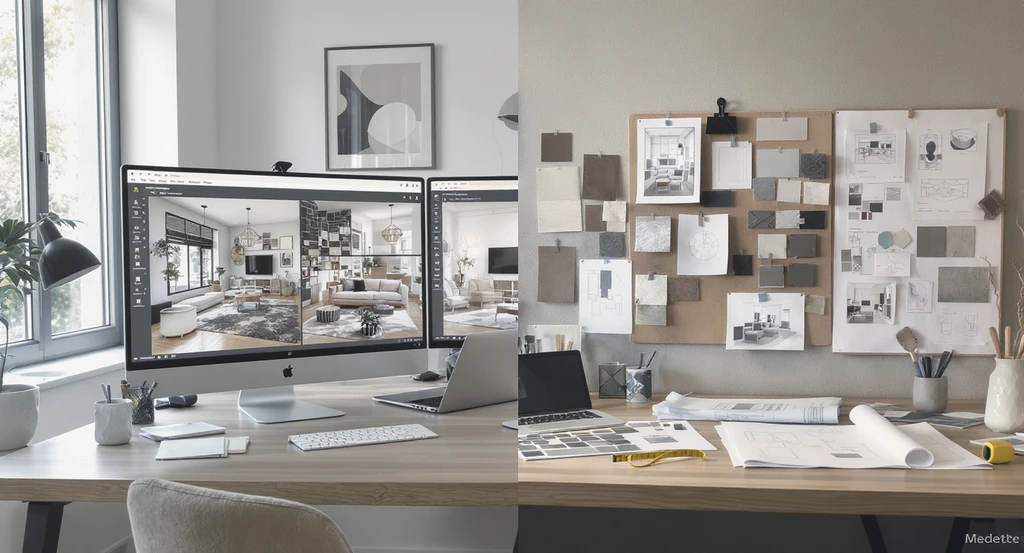
Side-by-side workspace showing AI home design tools and interior designer materials, highlighting the best-use scenarios, hybrid approaches, and cost comparisons between AI visualization and traditional interior design for 2026 homes.
Choosing between AI home design and interior designers depends on your goals, timeline, and level of complexity. A simple way to decide is:
- Choose AI When: You need speed, want to visualize multiple styles quickly, or are staging a property for sale, especially as a first-time homeowner, real estate agent, or investor.
- Choose a Designer When: You are planning a renovation, need custom-built solutions, or are working on a high-value project that requires hands-on execution and problem-solving.
- Hybrid Approach (Best For Most): Start with AI to explore and refine ideas, then involve a designer to finalize and execute the plan with real-world precision.
In practice, AI home design is ideal for early-stage decision-making, helping users gain clarity quickly and reduce uncertainty. Interior designers, on the other hand, are better suited for complex projects that require personalization, coordination, and execution. Combining both approaches allows you to move faster, reduce risk, and achieve better overall results.
-
Practical Tips: Reducing Decision Friction and Avoiding Mistakes
To get the best results from AI home design while avoiding common mistakes, follow these practical guidelines:
- Do not rely solely on AI for complex renovations or structural changes, always validate plans with a professional.
- Avoid over-designing or chasing too many styles; prioritize function alongside aesthetics.
- Use AI to clarify your preferences before purchasing furniture or starting construction.
- Remember: visualization reduces uncertainty, but real-world decisions require practical context.
If you’re unsure how your space could look, start by uploading a photo into an AI home design tool to explore multiple styles and layouts instantly before making any commitments.
-
Micro Case Study: Visualization Drives Engagement
For example, a vacant property that was digitally staged using AI-generated designs saw a significant increase in online engagement, including higher listing views, more saves, and increased buyer inquiries within the first few days of relaunch. This aligns with broader industry findings that visually staged or enhanced listings consistently outperform empty properties in terms of engagement and buyer interest. The result highlights a clear pattern: improving visual clarity before listing directly impacts how quickly and confidently buyers respond.
-
Future Trends: AI + Human Collaboration in Home Design
As AI tools continue to evolve, the gap between visualization and execution will narrow, making home design more accessible, efficient, and data-driven than ever before. Designers will increasingly rely on AI for early-stage ideation and feasibility checks, while homeowners will depend on visualization up front for more confident, mistake-free decisions. As AI tools become more integrated into real estate platforms and design workflows, early-stage visualization will likely become a standard step before any major home decision, shifting the industry from intuition-based choices to clarity-driven decisions.
Visualization Scenario
Imagine uploading a photo of your empty living room, then instantly viewing several design styles fit to your dimensions. Within seconds, you know which sofa size fits, which colors work, and what to buy, long before you risk a single purchase.
FAQ: AI vs Interior Designers (2026 Insight)
- Is AI better than interior designers?
- AI is better for speed, cost, and visualization, while designers are better for execution, personalization, and complex projects.
- Can AI design my entire home?
- AI can generate visual concepts, but real-world execution still requires human expertise for construction and installation.
- Is AI interior design accurate?
- AI delivers visually accurate concepts, but it may not account for all real-world factors like precise measurements or structural requirements.
- How much does AI home design cost?
- Most AI design tools range from free to low monthly subscription rates and are highly affordable, especially compared to traditional interior design services.
- Should I use AI before hiring a designer?
- Yes! Using AI to clarify your preferences makes subsequent collaboration with designers more efficient and effective.
Key Takeaways and Next Steps
The 3-Step Smart Design Framework (2026)
- Visualize First (AI): Explore multiple styles instantly and identify what works in your space.
- Validate Choices: Narrow down layouts, colors, and furniture with confidence.
- Execute Smartly (Designer): Use professional expertise only where needed.
This hybrid approach reduces risk, saves money, and leads to better final outcomes compared to traditional design-first workflows.
AI visualization tools give homeowners and property professionals instant access to multiple options, reducing decision friction and financial risk. Interior designers remain vital for custom projects and execution. The most effective home design journey starts with AI for clarity, then leverages designer expertise for best-in-class results.
Ready to see your space differently? Start with an AI staging tool to explore possibilities instantly and make more confident design decisions. The future of home design is not AI vs humans, it’s AI for clarity and humans for execution.