TL;DR
AI is not replacing real estate photographers, it’s changing how listing media is produced and experienced. The real shift is from slow, unclear workflows to instant, emotionally intelligent visualization that reduces buyer hesitation. Teams who blend human expertise and AI systems help buyers decide faster and more confidently.
A Change Bigger Than Any Camera: Why the Real Challenge Isn’t Just Photography

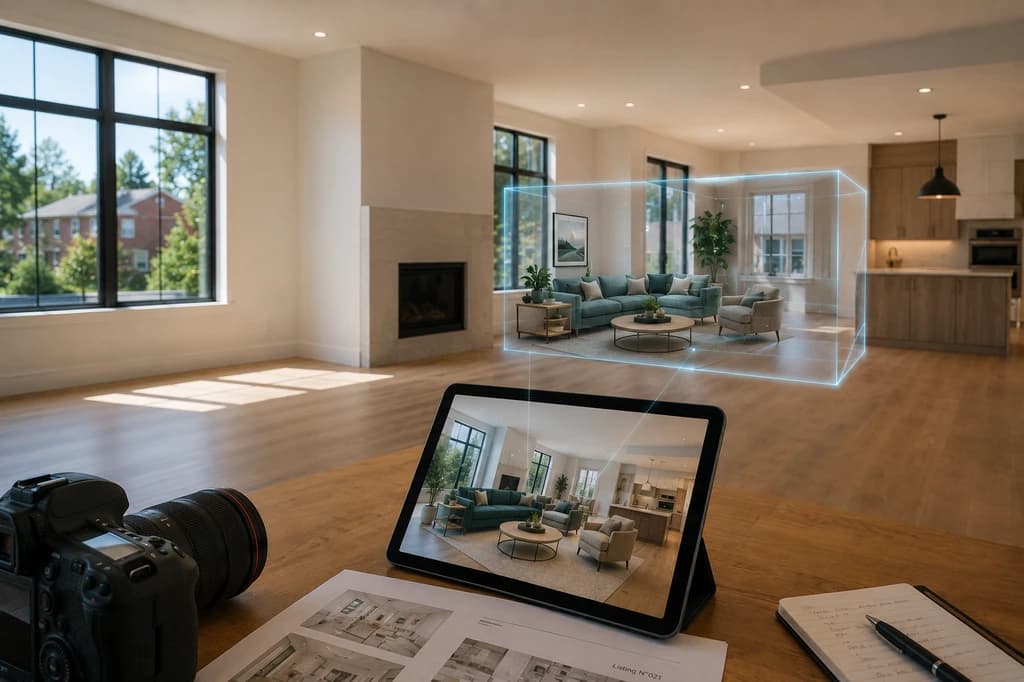
This editorial image shows how ai accelerates real estate photo editing and virtual staging, visually comparing traditional photography to digital enhancements to improve buyer engagement and listing performance.
Most listings do not fail because the photos are bad. They fail because buyers cannot mentally move into the space. Today’s buyers want more than empty rooms, they want furnished layouts, renovation possibilities, and clear visual understanding before ever visiting a property.
As AI reshapes listing media, the real question is not whether photographers are disappearing, but how the entire home-buying experience is changing. This article explores what AI is actually replacing, why human judgment still matters, and how professionals are adapting to help buyers decide with more confidence and less uncertainty.
-
Direct Answer: What’s Really Being Replaced?
AI is not fully replacing real estate photographers. It is replacing slow, unclear, and inefficient listing media workflows.
What’s changing is how homes are prepared, presented, and mentally processed by buyers, who now expect visually clear and trustworthy digital experiences before ever visiting a property.
The strongest professionals are not replacing traditional photography, they are combining it with AI to reduce buyer hesitation and improve listing performance. Explore how this blend is helping agents close deals faster .
Expert Insight
A seasoned real estate agent once shared that, after adding virtual staging to a long-stale listing, buyer interest soared. The room’s measurements hadn’t changed—but how people saw themselves in that space did. The sale happened within days. It's a reminder: sometimes, the difference is not square footage, but the story a visual tells.
-
Why This Change Matters: The Buyer’s Perspective
Photographs alone rarely close deals anymore. Buyers make early decisions based on how clearly they can understand space and imagine life in a home. Now, most buyers decide to book (or skip) a viewing before ever stepping inside, depending on:
- Visual clarity
- Emotional comfort
- Lifestyle fit
- Confidence in what’s shown
As buyers scroll and compare more listings, their standards climb. They want furnished visuals, renovation previews, mobile-friendly formats, and faster updates. Friction anywhere, missing context, outdated images, or inconsistent media, often leads to hesitation or distrust.
As we explained in our breakdown of AI visualization's impact on sales speed , what people see directly affects what they feel, which ultimately drives their next step.
-
The Real Problem: Visualization Friction, Not Photography

By leveraging AI to virtually stage homes, real estate listing performance is improved and buyer engagement with ai visuals increases, helping listings sell faster and bridging the visualization gap.
Think about how many listings fail not because the photos are technically poor, but because buyers cannot envision the space. Common issues include:
- Empty rooms that feel cold, small, or confusing
- Awkward layouts without visual guidance
- Outdated interiors buyers dismiss instantly
- Media inconsistency across platforms and channels
- Slow image delivery delaying listing launches
- Over-edited visuals that feel artificial and reduce trust
So the challenge is not about whether a photo is sharp or not, it’s whether it helps someone imagine living there.
According to our guide on the visualization gap in real estate , this disconnect is an industry blind spot that AI is now addressing, not by erasing human creativity, but by closing that mental gap faster.
-
From Marketing Asset to Visual Decision System
We’re watching a shift from static marketing assets to dynamic visual decision systems. Listing media today functions as:
- A decision tool for buyers (“Does this space work for my life?”)
- A trust layer (“Is this home really what it appears to be online?”)
- Operational infrastructure (“How quickly can we launch, update, and manage listings?”)
Buyers compare listings faster, trust visuals less easily, and expect near-instant clarity. The new standard is no longer just beautiful photography, it’s speed to understanding.
As discussed in our feature on AI-powered visualization and listing outcomes , combining AI visualization with strong photography gives listings a competitive edge.
-
Where AI Is Already Replacing Manual Work: Real Examples

AI-driven real estate photo editing accelerates listing preparation, with virtual staging and automated enhancements improving buyer engagement and answering does virtual staging help homes sell faster and the overall ai impact on real estate listing performance.
- Repetitive Editing: AI now automates sky replacement, decluttering, brightness fixes, object removal, and batch resizing in minutes.
- Empty Room Problem: AI virtual staging helps buyers understand scale, layout, and purpose, reducing uncertainty around empty spaces.
- Slow Turnaround: AI speeds up listing prep, visual approvals, and media delivery, helping listings go live faster, as explored in our fast-close strategies guide .
- Generic Marketing: AI helps personalize MLS descriptions and campaigns so different property types communicate different lifestyles.
-
What AI Still Can’t Replace: Human Judgement and Authenticity
While AI handles editing and staging quickly, some areas still depend heavily on human judgment:
- Emotional nuance and the natural feeling of a space
- Architectural and lighting details in luxury, historic, or designer homes
- Knowing what not to edit to preserve authenticity
Buyers are increasingly skeptical of visuals that feel overly perfect or unrealistic. The strongest listings use AI selectively, with human oversight helping maintain trust and believable representation. See how professionals combine AI with artistic judgment .
-
Original Insight: AI Isn’t Replacing Photographers, But Listing Confusion

Original Insight: AI Isn’t Replacing Photographers, But Listing Confusion Image
The biggest shift is this: AI isn’t erasing photographers, it’s reducing confusion. Its real value lies in lowering hesitation, visualization fatigue, and emotional disconnect.
- Empty rooms often create uncertainty and delay buyer action
- Warm, furnished layouts help buyers connect emotionally with the space
- Over-edited visuals can create distrust and raise doubts about accuracy
- Clear, realistic staging builds confidence and increases interest
- Inconsistent listing media often leads to confusion and lower trust
The goal is clarity that builds confidence. That’s where AI, when used responsibly, can genuinely improve buyer decision-making.
-
The Trust vs Speed Curve: Balancing AI and Human Value
Many teams chase AI for efficiency, but the strongest listing strategies balance speed with buyer trust.
- More speed supports faster launches, scalable workflows, and quicker approvals
- Too much automation can create buyer skepticism and reduce trust
The best-performing teams combine AI-assisted workflows with human oversight to keep listings both efficient and believable, as explored in our future-facing analysis .
-
Real-World Constraints: What AI Can and Can’t Fix
Adopting AI in real estate media is more complex than it first appears. Common challenges include:
- Low-quality photos still lead to weak outputs, AI cannot fully fix poor inputs
- MLS compliance requirements for virtual staging and digital edits
- Luxury listings needing nuanced lighting, composition, and atmosphere
- Different buyer preferences across urban, suburban, and emotional-buying markets
At scale, tools like Styldod’s Smart Media Module help brokerages maintain consistency, compliance, and operational efficiency without losing human oversight.
-
Practical Guidance: When and How to Use AI in Listing Media
Lean on AI for:
- Vacant property staging
- Speed to market in competitive areas
- Managing large listing volumes
- Routine, repetitive editing
- Media consistency across channels
- Visualization support for hesitant buyers
Use caution or manual oversight when:
- Authenticity is part of your brand promise
- Working with luxury or historic homes
- Renovation previews could mislead buyers
- Listings already face trust concerns
A thoughtful hybrid strategy almost always outperforms an AI only or photography only approach.
-
Styldod’s Perspective: Visualization Infrastructure, Not Just Editing Toolkit
The strongest listing media strategies combine visual clarity, operational scalability, and buyer trust. Platforms like Styldod help teams bridge the gap between empty spaces and buyer imagination through smarter visualization workflows.
- REimagineHome.ai supports virtual staging, redesign previews, and layout exploration
- Smart Media Module helps larger teams manage scalable, audit-ready media workflows
- Expert Services support professional editing, rendering, and realistic visual enhancements
As listing media becomes more operational, scalable workflows and trustworthy representation matter more than ever.
-
Compliance & Trust: The New Non-Negotiables
MLS systems increasingly require disclosure for virtual staging and digital edits, making trustworthy representation both an ethical and operational necessity.
- Label AI-edited images clearly
- Avoid misleading transformations
- Prioritize accuracy over artificial perfection
As explained in our guide to the visualization gap , responsible AI use helps protect both buyer trust and compliance standards.
Visualization Scenario
Picture a buyer scrolling through two listings. One features empty, echoing rooms with awkward angles. The next shows the same space—now virtually furnished, balanced, and inviting. Instantly, the buyer pauses, imagines “my furniture here, morning coffee there.” Decision made: book a viewing.
Frequently Asked Questions
- Can AI completely replace real estate photographers?
No. AI can automate editing and visualization tasks, but photographers still provide composition, emotional framing, and trustworthy property capture. - Why do empty rooms perform poorly online?
Empty rooms create visualization friction. Buyers struggle to imagine scale, furniture placement, and lifestyle use. - Does AI virtual staging improve listing performance?
Often yes. It helps buyers understand room purpose and layout more clearly, improving engagement and emotional connection. - Can AI-generated listing photos violate MLS rules?
Yes, if altered visuals are misleading or undisclosed. MLS compliance and transparency are increasingly important. - What is the biggest risk of AI in real estate marketing?
Over-editing. Unrealistic visuals can reduce buyer trust and create disappointment during showings. - Should luxury real estate rely heavily on AI visuals?
Luxury listings usually benefit from a hybrid approach combining professional photography with selective AI-assisted enhancement. - What matters more: photography or visualization?
Both matter. Photography captures reality. Visualization helps buyers interpret potential. - Why is buyer psychology important in listing media?
Because buyers make emotional decisions quickly. Clear visuals reduce uncertainty and improve confidence.
Key Takeaway: The Future Belongs to the Visually Clear and Operationally Ready
AI isn’t replacing real estate photographers, it’s reshaping the listing process around speed, clarity, and buyer confidence. The strongest listings today combine human visual judgment with scalable AI workflows to create visuals that feel both trustworthy and easy to understand.