TL;DR
Most people underestimate how fast costs add up when a home sits unsold. Carrying expenses such as mortgage, taxes, and utilities keep accumulating, while buyer interest fades. Virtual staging is a smaller, one-time investment that helps listings perform better by making spaces understandable and attractive. Over weeks, the true cost of waiting can greatly exceed the upfront cost of staging.
What Costs More: Staging or Waiting?
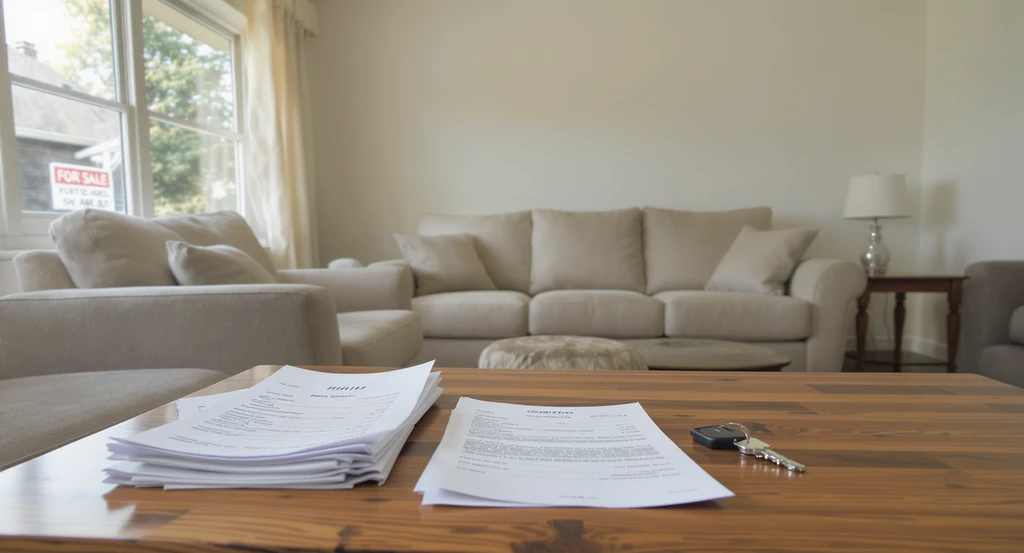
The cost of a home sitting unsold builds with each week—virtual staging can help reduce carrying costs and optimize real estate listing photos to attract buyers and shorten market time.
In most cases, keeping a home on the market costs far more than virtually staging it. Mortgage payments, taxes, utilities, insurance, and maintenance continue accumulating every week a listing sits unsold, while virtual staging is typically a one-time investment. With Styldod virtual staging often starting around the cost of a few meals out, even a short delay in selling can become significantly more expensive than improving listing presentation upfront. The real question isn't whether staging costs money, it’s how much waiting already costs.
Each extra week means another round of mortgage payments, utilities, taxes, and possible price cuts. The question becomes not whether virtual staging adds cost, but whether it saves more money than it spends by reducing time on the market.
Buyers rarely reject a house because they dislike its potential; they move on when listing photos create confusion or hesitation. Let's break down how staging, and especially virtual staging, works as a decision tool rather than just a decorative fix, and why it often costs less than waiting for a buyer who may never arrive.
-
How Costs Add Up When Homes Sit Unsold
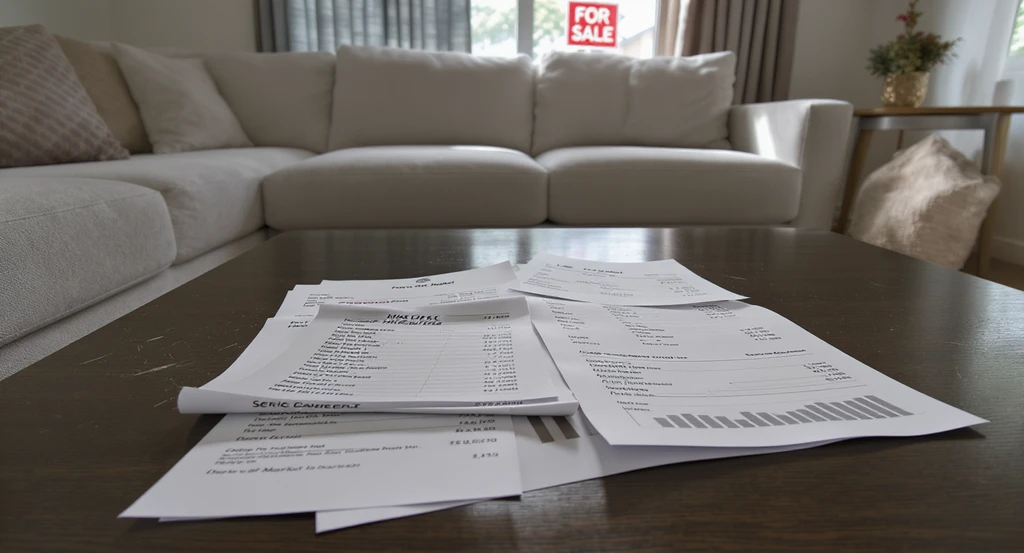
Unfurnished homes accumulate hidden costs—mortgage, utilities, taxes, insurance, and HOA fees—while sitting unsold, showcasing the true financial impact of delayed real estate listings and emphasizing the advantage of virtual staging to reduce time on market.
Most listings immediately start accumulating hidden monthly expenses:
- Mortgage payments
- Utilities
- Property taxes
- Insurance
- Maintenance and repairs
- HOA or condo fees
For example, if your monthly outlay totals $3,300 and your listing takes 60 days to sell, you’ve spent $6,600 beyond the closing costs and commission. That doesn’t count the subtle but real psychological pressure to lower the asking price as days-on-market increases.
Because every extra week increases costs, sellers who dismiss staging often confront the true bill only once months of carrying costs have accumulated.
Expert Insight
One real estate agent believed more staging always meant better results. By staging every space, including minor utility rooms, buyers became overwhelmed and lost focus on what mattered. By simplifying to just the main living areas, interest rebounded and showings doubled. Sometimes, less is indeed more in listing visuals.
-
The Silent Psychology of Buyer Hesitation
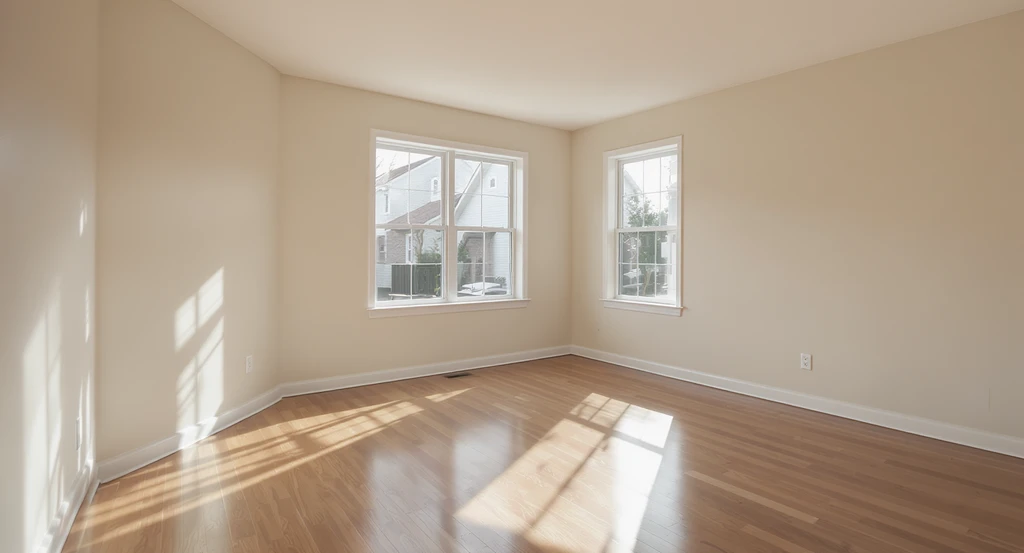
An empty, poorly staged living room underscores the cost of a home sitting unsold and the value of optimizing real estate listing photos to reduce time on market.
Online buyers decide which listings to visit in seconds. Empty rooms, unclear layouts, and poorly structured photos lead to confusion or a lack of connection.
When buyers see a home that has been listed for a long time, they often assume there’s a problem, overpricing or hidden defects. As we addressed in our guide to virtual staging vs empty photos, empty rooms rarely create the needed urgency or interest. Listings risk becoming stagnant, with engagement and perceived value dropping each week.
This psychological stall is costly, not just in lost attention, but in the potential need for future price reductions if buyer curiosity fades.
-
Why Presentation Drives Listing Performance
Staging, virtual or physical, removes interpretation friction for buyers. Rather than making every space look pretty, the main objective is to demonstrate how spaces work: their scale, traffic flow, furnishing potential, and lifestyle possibilities.
Most buyers struggle to mentally arrange furniture or understand awkward spaces. Empty rooms, as explored in our comparison on staging vs empty images, leave buyers guessing about size and purpose. This slows their decision and can delay a sale.
-
Virtual Staging: A Time Optimization Tool
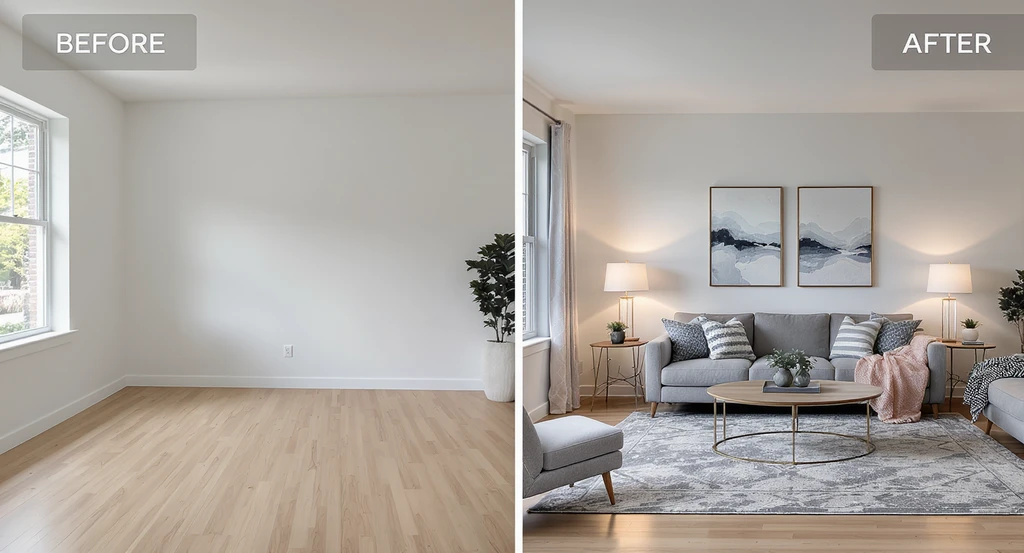
Virtual staging in high-impact rooms can dramatically reduce the cost of a home sitting unsold by optimizing real estate listing photos, helping buyers connect faster and reducing time on market.
Virtual staging is not simply digital decoration, it functions as a visual decision tool that helps buyers immediately understand room scale, purpose, and lifestyle potential. Instead of furnishing every space, you can focus on 4-8 high-impact rooms where visualization removes confusion and helps buyers quickly grasp scale and utility.
Unlike traditional staging, virtual staging avoids high transportation or setup costs. Strategic use means you control the visual narrative and help buyers move quickly from curiosity to showing appointment. The one-time investment often pays for itself by reducing time on market, as detailed in our virtual staging cost breakdown.
-
Comparing True Costs: Virtual Staging vs. Carrying Expenses
Let’s clarify the difference between one-time and ongoing costs. Virtual staging is a single investment at listing launch. Mortgage payments, utilities, and maintenance recur every month the property remains unsold.
For many typical homes, a full set of virtually staged key images costs less than two weeks’ carrying costs. Every additional unsold month multiplies losses, not just in cash outflow, but through diminishing buyer interest and potential price cuts, as shown in our in-depth analysis of staging ROI.
This isn’t just a math problem, it's a visibility problem. Listings that perform better visually move faster through the sales funnel and meet less pricing resistance.
-
Empty Rooms Create Buyer Friction, Here’s Why
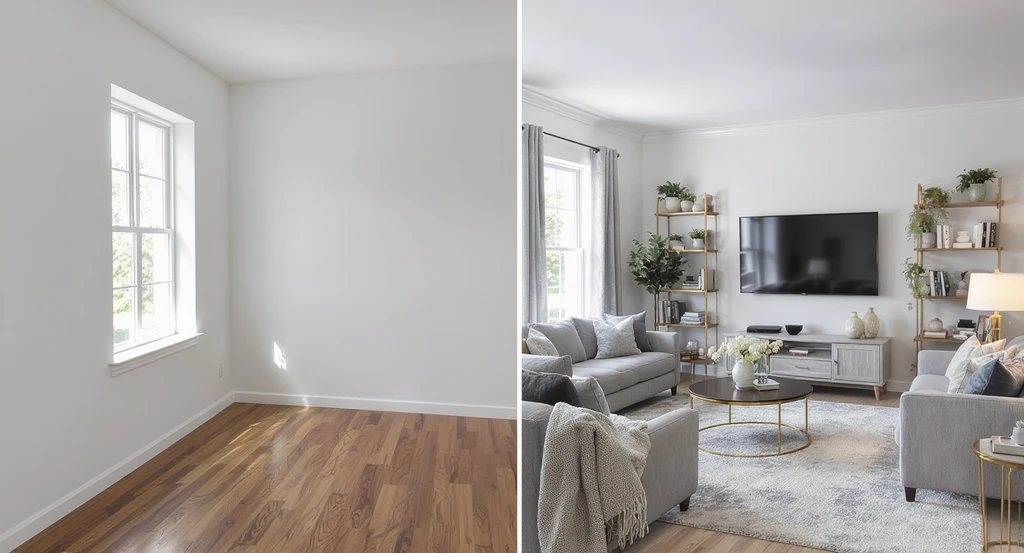
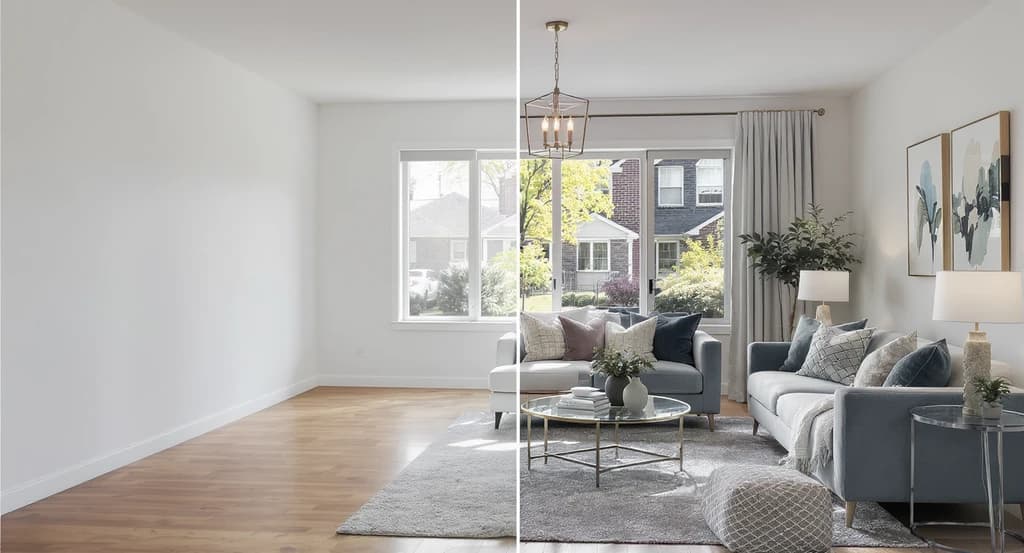
A side-by-side comparison: an unfurnished living room versus the same room virtually staged, highlighting how virtual staging versus carrying costs can reduce time on market and address buyer psychology in real estate sales.
Unfurnished spaces almost always generate uncertainty. Most buyers cannot estimate scale or function from a blank room.
- How does furniture fit?
- Is there enough space for entertaining?
- Where is the TV wall or reading corner?
Virtual staging answers these questions visually, removing decision friction and prompting buyers to act sooner. As explained in our review of virtual vs physical staging approaches, staged images enable faster comprehension and more confident decision-making.
-
Step-by-Step: Is Your Listing Losing Time (and Money) Due to Presentation?
- Review each listing image and identify spaces that may feel empty, unclear, or potentially confusing to buyers.
- Determine which rooms need the most visual clarification, such as living rooms, dining areas, bedrooms, and flex spaces.
- Ask yourself: Can a buyer instantly understand the scale, purpose, and function of this space? If not, consider it a warning sign.
- Prioritize staging your hero (lead) image first, followed by 3–7 additional high-impact spaces that drive buyer interest.
- Reassess listing performance after updated images go live. Monitor changes in views, clicks, engagement, and scheduled showings.
This workflow converts visual uncertainty into improved engagement, reducing the likelihood and cost of extended market time.
Visualization Scenario
Imagine a buyer scrolling through listings late at night. An empty room appears, it's hard to judge its size and use, so they move on. Next, they see the same room with clear, realistic virtual staging: a sofa, a rug, balanced lighting, and an inviting setup. This time, they pause, picture themselves there, and click to view more.
Frequently Asked Questions
- Is virtual staging cheaper than keeping a home on the market?
- Yes. Virtual staging is usually a one-time cost, while mortgage, taxes, and maintenance add up every month a home goes unsold. The longer a listing sits, the greater the cumulative cost compared to the upfront staging investment.
- Do empty rooms really hurt my listing?
- Empty spaces create uncertainty and make it hard for buyers to judge scale, purpose, and potential. As explored in our guides, virtual staging solves these issues and boosts engagement.
- Should I stage every room?
- No. Focus on staging only key rooms like the living area, primary bedroom, and kitchen. The goal is to help buyers picture day-to-day living and understand the home's flow, not to overload them visually.
- Is there measurable ROI from virtual staging?
- Virtual staging ROI often appears through reduced carrying costs rather than just sale price. Selling two to four weeks faster may eliminate additional mortgage payments, utility bills, and pricing pressure. Small presentation improvements can create larger financial effects over time.
- When is the best time to consider staging?
- Before listing, or as soon as you notice low engagement or slow showings. Upgrading images early maximizes buyer attention and shortens total market time.
Key Takeaways: Don’t Underestimate the Cost of Waiting
The upfront investment in staging, especially virtual staging, often pays back many times over simply by reducing the hidden carrying costs of a slow sale. Sellers and agents who treat presentation as an expense miss the financial impact of time, decision friction, and eroding buyer interest.
In most cases, the larger expense is not the price of staging, but the compounded cost of waiting for buyers to see a home’s full potential. Presentation is actionable leverage in any market. Reducing uncertainty, not just decorating, is what helps homes sell faster and for more value.