TL;DR
Most dining rooms feel less inviting because of subtle mistakes most people never notice. Little details like spacing, balance, and simplicity matter more than furniture style. Human expertise in design helps create dining rooms that feel right, not just look good.
The Real Secret Behind Inviting Dining Rooms
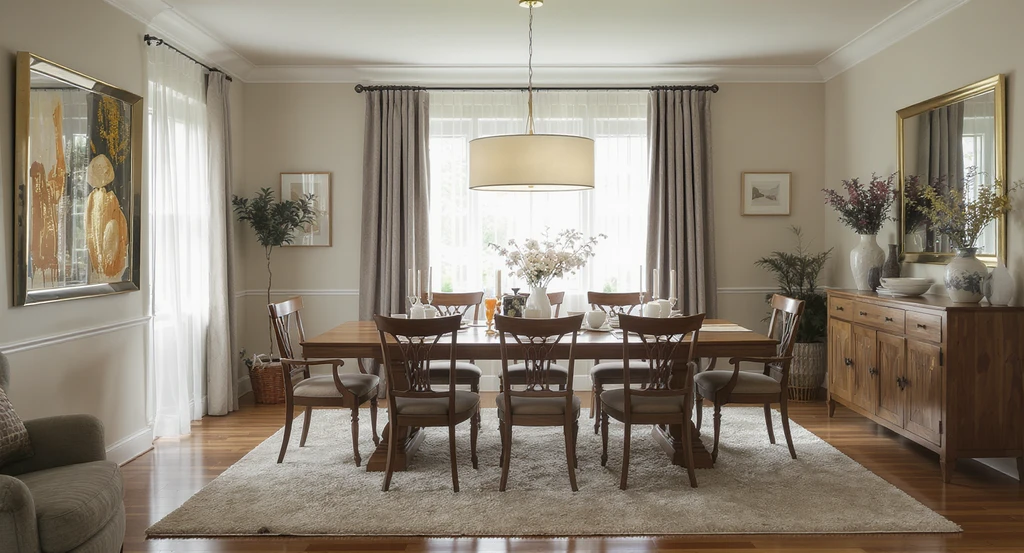
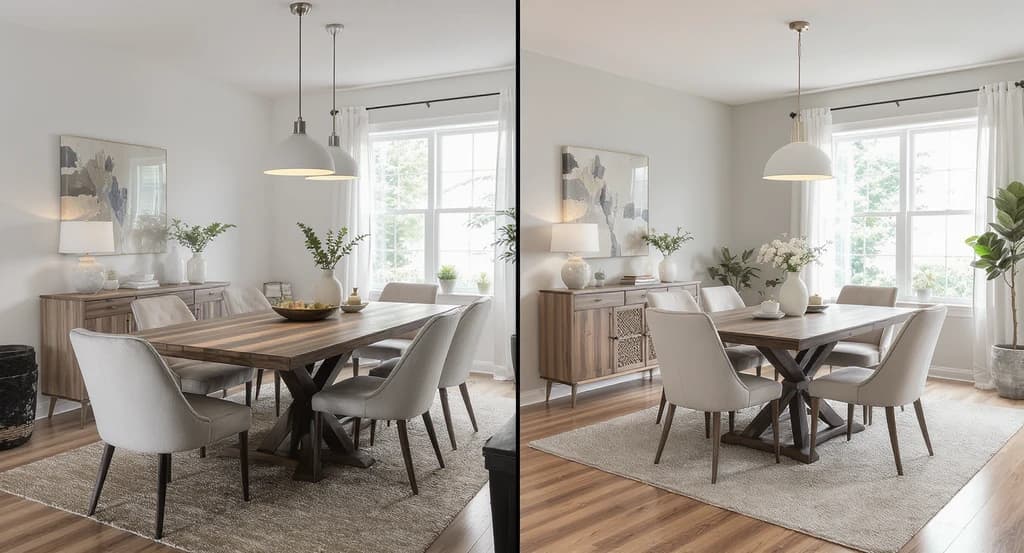
Dining room with mismatched chairs, crowded table, and off-balance lighting—revealing hidden design mistakes that quietly impact comfort, style, and how inviting your dining space feels.
If your dining room looks well-furnished but still feels uncomfortable, you’re not alone. Many homeowners, realtors, and designers find it tricky to create spaces that look nice and actually feel welcoming. Even with the rise of AI styling tools, the difference often comes down to understanding people, how they move, gather, and feel in a space. Here’s the truth: comfort, balance, and ease are what make a dining room memorable not just expensive furniture or bright lighting. Human expertise matters because real designers can read the room, spot subtle problems, and shape the atmosphere in a way that technology alone can’t. If your visuals or design choices don’t feel quite right, it usually means something deeper needs attention, not just a quick redesign.
-
1. Chairs Are Too Close Together
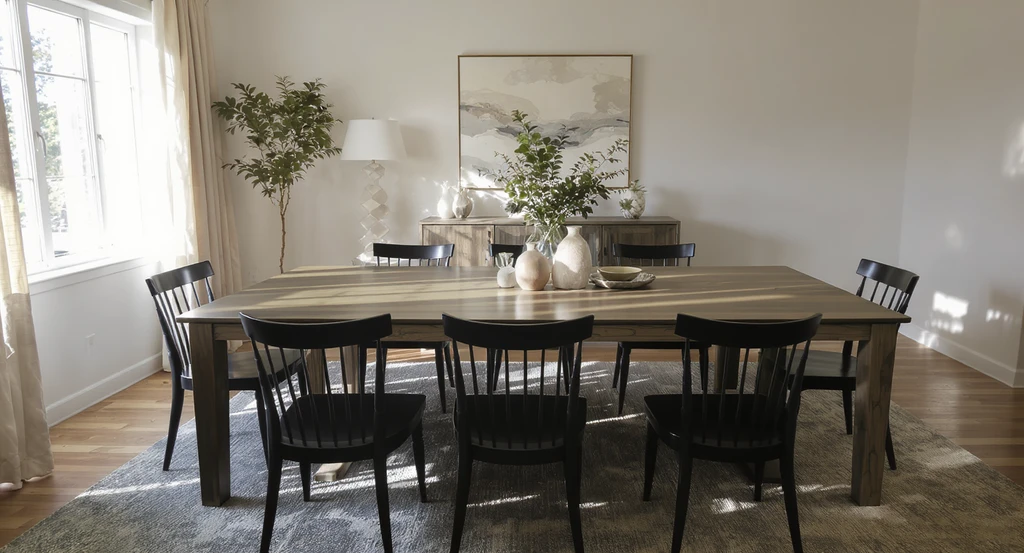
Cramming an oversized table into a dining room results in a crowded layout—one of the top dining room design mistakes that limits comfort and balanced flow.
Many people focus on getting the biggest table possible without thinking about walking room or elbow space. When chairs are packed too tightly, guests feel squeezed, and the room loses its sense of comfort. Human designers always prioritize space between chairs and flow around the table so sitting down or standing up feels effortless. This extra breathing room creates a welcoming feel from the moment anyone enters, as discussed in our guide on staging your dining room.
Expert Insight
Recently, a homeowner swapped out just two bulky buffet tables for a single, narrow sideboard and moved the dining chairs so they weren’t touching. Suddenly, guests said the room felt bigger and everyone stayed at the table longer even though the décor hardly changed.
-
2. Overdecorating: Thinking More Is Always Better
Adding too many decorative objects like vases, art, or sideboards can clutter a dining room quickly. Most professionally staged homes use restraint to encourage a calm, open feeling. That less-is-more approach helps buyers and guests focus on what matters, rather than being overwhelmed by too many things at once. Balanced minimalism, as shown in many contemporary dining room ideas, lets a space breathe.
-
3. Every Corner Doesn't Need Attention
When every wall and shelf is filled, it can exhaust the eyes and mind. Human designers often create at least one uncluttered area where the eyes can pause. This trick, inspired by principles in Scandinavian design, boosts a room’s refinement and comfort, it just feels easier to be in. For more on using calm focal points, see our Scandinavian dining room design guide.
-
4. Comfort Matters More Than Matching Decor
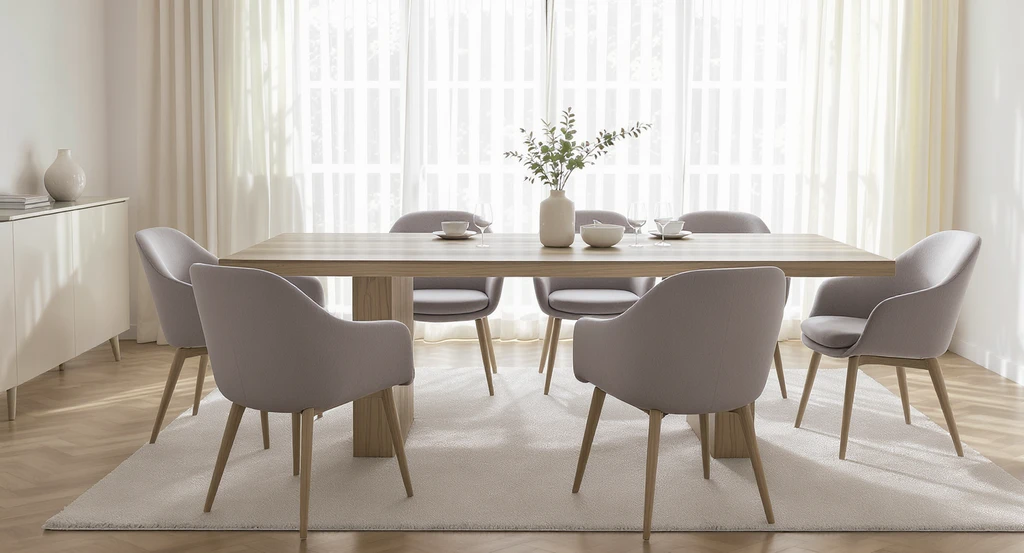
Comfort-focused dining room design avoids common mistakes by using supportive seating, clear sightlines, and a clutter-free table for a welcoming and balanced space.
It’s easy to focus on matching chairs or trendy fixtures, but the best dining rooms are those people want to linger in. Soft, supportive seating, clear sightlines, and an uncluttered table support easy conversation and longer visits. Creating that feeling often means knowing when to stop adding and when to refine what’s already there. Human stagers think not just about looks, but about how people actually use the room.
-
5. When The Room Feels Slightly Off
A room may look fine in photos but feel off in person if the layout is unbalanced. Heavy cabinets placed all on one side or empty corners can make the space feel awkward. Design-trained eyes spot these invisible sources of tension right away. Balancing visual weight across the room makes it feel easier and more naturally put together. Subtle spatial decisions like these often separate human-centered staging from generic, automatic layouts.
-
6. The Room Should Be Easy To Move Around In
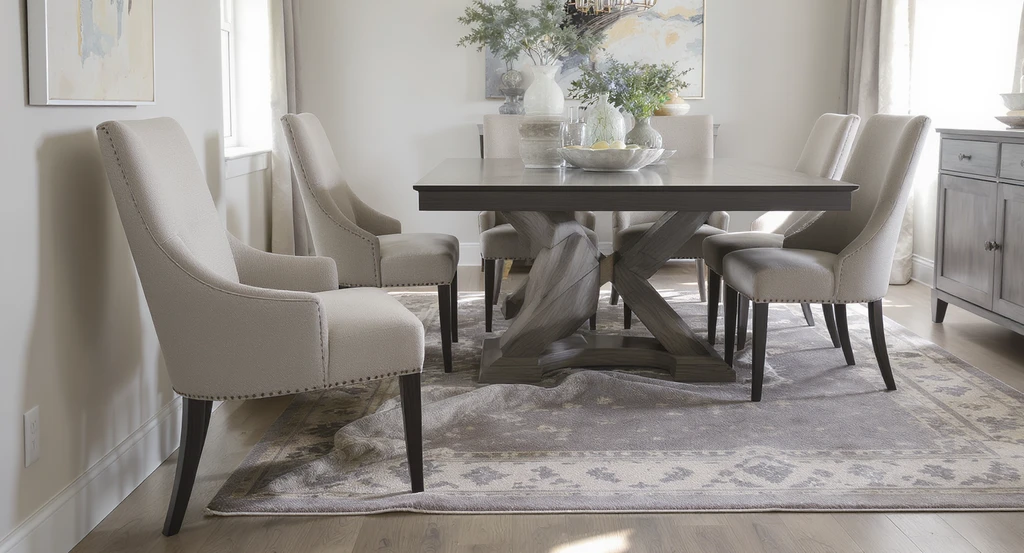
Common dining room design mistakes—such as cramped seating and misplaced rugs—can create uncomfortable friction points. Addressing these issues is essential for balanced, inviting dining spaces and better flow.
If pulling out a chair, passing a dish, or walking behind guests is a hassle, people notice and remember. Human designers identify these friction points and smooth them out during the planning process. Tiny adjustments, like shifting a rug or leaving extra room for movement, can make a room feel instantly more expensive and functional.
-
7. Too Many Things Are Competing For Attention
A statement chandelier, bold artwork, patterned curtains, and an oversized table can each be beautiful. But together, they might end up fighting for attention. The result is visual tension and a less relaxing mood. Skilled stagers know how to let one element shine and support it with quieter choices elsewhere. The result is a sense of harmony rather than chaos.
-
8. A Dining Room Should Look Lived In
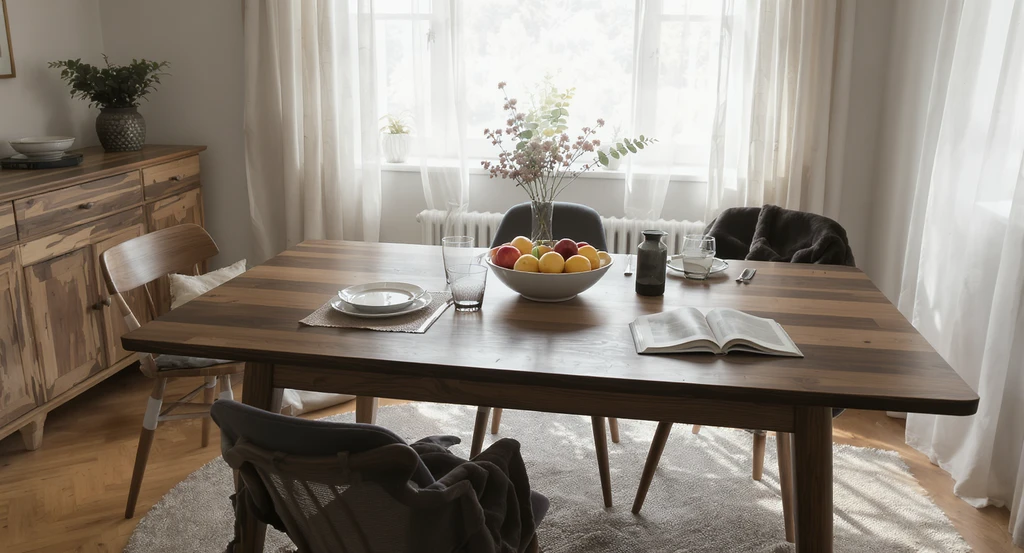
Adding subtle signs of life, like a casually placed chair or open book, prevents common dining room design mistakes and makes spaces feel more comfortable, balanced, and inviting.
Perfectly staged rooms can look impressive but also cold. A dining room feels warmer when it shows a little real life: a bowl of fruit, open book, or a slightly askew chair. Human stylists understand that comfort and approachability make a space more desirable. This lived-in touch appeals to both buyers and guests, turning a display into a place people actually want to use.
Visualization Scenario
Picture a dining room arranged by an expert: chairs spaced comfortably, one clear focal point, light flowing freely, and a hint of real life, a vase of flowers in the center. It feels easy to enter and settle in, whether you’re hosting friends or having a quiet meal at home.
Frequently Asked Questions About Dining Room Design
Most often, it’s crowding the table and making movement or conversation uncomfortable.
How does staging a dining room improve listing performance?
Professional staging makes rooms look balanced and lived-in, which buyers trust more.
Why do buyers value human-designed dining spaces?
Because people sense comfort, balance, and authenticity—details best understood by experts.
Can small adjustments really make a difference?
Yes. Moving chairs, reducing clutter, or softening lights often change the entire feel of a space.
Is AI staging enough for a realistic dining room feel?
AI tools can help, but experienced designers spot subtle problems and create trust-worthy visuals.
Bringing It All Together
Luxury and comfort in a dining room come from thoughtful details, not just what you buy. Human design experts see beyond layout and color, they notice how people feel, move, and connect in a space. By focusing on personal space, visual balance, comfort, and little signs of life, professionals help you create dining rooms that are truly welcoming. A few smart changes can do far more than expensive makeovers, as seen in our tips for staging your dining room. Trust human judgment for results that look and feel right.


