TL;DR
Staging just one room in a real estate listing often leads to visual inconsistency and weakens buyer confidence. Buyers evaluate the whole property experience, not isolated rooms, so multiple staged photos are necessary to create a believable, cohesive, and engaging listing that reduces decision friction and supports strong marketing outcomes.
Why Do Most Listings Underperform With Just One Virtually Staged Photo?
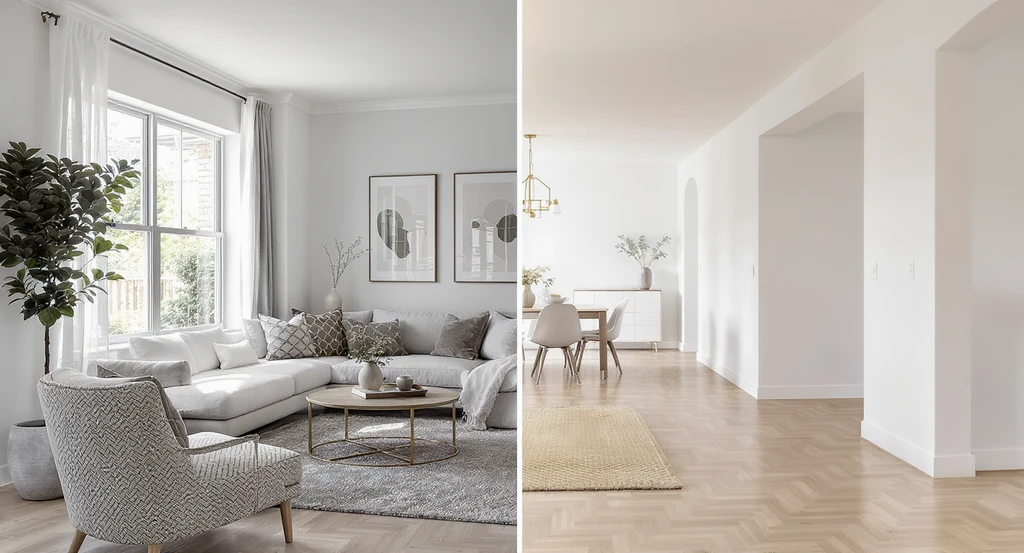
Showing only one virtually staged photo and leaving other rooms empty is a common listing photo mistake. Consistent virtual staging across multiple rooms helps buyers see the home's full potential and explains why staging multiple rooms sells homes.
One virtually staged photo rarely sells a home because buyers evaluate the entire listing journey, not a single room. When only one room is staged, visual consistency breaks and buyer confidence often drops. A staged living room beside empty bedrooms or dining spaces creates visual inconsistency, increases uncertainty, and weakens trust. Multiple staged spaces create continuity that helps buyers imagine living in the home.
Most people struggle to understand why a single virtually staged photo rarely changes how buyers feel about a property. This happens because buyers scroll through listings quickly, and see homes as connected experiences, not as stand-alone rooms. If you show one beautifully staged living room but leave the rest of the home empty, visual consistency breaks.
Instead of being led through a story, buyers start mentally switching between two realities: the staged space and the unfinished emptiness. Visual inconsistency interrupts how buyers mentally move through a property and often increases uncertainty. Instead of smoothly imagining life in the home, buyers begin questioning missing spaces and filling gaps themselves.
-
How Buyers Judge Listings: Not By the Room, But by the Whole Experience
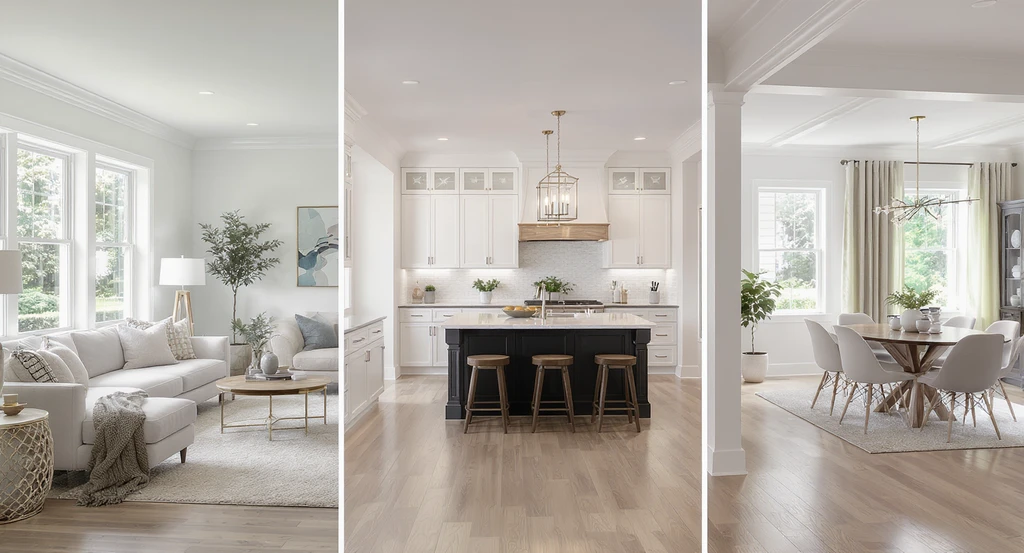
Why staging multiple rooms sells homes: Inconsistent virtual staging, as seen here with only one room fully staged, highlights a common mistake in listing photos. Consistent staging across key spaces is essential for creating buyer confidence and maximizing listing impact.
Buyers do not decide to tour or purchase a home based on just one attractive space. Instead, they evaluate the full journey through every listing photo. If only one room is virtually staged, buyers subconsciously question why the rest is empty or ignored. This inconsistency can make a listing feel unfinished.
According to our analysis in Virtual Staging vs Empty Room Photos: What Sells Faster?, listings with staged photos throughout key rooms outperform those with only one staged highlight. Buyers need context for all primary spaces to build a story of how they will live in the home.
This lack of cohesion increases mental work for buyers, raising hesitation instead of engagement.
Expert Insight
One homeowner initially staged only the living room because they assumed buyers would focus on the "main attraction." Yet showing requests repeatedly led to the same feedback: buyers loved the living area but struggled to picture sleeping arrangements, workspaces, and daily routines elsewhere. After staging the primary bedroom and flex space, buyers spent longer viewing the listing and engagement noticeably increased.
-
The Problem with Visual Inconsistency: Cognitive Friction in Listings
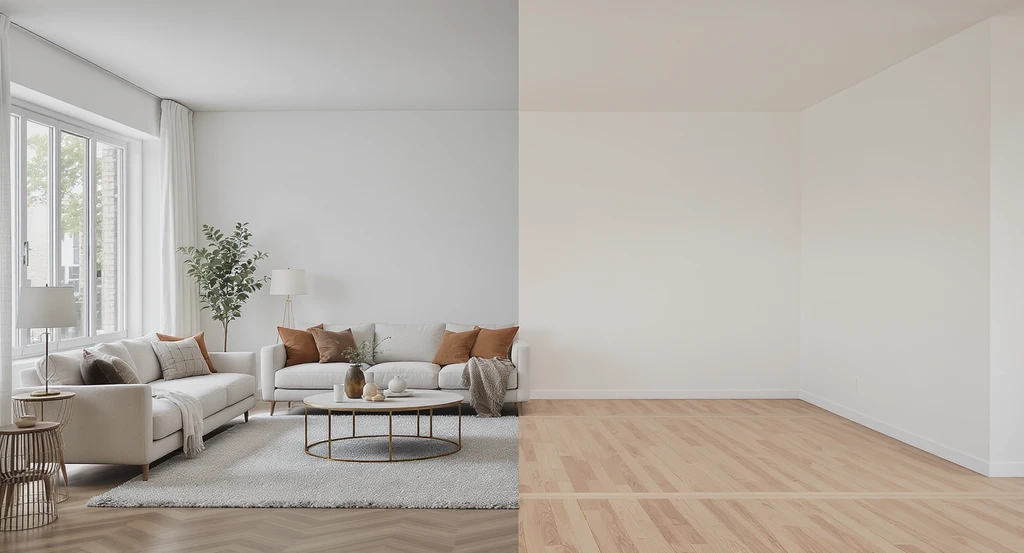
Visualizing the impact of consistent virtual staging: abrupt transitions between staged and empty rooms are common listing photo mistakes. This split-view interior shows why staging multiple rooms sells homes.
When a listing jumps from one staged image to a string of empty rooms, it creates abrupt visual transitions. Human brains naturally prefer patterns and continuity. When this flow is interrupted, buyers become distracted by missing or mismatched details.
This is known as cognitive friction, when viewers are forced to figure out why the environment suddenly changes. As discussed in our guide to visualization gaps in empty home sales, this effect is common and can cause buyers to question the overall quality and reliability of the property or the agent.
A disconnected photo sequence makes buyers interpret and fill in missing parts on their own, which can lead to uncertainty and reduced confidence in the listing itself.
-
Why One Staged Image Fails: The Psychology of Empty Rooms
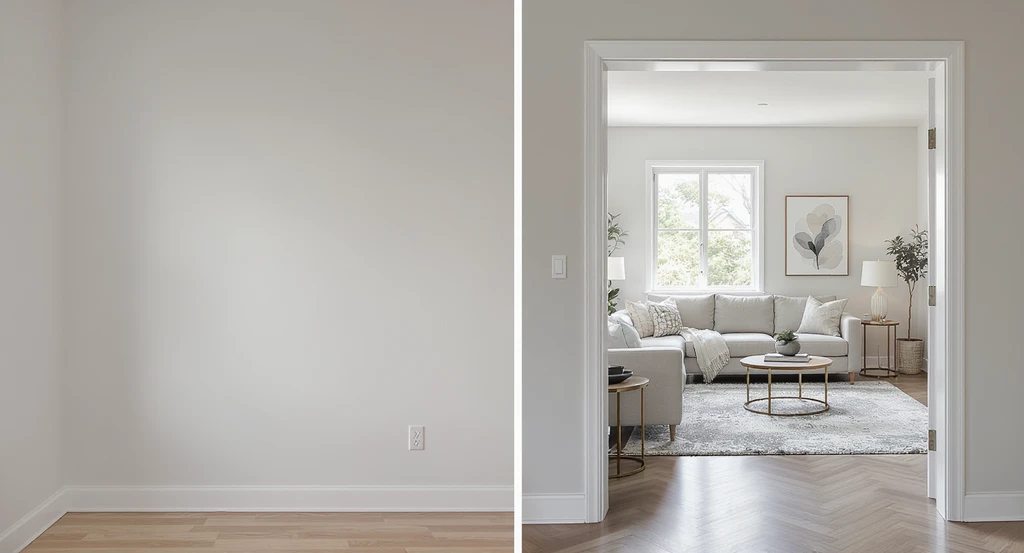
Staging only a single room leaves key spaces empty, highlighting why staging multiple rooms sells homes and the impact of consistent virtual staging—reducing buyer uncertainty and common mistakes with listing photos.
Empty spaces make buyers work harder because they must guess how the room functions. Buyers must answer questions such as: How large is this space? Where does furniture fit? Would this work for my daily life? When only the living room is staged, and bedrooms or dining areas appear empty, buyers are forced to mentally 'fill in' the purpose and scale of each space.
This mental work varies, some people are visual thinkers, others struggle to imagine possibilities. Listings perform better when they remove the need for guessing. Multiple staged images make the home easier to understand by maintaining clarity and showing function edge-to-edge.
If buyers find it hard to visualize key areas, they're less likely to form an emotional connection, schedule a visit, or make an offer.
-
The Scale Misconception: Empty Rooms Usually Feel Smaller Online
Many assume removing furniture will make a room look larger. But online, the absence of scale reference points makes it hard for buyers to assess size or flow. Without familiar objects, corners and walls can seem closer than they are.
Virtual staging helps by assigning visual anchors, beds, sofas, tables, that demonstrate real proportions and functionality. As shown in The Ultimate Guide to Virtual Staging in 2026, successful staging always considers scale and accurate placement for every key room, reducing misjudgment for buyers and minimizing surprises during walkthroughs.
-
Key Rooms to Stage: Where Visual Continuity Matters Most
Not every room demands equal investment, but certain areas consistently influence perception, including the living room, primary bedroom, dining area, home office, and at least one secondary bedroom or flex space.
Staging these zones ensures buyers can see how life, workflow, and daily moments might play out across the entire property, not just one highlight. A staged living room rarely sells the idea of comfortable sleeping, productive remote work, or family meals. Consistent staging helps buyers transition mentally through the home, lowering resistance to positive decision-making.
-
Visual Consistency Builds Trust and Confirms Quality
Buyers interpret professional, visually balanced listings as signals of care, organization, and reliability. Inconsistent staging, or a single well-styled space amid emptiness, can create the impression that critical areas were overlooked, or that the property itself is incomplete.
The result: buyers lose confidence, leading to fewer inquiries and slower offers. Professional consistency, as covered in virtual staging best practices for MLS listings, also keeps properties compliant and aligned with buyer expectations for transparency and disclosure.
-
Virtual Staging Is About Visualization, Not Decoration
Furniture placement is not the goal, lifestyle visualization is. Effective staging shows buyers how each space might support their routines, ambitions, or comfort. One staged photo introduces this possibility. Multiple staged rooms create continuity that helps buyers imagine daily life unfolding naturally across the property.
A single image may draw attention but does not sustain engagement or build trust. The collective journey through several thoughtfully staged rooms is what turns interest into action, making buyers comfortable enough to take the next step.
-
Reducing Listing Friction: A System for Effective Virtual Staging Decisions
The safest way to reduce decision friction is by staging all rooms that define how the property functions in daily life. Start with the living room, then stage the primary bedroom, dining area, home office, and any secondary or flex spaces. Consistency is more impactful than intensity, better to stage several key rooms modestly than one room to perfection and neglect the rest.
Always disclose that rooms are virtually staged and, where possible, show the empty photo side-by-side for transparency. This builds buyer trust and sets clear expectations during in-person showings.
If you need to scale consistent, high-quality media across many listings or want expert support with photo editing and standardized floor plans, explore Styldod's Smart Media Module for real estate media infrastructure or use Styldod Expert Services for professional, human-assisted listing enhancements.
Visualization Scenario
Visualize two listings: one has a staged living room but all other rooms appear empty, disconnected, and hard to interpret; the other shows a sequence of staged, purposeful spaces, leading you to imagine daily life unfolding naturally from room to room. The second listing always feels easier to process and more inviting to explore.
Frequently Asked Questions
- Is one virtually staged photo enough to sell a home?
- One photo may create initial interest, but buyers need consistent context across key rooms. Multiple staged images help reduce uncertainty and improve listing performance.
- Which rooms should always be virtually staged in a listing?
- Focus on the living room, primary bedroom, dining area, home office, and any key flex spaces to ensure buyers can visualize how they would use each major area.
- Why do empty rooms often look smaller online?
- Empty rooms lack visual reference points, making it hard for buyers to judge scale. Staging with accurately sized furniture builds context and improves perceived room size.
- How does visual consistency impact buyer trust?
- Consistent, professional visuals build trust and suggest a property is well cared for, making buyers more confident and likely to engage further with the listing.
- Are there risks to staging only the living room?
- Staging one room can make the rest of the home feel unfinished. This can cause skepticism or disappointment during showings, weakening the buyer's emotional connection.
Conclusion: The Value of Visual Cohesion in Real Estate Listings
One virtually staged photo can attract interest, but sustained buyer engagement depends on visual continuity throughout key spaces. Effective virtual staging removes uncertainty, reduces buyer effort, and builds narrative flow that helps listings perform better.
Presenting a cohesive experience supports the way buyers evaluate homes, enabling them to visualize possibilities, trust the offering, and act with confidence. Every staged space is part of a larger, unified story, and that story makes the difference between a listing that stalls and one that sells.