
-
1. Cost: Virtual Staging Is 95–99% Cheaper
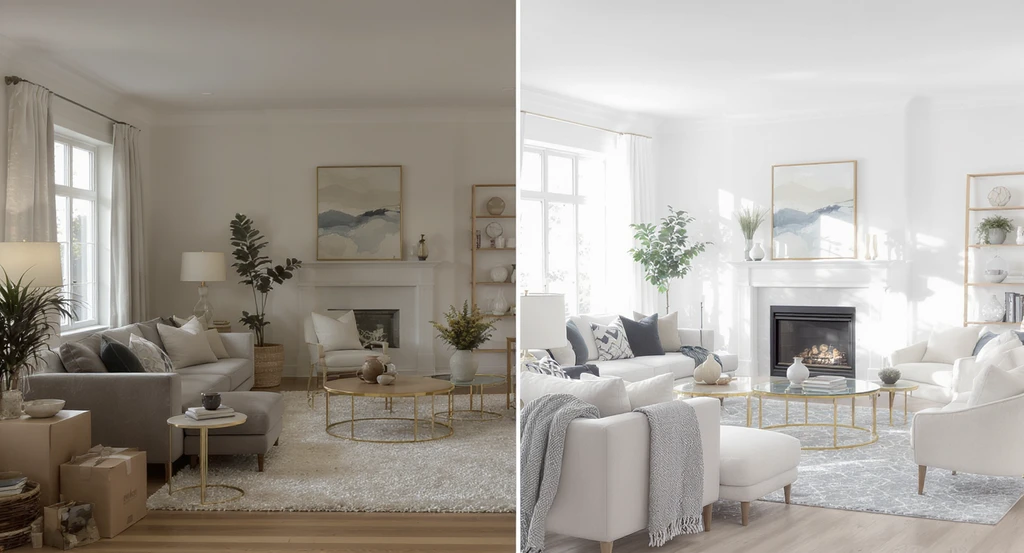
Split-screen visual contrasts virtual staging vs physical staging for home selling, offering a clear cost comparison of virtual and physical staging in 2026.
Physical staging for a standard 3-bedroom home now averages $4,000 to $8,000 for about two months, sometimes far more in major cities or luxury homes. There are setup fees, monthly rentals, and moving costs. By contrast, virtual staging typically runs $1 to $23 per image for AI-driven services, with full-house projects from professional vendors like Styldod costing under $200. That’s why so many agents are making the shift, as detailed in our virtual staging cost breakdown. For volume agents or teams, the cumulative annual savings are often tens of thousands of dollars. What this means: you get professionally styled listing visuals without a major hit to your marketing budget.
-
2. Turnaround Time: Virtual Gets You To Market Within Hours
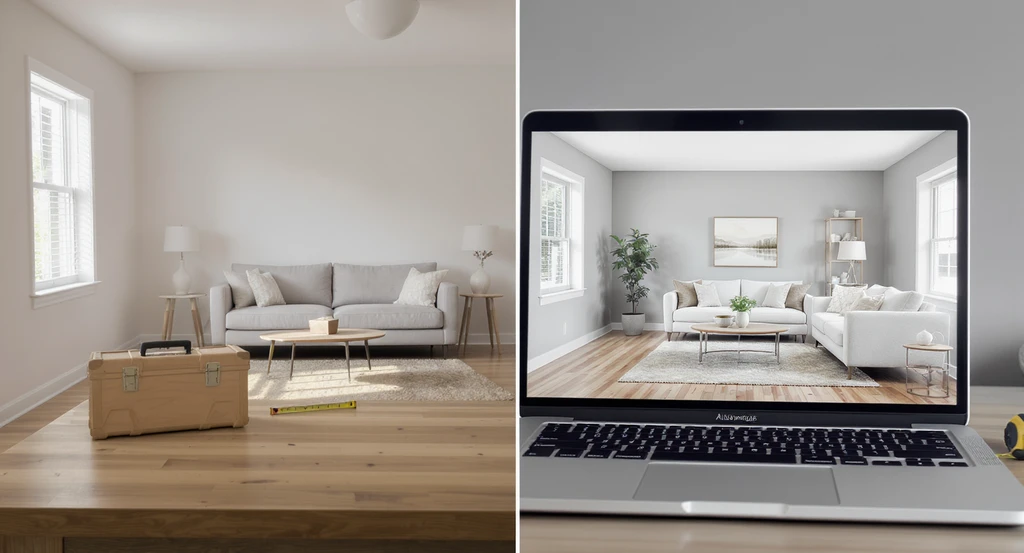
Virtual staging vs physical staging for home selling: Virtual staging software delivers furnished listing photos in minutes, highlighting faster turnaround, lower cost, and the best AI tools for home staging compared to traditional staging methods.
Physical staging typically requires 5 to 14 business days, sometimes longer if furniture is custom-ordered or schedules are tight. That means your listing launch might stall by a week or two. Virtual staging, especially through modern platforms, can deliver results in as little as 60 seconds using AI, or 24–48 hours with designer-led editing. Fast turnaround ensures you can respond quickly to market shifts or competition. As we explored in The Ultimate Guide to Virtual Staging in 2026, this speed lets sellers move fast and capture early buyer attention.
-
3. Online Buyer Engagement: Both Deliver Results, But Staging Is Essential
Both staged methods dramatically increase online performance. Staged properties (virtual or physical) sell 73% faster and at up to 5% higher prices than empty homes. Listings with styled photos see 70–90% more clicks and up to 70% longer buyer engagement. The magic isn’t in the method alone, it’s in showing believable, emotionally appealing spaces. Multiple studies, highlighted in our virtual staging ROI breakdown, confirm that buyers gravitate to listings where they can visualize themselves living comfortably.
-
4. Impact on In-Person Showings: Physical Staging Still Wins for Luxury

Physical staging in luxury homes offers tactile experiences, authentic textures, and spatial clarity—key advantages over virtual staging for high-value buyers.
No virtual photo can replace the tactile, lifestyle-driven experience of touring a house full of beautiful real furniture, especially on homes above $1M or in highly competitive markets. Physical staging lets high-value buyers experience textures, lighting effects, and real-life spatial flow, creating a powerful emotional connection during walkthroughs. If your typical buyer will visit the property in person, especially in the luxury bracket, traditional staging is harder to replace. However, for mid-market or investor-focused properties that sell largely online, virtual staging covers all the online bases at a tiny fraction of the cost.
-
5. Flexibility: Virtual Allows Multiple Styles, Instantly
Physical staging gives you one look, after furniture is installed, it remains set until the home sells or you pay for a redesign. Virtual staging lets you show a living room in three different styles (mod, traditional, or family-friendly) all with the same base image. This increases your reach to different buyer tastes and allows you to test which styles generate the most interest, as discussed in our side-by-side staging comparison.
-
6. Renovation Visualization: Virtual Staging Sells Possibilities
Unlike physical staging, which shows only existing space, virtual staging can demonstrate what a room could look like after updates, new flooring, wall colors, a modern kitchen, or open floor plans. This helps buyers dream and see potential before committing to renovations, often leading to a stronger offer. For older or awkwardly finished homes, virtual staging reduces renovation fears and highlights what’s possible at almost zero additional cost.
-
7. Hybrid Approaches: Best of Both Worlds for High-Value Listings
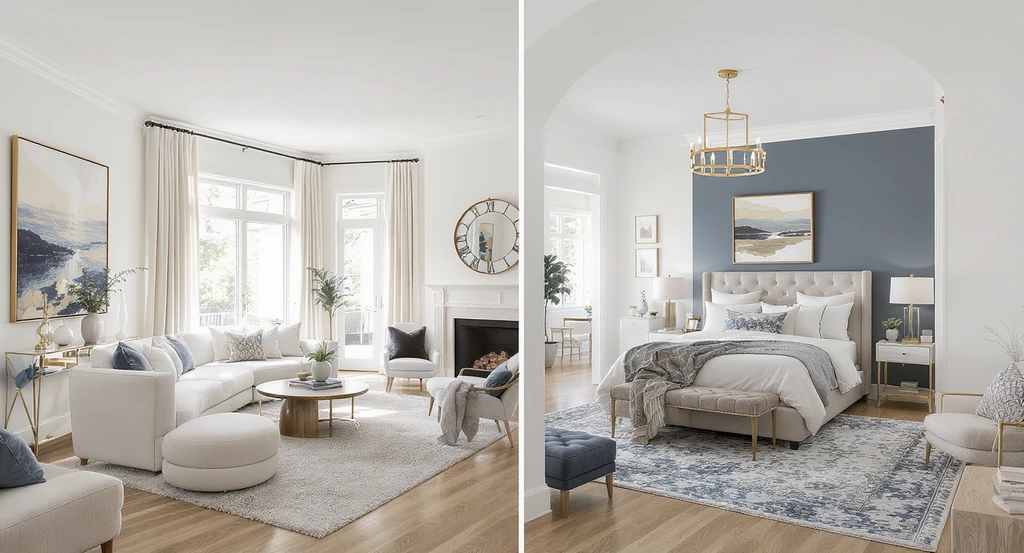
A hybrid approach shows physically staged main rooms and virtually staged secondary rooms, illustrating virtual staging vs physical staging for home selling, cost comparison, and how the best AI tools for home staging optimize appeal for high-value listings.
Many leading agents now mix the two approaches: stage main rooms (like living rooms and primary suites) physically for showings, while using virtual staging for secondary rooms and vacant spaces online. This hybrid method cuts physical staging costs by thousands and maximizes in-person appeal where it matters. As our breakdown of virtual vs physical staging explains, this strategy works best for premium homes and top-tier competition.
-
8. Compliance and Trust: Virtual Staging Must Disclose Edits
MLS rules require that all virtually staged images are labeled "Virtually Staged" and include at least one original, unedited photo per room. Platforms like Styldod handle this automatically to keep your listing compliant and transparent. Buyers, especially in digital-first markets, trust transparent presentation and appreciate clarity. This avoids surprises during showings and builds visual trust, a huge factor in whether buyers convert.
Frequently Asked Questions
Yes. For most listings, virtual staging generates similar online engagement and sale price improvements at a fraction of the cost (see our ROI analysis).
How much can I save by choosing virtual staging?
You typically save 95–99% on staging costs compared to physical methods. Annual savings can reach tens of thousands for active agents (read the full breakdown).
Do buyers care if a home was virtually staged?
Buyers care that visuals are realistic and spaces feel inviting. Virtual staging that looks authentic earns buyer trust, especially when clearly disclosed.
When should I choose physical staging over virtual?
For luxury homes ($1M+), competitive in-person markets, or unique spaces, physical staging adds value. For fast, flexible, or budget-friendly listing prep, virtual wins.
How do I comply with MLS rules for virtual staging?
All virtually staged images must be clearly labeled. Add at least one original photo per room. Styldod provides automatic compliance labeling.
Bottom Line: Choose the Approach That Fits Your Value and Timeline
Virtual staging isn’t just a shortcut, it’s now the most practical and scalable option for most sellers and agents, especially under $1M. Physical staging still has its place, particularly for luxury and in-person experiences. But for fast, affordable, and flexible presentation that gets properties sold, virtual is the clear winner. Want to explore options for your next listing? Start with a professional virtual staging trial and see the results for yourself.