-
1. Human-Directed Videos Keep Viewers Engaged
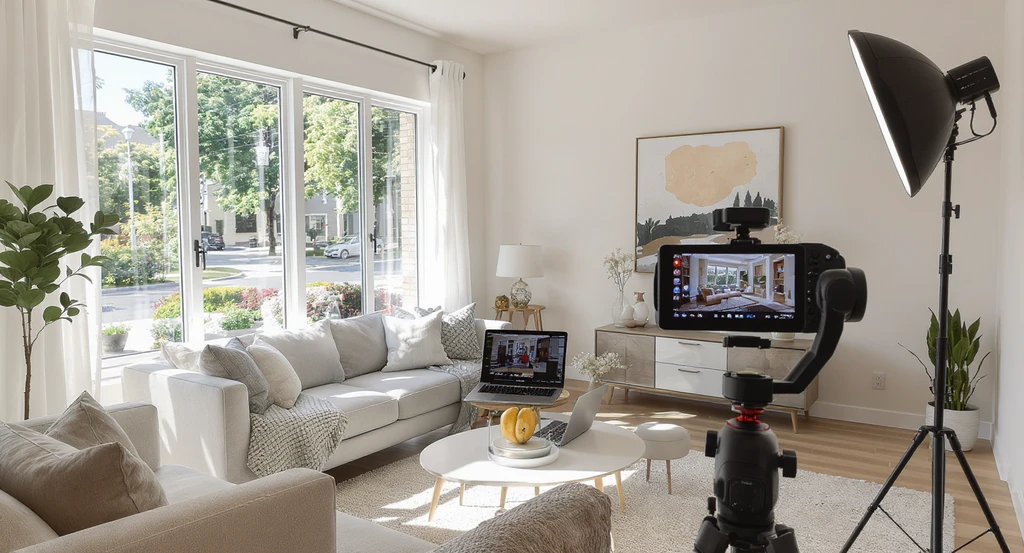
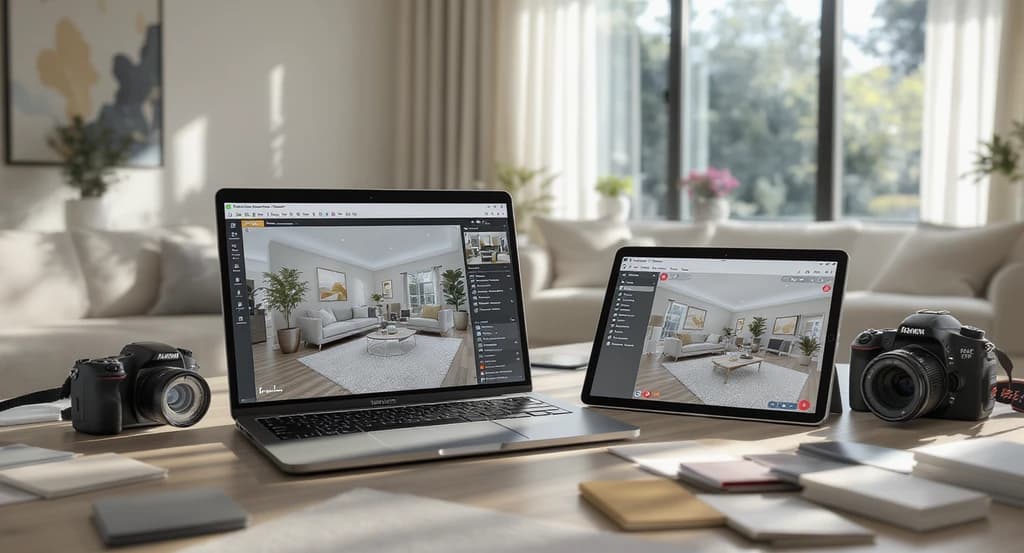
Curated living room scene prepared with AI-powered visualization and traditional tools, showing how to create engaging virtual tours and videos for real estate in 2026.
Short-form videos, on TikTok, Instagram Reels, or YouTube Shorts, now drive most buyer discovery in 2026. But the highest-performing real estate videos are never generic. Human storytellers know which features, angles, and moments to prioritize. They understand the impact of framing, authentic voice, and neighborhood context, and how to hook attention in the first three seconds.
That’s why skilled creators plan videos for buyer psychology, balancing excitement with trust. They choose relatable scenes, like prepping for showings or highlighting walkability, not just technical pans. This approach keeps people watching longer, leading to more qualified inquiries, as shown in our discussion on how to maximize engagement with video length and content. If your videos feel robotic or overproduced, buyers tune out. Human-guided editing ensures your listing stands out, and feels real.
-
2. Expert-Designed Virtual Tours Feel Believable
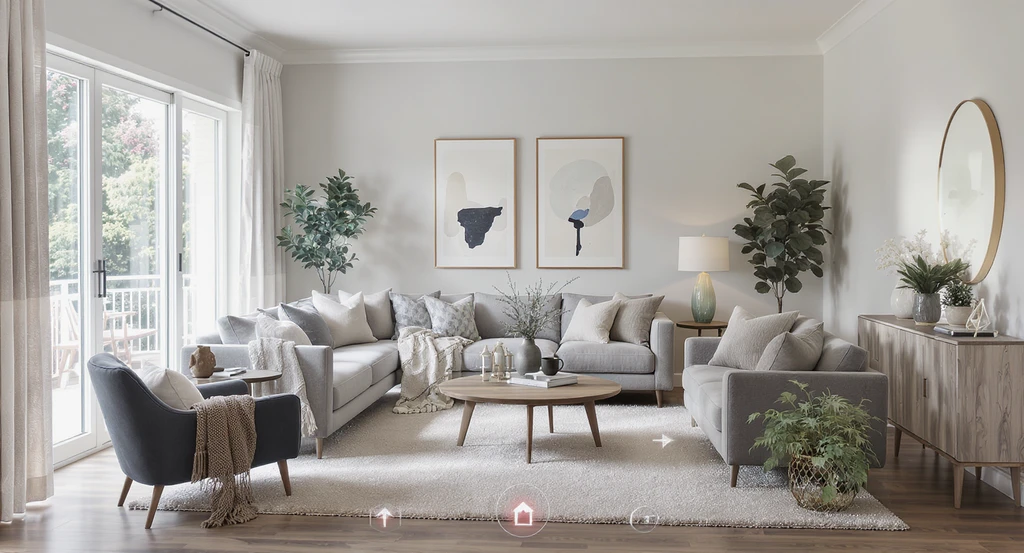
A photorealistic living room staged with best AI interior design software 2026, demonstrating how to create virtual tours with AI. Unlike automated setups, expert editing in ai-powered home design visualization tools ensures believable flow, precise lighting, and immersive detail—illustrating why human expertise adds realism and makes using AI for virtual home staging more effective than traditional home design methods.
AI-generated 3D tours offer instant accessibility, but believable virtual walkthroughs require thoughtful staging, accurate flow, and attention to lighting and detail. Experienced editors spot and correct distracting shadows, misplaced furniture, or unrealistic scale, issues that automated tools often miss.
Buyers rely on these immersive tours to understand space and connect emotionally. When a tour feels visually balanced and navigates intuitively, buyer confidence grows. As explored in our guide to the benefits of virtual tours, expertly crafted virtual experiences keep prospects exploring longer and greatly increase listing performance. Human oversight ensures each room tells a story and no detail breaks the sense of reality.
-
3. Real Editors Notice Small Flaws That Undermine Trust
Compare how ai-powered home design visualization tools versus traditional home design methods impact virtual home staging. Human editors using the best ai interior design software 2026 can fix ai-made flaws, building trust for virtual tours created with ai.
Automated editing tools can quickly stage a room or fix lighting, but subtle mistakes, odd shadows, distorted proportions, or overlooked clutter, can make images look “off.” Even the smallest visual error reduces buyer trust or leaves viewers uneasy about a property.
Professional human editors have the trained eye to catch these issues. They spot inconsistencies in texture, window views, or color balance, ensuring that every photo feels natural and inviting rather than uncanny. As detailed in our 2026 virtual staging guide, this attention to refinement means buyers spend more time on your listing, and feel more confident reaching out.
-
4. Staging That Connects to Buyer Psychology and Space
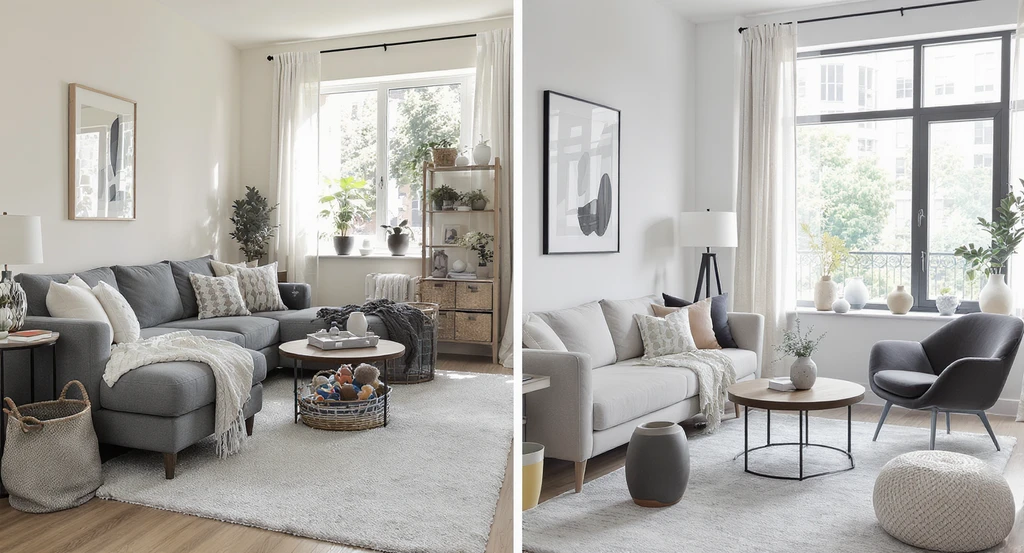
Comparing ai-powered home design visualization tools and traditional staging, this image highlights how to create virtual tours with ai and the role of human insight in using ai for virtual home staging in 2026.
Great staging is more than adding trendy furniture; it’s about telling the right story for your target buyer and showing how each room can actually be used. Human designers consider local trends, buyer demographics, and spatial flows to select styles that connect emotionally.
For example, a family home and a city studio need very different approaches, something automated staging tools can miss. The most effective rooms are staged with the scale, function, and usability of actual living in mind, which only happens with thoughtful human input. This creates visual trust and makes properties more memorable.
-
5. Ethical Compliance and Transparency
MLS and advertising platforms require clear disclosure for virtually staged or altered images. Human experts ensure that labels like “Virtually Staged” are visible and that at least one unedited photo is provided for each room, as reinforced in our guide on MLS best practices for virtual staging.
This honesty protects agent reputations and avoids buyer disappointment or legal risks. It’s not just about following rules, clear, up-front representation builds buyer trust and keeps your marketing compliant in a fast-changing digital marketplace.
-
6. Customization That Reflects Real-World Use
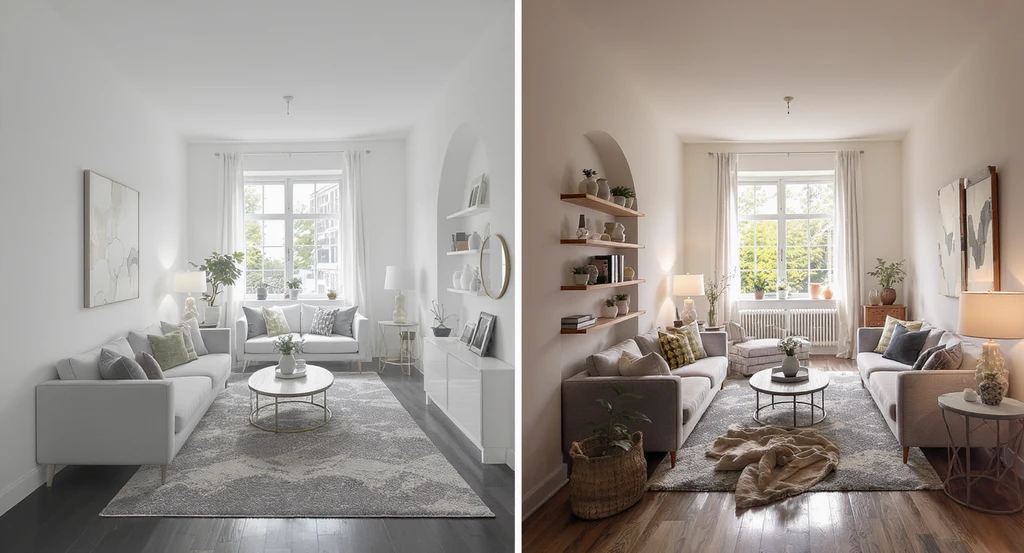
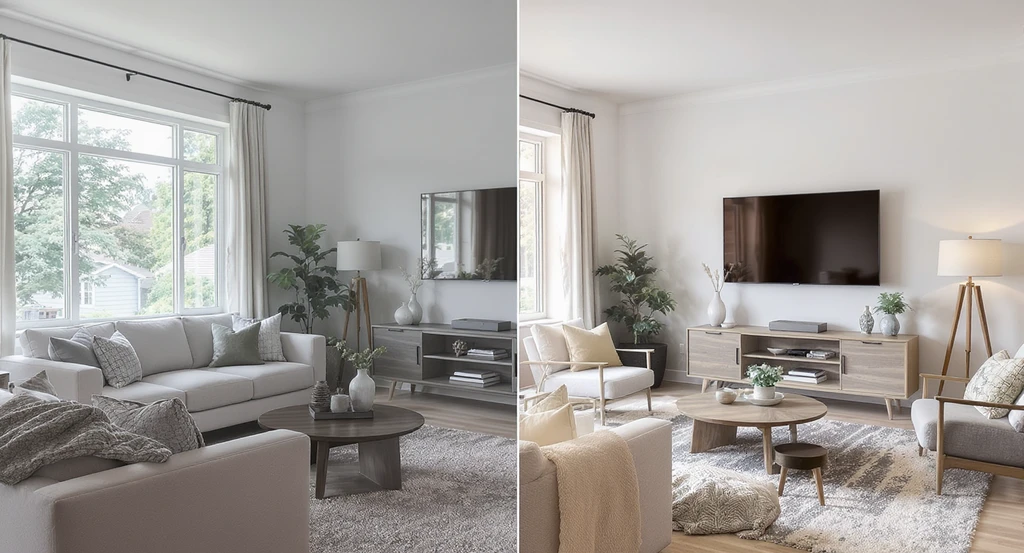
Side-by-side virtual staging of a long narrow living room using ai-powered home design visualization tools versus expert human customization. This clear example highlights how using ai for virtual home staging compares to traditional methods, especially for challenging spaces, revealing the value of tailored design in 2026.
AI-powered visual tools can create fast results, but they often apply the same design templates over and over, especially in high-volume listings. Human designers tailor visuals to highlight unique architectural features, correct awkward corners, and suggest real-world solutions (like optimal furniture arrangement for long narrow rooms).
This custom touch creates memorable, believable interiors that stand out from repetitive, AI-staged listings. As we explored in our 2026 staging best practices, customization is key for homeowners, agents, and property marketers who want their listings to perform and convert.
-
7. Reliable Quality Control and Fewer Revisions
With human touchpoints throughout the editing and staging process, there’s less back-and-forth, clearer communication, and more consistent results. Real experts catch issues before they’re published and provide context if something can’t or shouldn’t be changed (such as permanent architectural features).
That consistency is the reason clients return to expert services. The result? Faster project turnaround, fewer costly mistakes, and listing visuals that inspire trust, every time.
Frequently Asked Questions
- Is AI virtual staging realistic enough for MLS listings?
Yes—if paired with expert editing and proper disclosures. See our guide on MLS image rules for details. - How do human editors improve 3D tour quality?
They refine flow, lighting, and realism so virtual tours feel inviting, not uncanny. - What if I want multiple design styles for one space?
Professional services can customize visuals to suit different buyer types or needs—much more flexibly than most AI tools. - Does expert input matter on lower-priced homes?
Absolutely. Buyers at every price point respond to believable, thoughtfully staged visuals. - What should I disclose with virtual or AI-altered images?
Always label modified images and show at least one original, per MLS best practices as detailed here. - Why do clients return to Styldod’s expert services?
Consistency, realistic results, careful attention to detail, and fewer frustrating surprises.
The Bottom Line: Human Touch + Smart Tech Win in 2026
No matter how advanced AI becomes, real estate buyers and sellers respond to visuals that feel authentic, practical, and aspirational. Human designers and editors use their judgment to build this sense of realism and trust, grounding every photo, tour, and rendering in real-world experience.
Combining next-gen media tools with professional expertise leads to better listing performance, higher buyer confidence, and smoother client experiences. Whether you’re a realtor, homeowner, builder, or interior designer, including expert review and input into your visual workflow is the smartest way to present your property in today’s competitive market.