
TL;DR
AI agents help reduce buyer drop-off in real estate by simplifying decision-making, responding faster, and providing clearer, more realistic listing visuals. They do not replace the need for trustworthy representation or human expertise but make the process easier and more emotionally comfortable, reducing the small confusions that lead to lost opportunities.
Direct Answer

Consistent, high-quality listing photos and interactive previews reduce buyer drop-off in real estate listings by boosting confidence. Discover how AI agents improve listing conversion with smarter, more trustworthy visuals.
AI agents help reduce buyer drop-off by removing small moments of confusion that quietly push buyers away during the property search process. Fast replies, clear listing visuals, realistic previews, and guided communication help buyers feel more confident while comparing homes online. In many cases, buyers do not leave because they dislike the property—they leave because the decision starts to feel too difficult or unclear.
What buyers see affects what they feel. What they feel determines whether they continue exploring or quietly click away.
-
Why Buyers Leave Listings Even When Interested
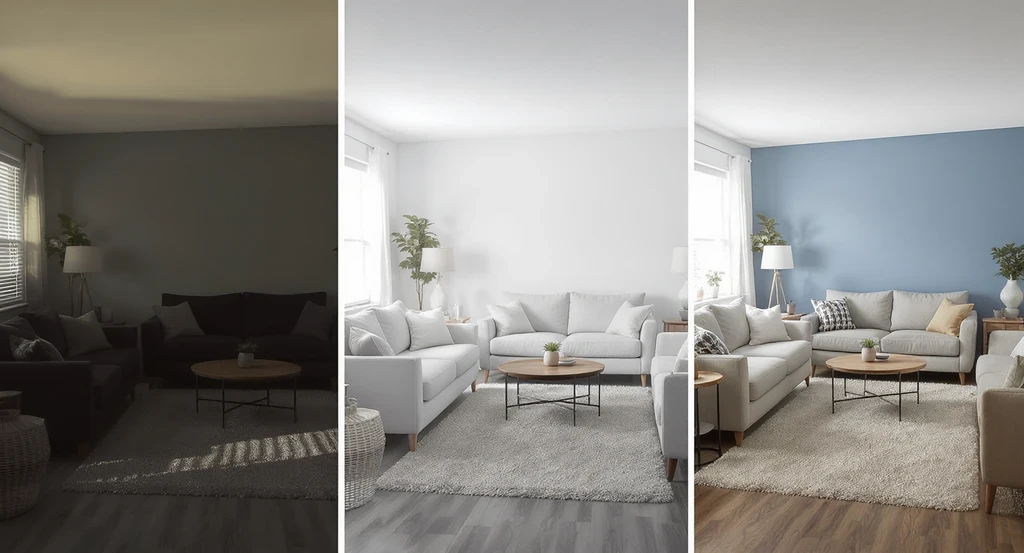
Inconsistent listing photos—showing the same room with different lighting and layout—are a common mistake that increases buyer hesitation. Boosting buyer trust with consistent, clear visuals is key to reducing buyer drop-off in real estate listings and increasing conversion rates.
Most buyers don’t instantly reject a property. Often they leave listings they genuinely liked, not because of a major flaw but due to a slow build-up of uncertainty. Questions like "Why does this room look different in every photo?", "Will this space feel too small in person?" or "Am I missing something?" start to erode confidence. This habit of comparing not just properties, but also which feels easier or safer to decide on, causes many listings to quietly lose momentum—especially when online visuals trigger doubt or require too much imagination, as we explored in our post on why over-edited listing photos reduce buyer confidence.
Expert Insight
One agent noticed that inquiries dropped by half whenever a listing had a mix of unedited, dark hallways and professionally staged living areas. After switching to consistent, AI-assisted staging and prompt responses, drop-off rates plummeted—and buyers started mentioning how 'easy' and 'clear' the process felt.
-
The Real Reason Buyer Drop-Off Happens
Many real estate professionals underestimate just how quickly buyer confidence wanes when listings demand too much mental effort. Today, most decisions happen online—buyers assess room size, renovation needs, furniture fit, and lighting through images alone. If a listing leaves visual questions unanswered, confidence decays quietly, a phenomenon we called the Visualization Gap. Empty spaces, inconsistent photos, heavy editing, or unclear layouts slowly make buyers feel less certain, even if they can’t always say why.
-
How AI Agents Actually Help Reduce Buyer Drop-Off

AI agents reduce buyer drop-off in real estate listings by instantly providing realistic visualizations and decision tools, boosting buyer trust and improving listing conversion.
- Faster, more responsive communication: AI agents answer questions instantly, share details quickly, and help schedule showings before a buyer’s momentum fades. Early clarity removes anxiety and helps buyers feel supported.
- Reducing the imagination burden: Buyers struggle to mentally visualize unfurnished spaces, odd angles, or renovation potential. AI-powered visual tools help bridge this gap—showing realistic staging, furnishing options, and redesign previews. The goal isn’t perfection—it’s creating confidence in what could be, as well as what is, as seen in our analysis of faster selling with AI visualization.
- Simplifying decisions: Too many choices or visuals that add confusion only increase hesitation. Helpful AI gently narrows the field, suggesting ideas that fit each buyer’s needs.
- Recognizing hesitation: AI can spot when buyers revisit the same images or spend longer on certain details, offering timely help, previews, or clarifications—reducing uncertainty without adding pressure.
-
Why Visual Trust Matters More Than Ever
As AI-generated media becomes common, buyers are more alert to authenticity and visual consistency. Over-edited or mismatched listing photos quietly increase buyer hesitation, as discussed in our guide to photo editing and buyer trust. Modern visuals must not only attract but also build trust, provide clarity, and help buyers realistically compare properties. Eventually, the strongest listings are ones that feel easiest to trust and understand at a glance.
-
Operational Gaps and the Need for Consistency
Listing performance doesn’t depend solely on technology. Even the best AI tools can’t compensate if a listing’s photos are out of date, visuals differ between websites, or communication feels fragmented. Consistency across images, platforms, and follow-up is crucial for maintaining visual confidence and reliable property marketing. Visualization gaps are rarely corrected by automation alone—they require process and proactive review, driving higher buyer trust and reduced drop-off.
-
Common Mistakes That Increase Buyer Drop-Off
- Overediting listing images: Unrealistic filters or enhancements cause buyers to question the listing’s honesty, as shown in our photo editing research.
- Treating AI like a chatbot: Helpful AI must connect with real buyer needs, not deliver canned, generic responses.
- Inconsistent media: One poorly staged or dark photo can lower trust in the rest of the listing, contributing to the visualization gaps that undermine engagement.
- Overwhelming buyers: Too many visual options without guidance intensify confusion.
- Lack of human oversight: The best results always combine technology with attentive, professional review and realistic presentation.
-
Where Expert Services and AI Work Best Together

Consistent, realistic visuals powered by AI agents and expert editing services help reduce buyer drop-off in real estate listings by boosting buyer trust and confidence. This approach demonstrates how AI agents improve listing conversion with reliable visual confidence strategies for real estate sales.
AI agents help speed up the process and make it more comfortable for the buyer—but real trust is built through consistent, thoughtfully executed visuals and attentive human input. Ecosystems like Styldod’s bridge this gap: REimagineHome.ai visualizes redesigns and staging; Smart Media Module organizes listing workflows and updates; Styldod Expert Services edit, enhance, and stage images to maintain realism and trust. This collaboration is often what separates reliable listings from those that quietly lose buyers to uncertainty.
Visualization Scenario
Imagine a buyer scrolling late at night. Listing A has a dark, empty bedroom and mismatched images, while Listing B has clear, consistently staged rooms and quick chat support to answer a question. The buyer naturally gravitates to Listing B—not because it’s a better home, but because it feels easier and safer to understand.
Frequently Asked Questions
- How do AI agents reduce buyer drop-off in real estate?
- AI agents help lower drop-off by speeding up replies, providing clearer guidance, and helping buyers visualize spaces more confidently, which lowers uncertainty during comparisons.
- Why do buyers leave listings they were initially interested in?
- Often, buyers leave because of subtle uncertainties, confusing visuals, unanswered questions, or inconsistent information rather than a lack of interest.
- What is Visual Confidence Decay?
- It's a gradual reduction in buyer certainty that occurs when a listing leaves visual questions unanswered, according to our breakdown of the visualization gap.
- Can inconsistent listing photos reduce buyer trust?
- Yes. As discussed in our guide, buyers often notice when photo style, quality, or lighting is inconsistent, which makes listings feel less trustworthy.
- How does virtual staging help buyers?
- Virtual staging shows how furniture fits, helps buyers picture daily life, and bridges the gap between empty space and real use. Learn how it speeds up sales in our research.
Key Takeaways
Most buyers don’t leave because they’ve lost all interest. They leave because the process slowly stops feeling clear or trustworthy—perhaps a room is hard to picture, a detail doesn’t add up, or a question goes unanswered. AI agents help when they remove obstacles and make the process simpler. But lasting buyer confidence comes from listings that stay realistic, visually clear, and gently guided by expertise at each step.


