TL;DR
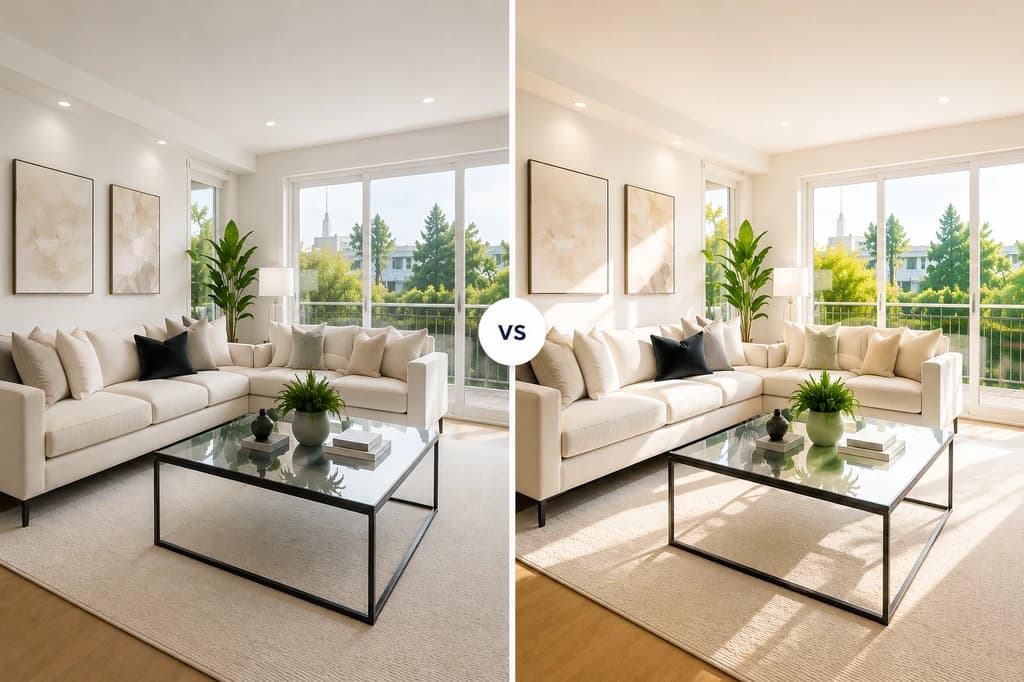
Over edited listing photos reduce buyer confidence when online visuals feel different from the real showing experience. Buyers quickly sense this mismatch, which weakens trust, emotional connection, and offer confidence. Clear and realistic visualization protects listing credibility and supports stronger buyer trust at scale.
Why the Real Issue in Listing Media Is Trust, Not Just Quality
Almost every listing photo today is edited, and that is not the problem. The issue starts when visuals feel too perfect or unrealistic. Buyers quickly sense when something feels off, which shifts them from imagining life in the home to questioning the listing itself. Strong listing media is no longer just about attention. It is about maintaining buyer trust from the first click to the showing.
-
Direct Answer: Why Over-Editing Reduces Buyer Trust
Over edited listing photos reduce buyer trust because buyers now use visuals to judge credibility, not just browse homes. When images feel unrealistic, buyers stop imagining life in the space and start questioning what may be hidden or exaggerated. Professional editing should improve clarity, not distort reality, because trust strongly affects showing performance and offer confidence.
Expert Insight
A Los Angeles agent once shared how a listing with heavily edited photos generated constant clicks and showings, yet buyers kept leaving within minutes. The digitally widened rooms and artificial lighting created expectations the real home could not match. The result was weaker emotional connection, lower buyer confidence, and ultimately a lower sale outcome.
-
Why It Matters: Confidence Drives Decisions
Why It Matters: Confidence Drives Decisions Image
How buyers react to unrealistic listing photos:
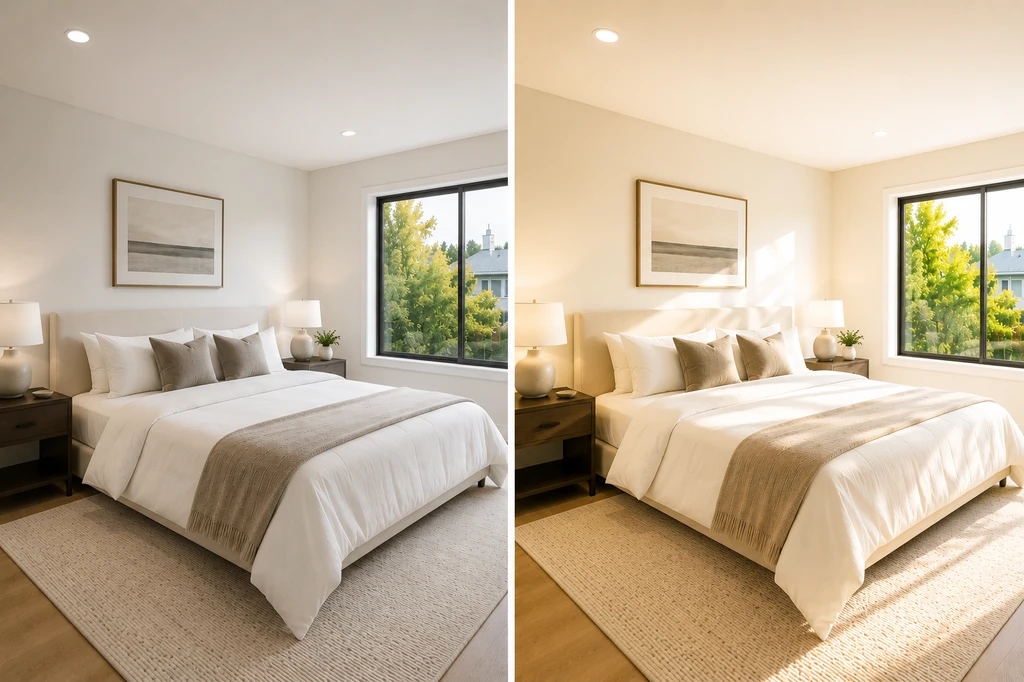
- ● Buyers rarely say photos were over edited, but they notice when rooms feel smaller or different in person.
- ● That feeling of something being off weakens emotional connection and offer confidence.
- ● Today’s buyers increasingly expect realistic listing visuals and scrutinize media more carefully.
- ● What buyers see in a listing strongly shapes what they feel and ultimately decide.
Learn more in our California MLS altered image guide.
-
The Visualization Gap: Why Buyers Struggle with Over-Editing
How over edited visuals increase buyer hesitation:
- ● Empty rooms may feel unclear, but unrealistic edits create even more doubt.
- ● Buyers begin questioning room size, layout, lighting, and overall accuracy.
- ● This creates a visualization gap where buyers struggle to picture real day to day living.
- ● Uncertainty slows decisions and often prevents buyers from making offers at all.
In today’s AI driven visual world, buyers increasingly hesitate when listing media feels disconnected from reality.
-
How Over-Editing Damages Showings: A Practical Breakdown
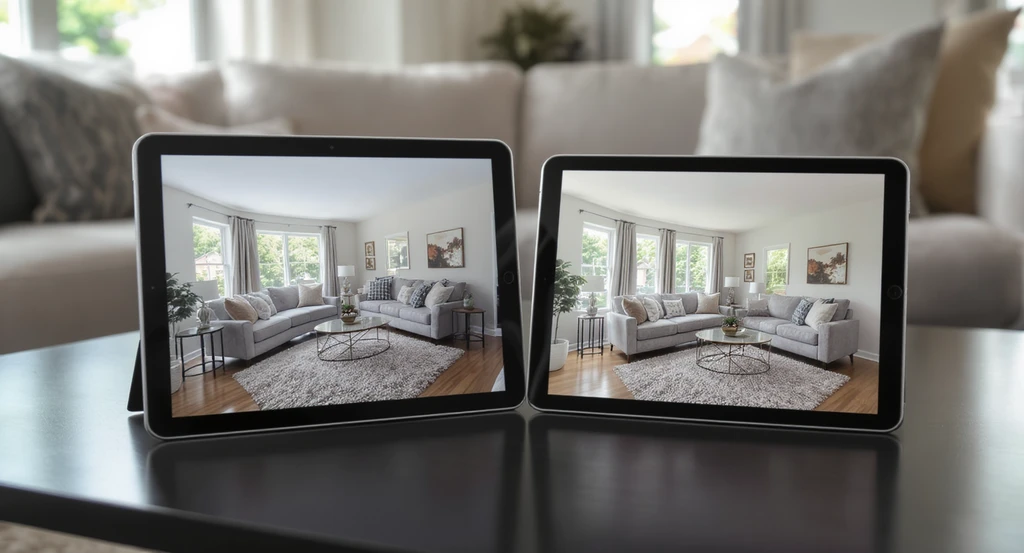
Comparing over-edited AI listing photos with authentic real estate images highlights how visual mismatches affect buyer trust and showings.
What usually happens when listing photos create unrealistic expectations:
- ● Bright and overly wide listing photos may attract more clicks and saves online.
- ● During showings, buyers often reopen listing photos to compare room size, lighting, and condition.
- ● When reality feels different, buyers become less emotionally connected and move through the showing faster.
- ● Instead of imagining life in the home, buyers begin questioning what may have been hidden.
- ● Offer confidence weakens, and many listings quietly lose momentum.
This gap between online presentation and in person experience is often subtle, but small moments of doubt can strongly affect buyer trust and days on market. Read more in our guide on how to avoid over editing real estate photos.
-
A Framework: The Visual Integrity Continuum
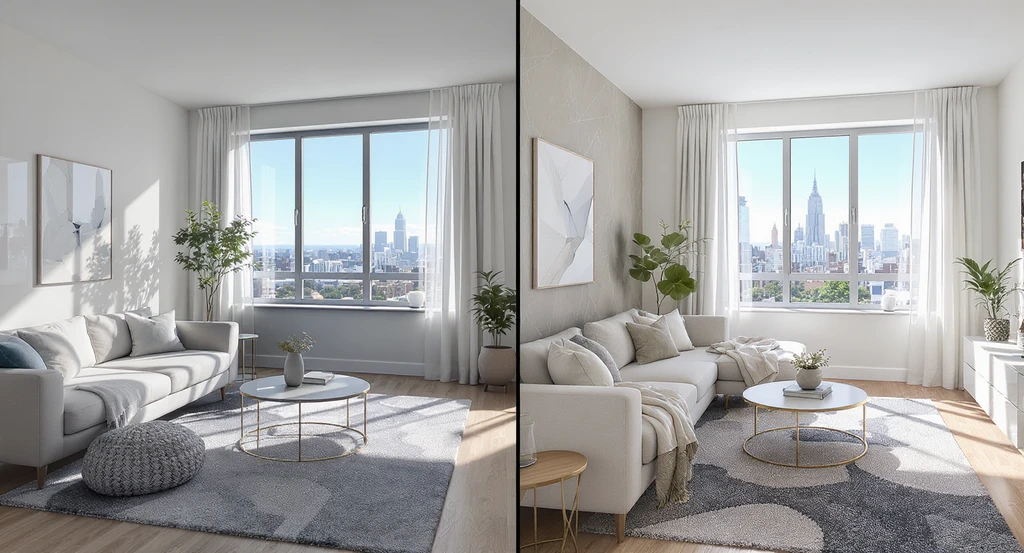
A direct comparison of safe versus risky AI edits in listing photos highlights the ethical use of AI and how over-edited images can undermine real estate buyer trust and reduce confidence.
To help separate helpful enhancement from misleading editing, think of listing media as a visual integrity continuum. Edits that improve clarity and spatial understanding are usually safe. Edits that change reality often reduce buyer trust.
Safe Practices Why It Helps Exposure Correction Makes details easier to see Color Balancing Shows realistic tones Vertical Line Correction Prevents visual distortion Removing Temporary Clutter Improves visual focus Realistic Sky Replacement Restores natural ambiance Risky Practices Why It Hurts Room Widening Creates expectation mismatch Removing Permanent Defects Feels visually dishonest Altering Location or Views Breaks trust during showings Unrealistic Virtual Staging Misleads buyers about functionality Safe practices improve clarity and buyer comfort. Risky practices create visual trust debt, where buyers must emotionally correct unrealistic expectations during the showing. Read more in our guide on MLS AI photo compliance rules.
-
Real-World Constraints: Where Idealism Meets Reality
Editing happens under real world pressures like tight budgets, local design preferences, uneven listing quality, and fast moving media workflows. For brokerages and large teams, even one heavily edited listing can damage long term buyer trust and brand credibility.
MLS disclosure and compliance rules also vary by state, making realistic representation increasingly important. See our California AB 723 guide for more context.
That is why standardized editing workflows are becoming essential for operational consistency, compliance readiness, and buyer confidence at scale.
-
Practical Guidance: How to Edit for Trust and Performance
What works best? Here’s what high performing listing teams consistently prioritize:
- ● Ask whether buyers will feel misled during the showing. Edit to explain, not just impress.
- ● Prioritize emotional accuracy over short term online engagement.
- ● Keep room proportions realistic and avoid extreme wide angle distortion.
- ● Clearly disclose virtual staging and separate real elements from conceptual visuals.
- ● Standardize media workflows across teams and high volume brokerage operations.
Mistakes that quietly damage buyer trust:
- ● Over saturating colors and lighting
- ● Erasing permanent defects or property features
- ● Hiding environmental realities such as nearby buildings or blocked views
Strong listing media is not only creative output. It is operational infrastructure that must scale consistently while preserving buyer trust and emotional clarity across every showing experience.
-
The Styldod Perspective: Listing Media as Decision Support, Not Decoration
At Styldod, listing media is treated as decision support, not just attention grabbing content. Tools like REimagineHome.ai help buyers visualize redesigns, layouts, and furnishing possibilities realistically.
For larger teams and brokerages, the Smart Media Module supports consistent workflows, compliance readiness, and visual integrity across listing portfolios.
Clear editing, transparent disclosure, and consistent media standards help buyers trust what they see and make decisions with greater confidence.
-
Compliance and Trust: Navigating MLS and Disclosure
Stricter MLS rules are placing more attention on how listing photos are edited and disclosed. Agents now need to understand which edits improve clarity and which may create compliance or trust risks.
As explained in our guides on MLS AI photo compliance and California disclosure requirements, transparent editing and audit ready workflows are becoming essential for long term listing credibility.
Visualization Scenario
Picture this: a buyer sees a listing online with airy, sundrenched rooms and crisp, clean finishes. But during the showing, the rooms are noticeably tighter and the natural light is much dimmer. The buyer, instead of planning where to put their couch, pulls up the online photos on their phone, comparing every detail. Suddenly, the emotional warmth is gone. They leave, the decision is already made.
Frequently Asked Questions: Over-Editing and Buyer Confidence
-
Why do over edited listing photos reduce buyer trust?
Buyers notice when the home feels different in person, which reduces confidence and emotional connection. -
What is visual trust debt in real estate listings?
It is the loss of confidence buyers feel when listing photos exaggerate reality. -
Do professionally edited photos improve listing performance?
Yes. Ethical editing improves clarity and engagement without misleading buyers. -
What kinds of edits can break MLS compliance?
Removing defects, changing room size, or hiding permanent features can create compliance and trust issues. -
Why do buyers check listing photos during showings?
Buyers compare the online images with the actual property to verify accuracy. -
Is virtual staging allowed?
Yes. Virtual staging is acceptable when clearly disclosed and realistically presented. -
Why are buyers more skeptical today?
Social media, AI visuals, and over polished listings have increased buyer sensitivity to unrealistic images. -
How can agents balance editing and trust?
Focus on realistic edits, honest proportions, and transparent staging disclosures.
Takeaway: True Listing Value Is Built on Trust, Not Just Attention
Beautiful listing photos only work when buyers trust what they see. Over editing does not just weaken offers. It weakens confidence in the entire buying experience. Strong listing media should help buyers make emotionally honest decisions through clear, realistic, and trustworthy visuals. The future belongs to agents and teams that treat media as scalable decision infrastructure built on consistency, clarity, and trust.


