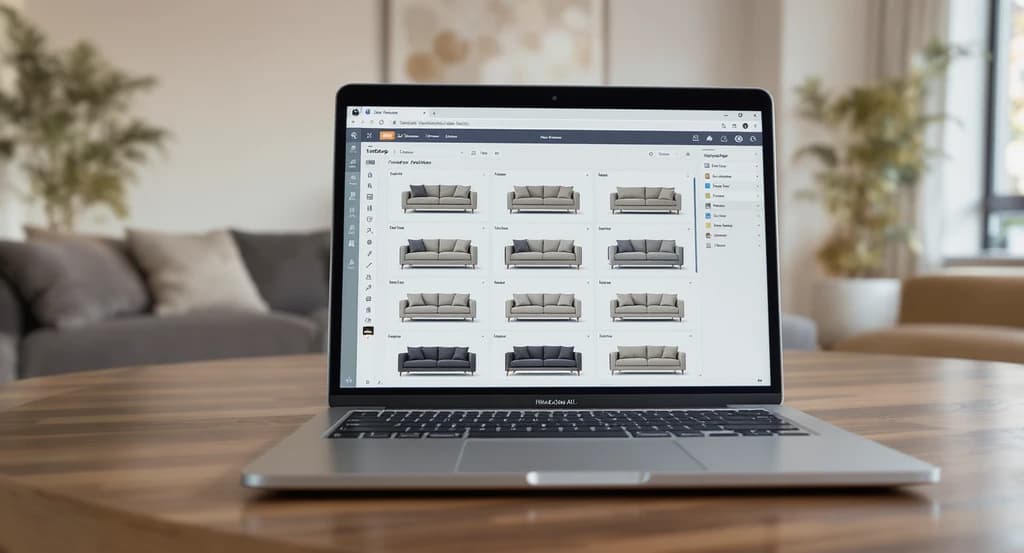
TL;DR
Can AI help you decide what furniture to buy? Yes, because AI no longer just recommends products, it shows what furniture will actually look and feel like inside your room before you buy it. Instead of relying on catalog photos or imagination, buyers can now preview sofas, beds, dining tables, and layouts inside their own spaces with realistic scale, lighting, and placement. The result is faster decisions, fewer mistakes, and greater confidence before spending money.
Why Furniture Buying Feels Risky, And How Visualization Changes the Equation
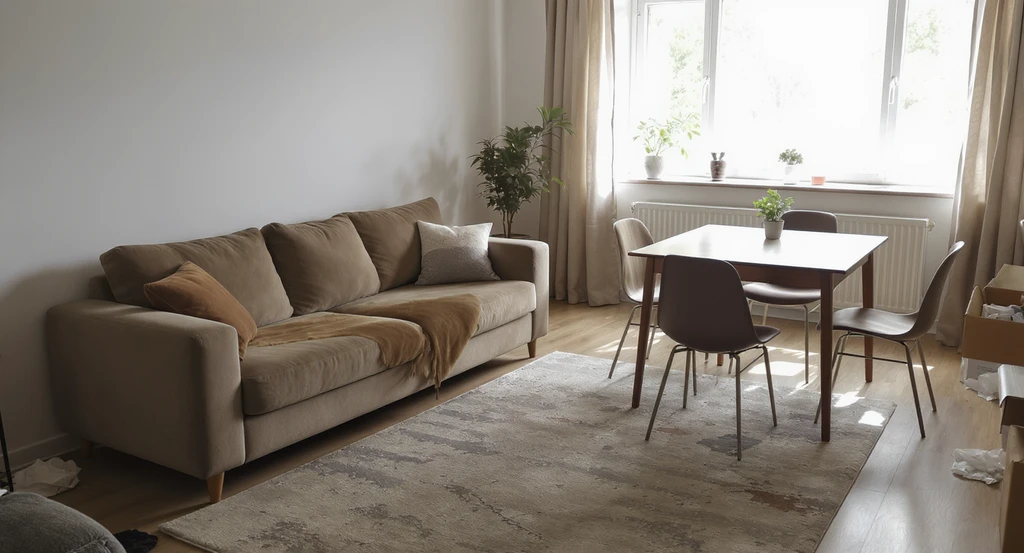
Many homeowners struggle to judge furniture fit and style from catalog photos alone—ai visualization for furniture shopping and home design tools let buyers preview and plan real room layouts before purchasing, reducing mismatches and clutter.
Most furniture mistakes happen before checkout, not after delivery. Buyers often choose pieces they love online only to discover they overwhelm the room, block movement, or feel completely different once placed at home.
Items that look perfect online can feel very different in real spaces. Colors appear different under home lighting, oversized furniture shrinks walking areas, and rooms can quickly feel crowded. Human imagination simply isn’t reliable for predicting scale, spacing, or visual balance.
AI visualization changes this process by allowing buyers to preview furniture inside their own room before purchasing. Instead of relying on catalog images alone, people can see how pieces fit alongside existing layouts, lighting, and decor. As explained in our breakdown of how AI room design tools work, AI helps make spatial decisions clearer.
Why Furniture Shopping Changed in 2026
For years, uncertainty was considered a normal part of furniture shopping. That changed once AI made room-specific previews possible. Buyers no longer rely only on showroom images, they want proof that furniture works inside their own space before purchasing.
-
Why Choosing Furniture Creates So Much Decision Friction
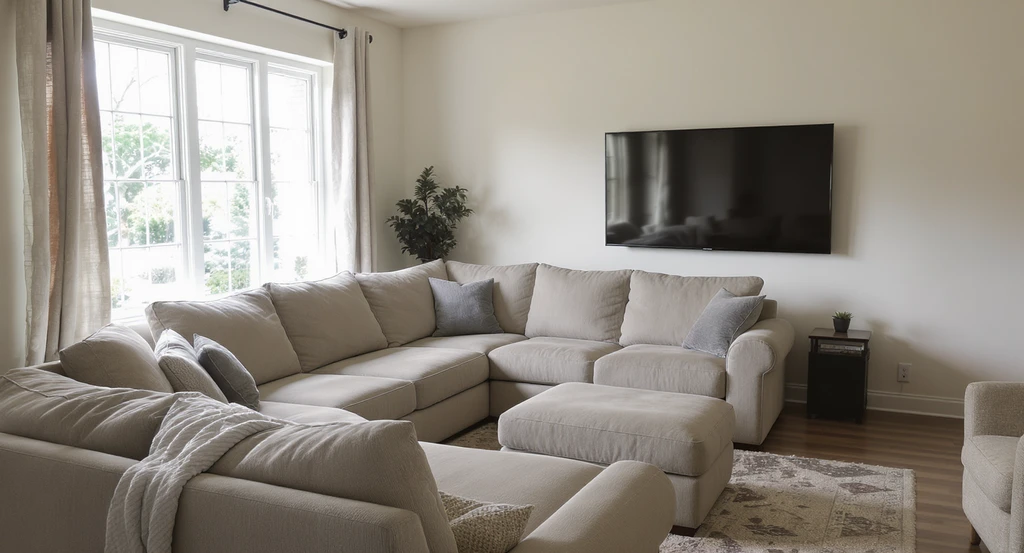
See how AI home design tools for homeowners improve room layout planning by previewing furniture in your room before buying, reducing costly mistakes.
Furniture selection isn’t only about choosing what looks good on screen, it’s about making sure it works within the realities of a space. A large sectional may seem perfect online but can reduce walking space, block sightlines, or visually overwhelm a room. Traditional shopping forces buyers to rely on measurements, size charts, and guesswork to predict the outcome.
Humans are naturally poor at estimating scale, spacing, and visual balance from isolated product images. A sofa may appear perfect online but feel dramatically different once placed within real room dimensions.This often leads to costly mistakes: oversized sofas, crowded layouts, or colors that feel different under real lighting. Buyers also struggle to predict how one new piece may affect the balance of an entire room. AI visualization helps remove this uncertainty by providing instant room-specific previews before making a purchase.
Expert Insight
A homeowner narrowed her search to three sofas that looked nearly identical online. After uploading her living room photo, AI previews revealed that one blocked natural walking paths, one overwhelmed the room visually, and only one maintained openness and balance. The decision took minutes instead of weeks of uncertainty.
-
What Is AI Visualization in Furniture Shopping?
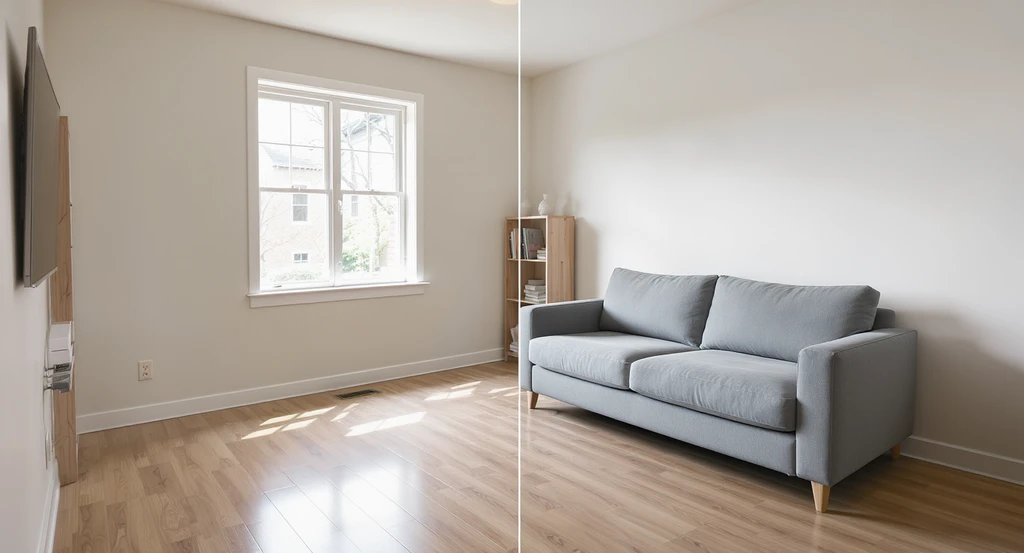
AI visualization for furniture shopping lets homeowners preview furniture in their actual rooms, improving layout planning and matching furniture styles.
AI visualization uses artificial intelligence to place furniture digitally inside photos of your actual room. Instead of relying on product photos alone, buyers can preview sofas, beds, or dining sets with realistic scale, perspective, and lighting. As explained in our guide to AI interior design, these tools recognize room structure, spatial relationships, and style consistency to create more accurate previews.
This removes the need to repeatedly compare dimensions or imagine outcomes. Buyers can instantly understand how furniture affects room flow, visual balance, and openness before making a purchase.
Traditional Furniture Buying vs AI Visualization
Traditional Furniture Shopping AI Visualization Shopping Measure room manually Upload a room photo Open multiple product tabs Preview furniture instantly Guess scale from dimensions See realistic size and placement Imagine furniture placement Compare layouts visually Hope it works after delivery Purchase with confidence This shift replaces imagination with validation, helping buyers make faster and more confident furniture decisions.
-
Practical Ways AI Improves Furniture Selection
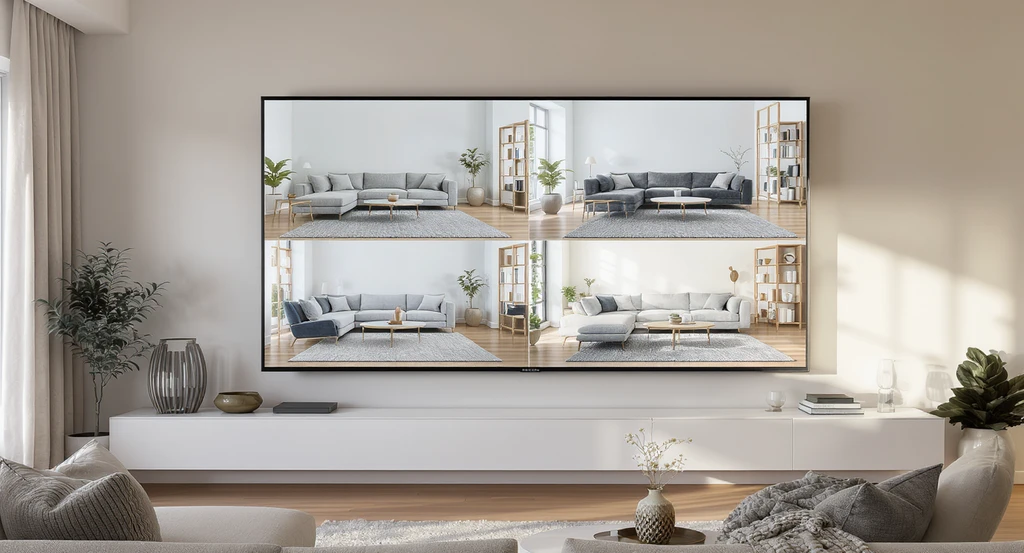
AI visualization for furniture shopping enables homeowners to preview furniture in their room, compare layouts, and find matching styles. See how AI home design tools improve room layout planning by exposing fit, scale, and design consistency before buying.
Rather than simply helping people "see furniture," AI solves five invisible problems that repeatedly cause buying mistakes:
- Previewing Placement: Compare sectional versus straight sofas, round versus rectangular tables, or accent chairs beside existing decor. Visual previews expose what fits, not just what looks good in a catalog.
- Evaluating Scale: AI highlights walking clearances, spacing between items, and how new furniture impacts room openness. This reduces oversize errors and ignores optical illusions caused by wide-angle lens product photography.
- Style Consistency: AI recognizes major design trends (e.g., Japandi, Scandinavian, mid-century) and suggests pieces that blend, instead of clash, with what’s already present.
- Optimizing Layout: Visual tools allow users to test several possible arrangements in minutes, something almost impossible with traditional trial and error. This exposes solutions for odd-shaped rooms or awkward circulation patterns.
- Reducing Returns: When buyers know what to expect, disappointment declines and costly returns become less frequent, for both consumers and retailers.
-
How Visualization Reduces Psychological Guesswork
Much of the stress in furniture shopping comes from uncertainty. Furniture is a high-friction category because buyers must evaluate size, style compatibility, comfort, and long-term use all at once. Questions quickly arise: Will this fit? Will it match? Will it improve the room, or disrupt the flow?
AI visualization reduces this uncertainty by replacing assumptions with visible outcomes. Instead of relying on imagination or interpreting measurements, buyers can see room-specific previews that turn abstract decisions into visual evidence.
This psychological shift increases confidence, reduces regret, and removes friction from the buying process. As covered in our overview of the future of AI interior design, clarity, not automation, is the real benefit. Visualization helps close the gap between expectation and reality.
-
Limits and Cautions: Where AI Visualization Still Depends on Human Judgement
AI visualization solves many spatial decision challenges, but it cannot replace personal experience. It can’t determine how comfortable a chair feels, predict how fabric will age, or evaluate texture and material quality. Factors like cushion firmness and tactile comfort still benefit from in-person evaluation.
Accurate previews also depend on quality room photos and correct dimensions. While AI can improve decisions around layout, scale, and visual fit, personal preferences and everyday usability still require human judgment.
The best outcomes come from combining AI’s ability to preview furniture arrangements with an understanding of your own comfort needs, lifestyle, and daily habits.
-
What the AI-Driven Future of Furniture Shopping Looks Like
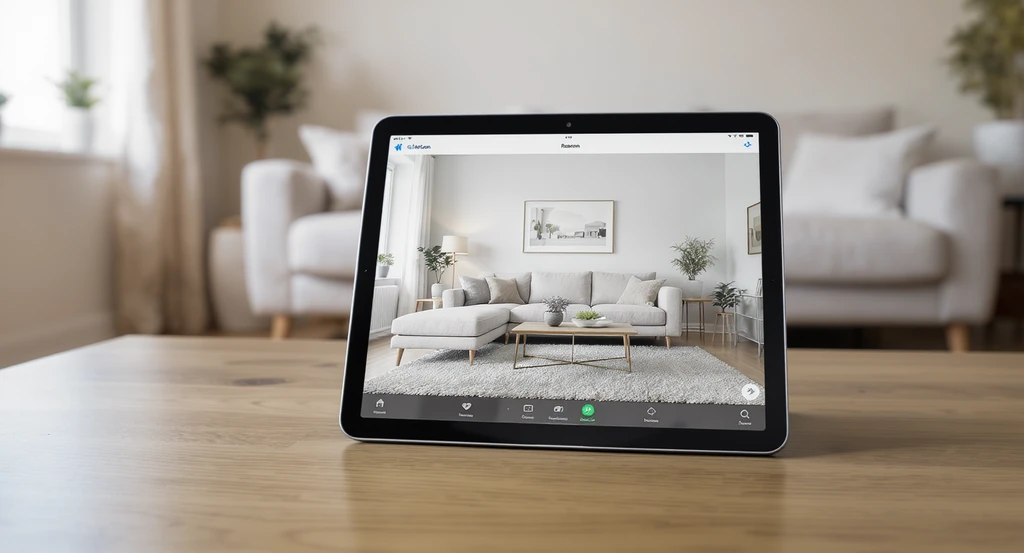
See how AI visualization for furniture shopping helps homeowners preview furniture in your room, improving layout planning and recommending matching styles instantly.
The next stage of furniture shopping may remove browsing altogether. Instead of scrolling through endless product pages, buyers could upload a room photo and instantly receive recommendations filtered by style, budget, room dimensions, lighting conditions, and existing decor. Shopping shifts from searching to visual validation.
Each recommendation can include a realistic room preview, making decisions faster and easier. Traditional showroom visits and manual comparisons may gradually evolve into a simpler process: upload, visualize, validate, purchase. This approach reduces time, uncertainty, and decision fatigue.
If you want to see how AI-powered visualization can support your next furnishing decision, platforms like ReimagineHome offer room-specific previews that turn imagination into confidence.
Visualization Scenario
Imagine uploading a photo of your living room, selecting three different sofas, and immediately seeing each one placed inside your space to scale, complete with accurate shadows, perspective, and color in your real lighting. Suddenly, choosing feels obvious, and you know in advance whether each sofa fits or overwhelms.
Frequently Asked Questions About AI in Furniture Shopping
- Can AI tell me which sofa will fit best?
- AI can provide realistic visual previews by analyzing your room’s size and the sofa’s dimensions. It shows how well furniture fits your specific space so you can judge walking flow and proportion before purchase.
- Does AI replace the need for interior designers?
- No. AI supports decision-making, but interior designers still offer creativity, nuanced layout solutions, and context-sensitive expertise that AI cannot match.
- Is AI visualization for furniture buying accurate?
- Modern systems deliver highly realistic previews if you upload quality photos and accurate measurements. However, comfort, texture, and fine materials can’t be evaluated through images.
- Can AI recommend furniture styles for my room?
- Yes, many AI platforms identify your existing design style and suggest compatible products. These style-aware suggestions improve overall room harmony and visual balance.
Summary: Why AI Room Previews Work Better Than Product Photos
Catalog images show furniture in ideal conditions: oversized rooms, perfect lighting, and carefully staged layouts. Real homes rarely resemble showrooms. AI previews add context by placing furniture inside the spaces where people actually live, helping buyers evaluate choices based on reality rather than assumptions.
Furniture shopping becomes difficult when buyers must predict outcomes using measurements and product photos alone. AI visualization turns furniture shopping from a process of guessing into a process of seeing. Instead of hoping furniture works after delivery, buyers can validate decisions before spending money. By showing scale, layout impact, room flow, and style compatibility before purchase, it helps people make faster, smarter, and more confident decisions.