TL;DR
Most listings don’t fail because of the property, but because buyers can’t quickly understand the space. Human visual expertise creates trust, clarity, and engagement while generic or over-edited images quietly undermine confidence. Here’s why real design experience still matters, and how expert services create results AI alone can’t match.
If your property listing isn’t getting traction, you’re not alone.
Many property listings fail to communicate layout, causing buyers difficulty in visualizing space. Tools for overcoming the visualization gap—like clear floor plans, accurate photos, and virtual staging—improve listing clarity for visual thinkers and those with aphantasia.
Many agents, homeowners, and marketers feel frustrated when a promising property fails online. The photos might look sharp. The facts are correct. Yet buyers scroll past, uncertain—or worse, skeptical. If AI-generated visuals sometimes feel unrealistic or disconnected from the actual property, you’re not imagining it. The difference often comes down to human judgment and practical design thinking. Strong listings work because they create instant understanding. That happens when every image, floor plan, or tour is clear, trustworthy, and easy for buyers to interpret—especially for visual thinkers or those who struggle to picture layout (a condition called aphantasia). Human expertise filters out confusion and consistently produces visuals that *feel* right, guiding buyers to stay, explore, and engage.
-
Why this still matters today
Online listings are judged in seconds. Most buyers don’t study every detail, they scan for clarity. If the visuals feel fragmented, unclear, or inconsistent, buyers move on. Tools for overcoming the visualization gap in real estate need more than just software; they need a designer’s eye for context, scale, and emotional comfort (see how human-centered visuals close the visualization gap). Even as AI tools become common, the expertise that makes spaces believable and trustworthy remains crucial.
Expert Insight
One homeowner was frustrated after listing their updated condo online—dozens of views but no showings. After switching to visuals reviewed and staged by expert designers, engagement doubled within a week. Buyers said the listing felt ‘real’ and ‘inviting,’ not just pretty, with each room feeling easy to understand and imagine using.
-
Why human-designed spaces feel more believable

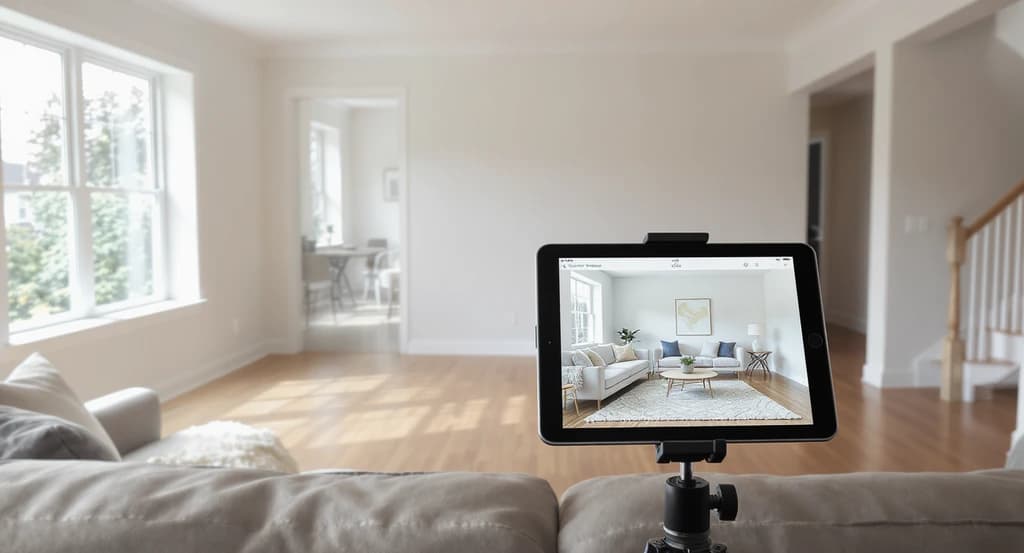
A well-staged living room with accurate scale, practical furniture placement, and natural lighting, helping overcome visualization gaps in real estate listings.
Human designers bring more than technical skill, they notice the subtle details that help buyers imagine living in a space. Real-world usability, practical furniture placement, and an understanding of spatial flow make a room feel relatable. When a pro stages or edits, they consider scale accuracy, natural lighting, and real buyer expectations, not just what looks good in a template. Generic staging can make rooms feel lifeless or confusing, while human oversight ensures each image serves the property’s story. According to our research on virtual staging vs empty photos, buyers connect more with thoughtfully staged interiors because they can quickly grasp the space’s purpose and potential.
-
How expert visuals improve buyer confidence
Trust is fragile. When listing images are over-processed or scale feels off, buyers notice often unconsciously. Small editing mistakes or mismatched lighting can make a property feel suspicious or inauthentic (learn more about the risks of over-editing listing photos). Human editors make careful adjustments to ensure clarity while preserving realism. They remove distracting objects, balance light and color, and check for consistency across images, so each photo builds confidence instead of raising doubts. As a result, buyers are more likely to spend time on listings they can trust—and less likely to move on prematurely.
-
Why clients keep coming back
Consistency, realism, and quality control guide client decisions. With expert services, visuals feel refined, believable, and adapted to each property’s strengths. Experienced editors and designers catch context-specific issues: Is scale accurate? Is the space inviting without feeling fake? Was the property’s style and location considered? This attention to nuance means fewer revisions, smoother collaboration, and higher listing engagement. Agents and marketers notice the difference not just in immediate buyer response but in client retention, as we’ve seen in repeat projects over time.
-
Common mistakes that reduce trust
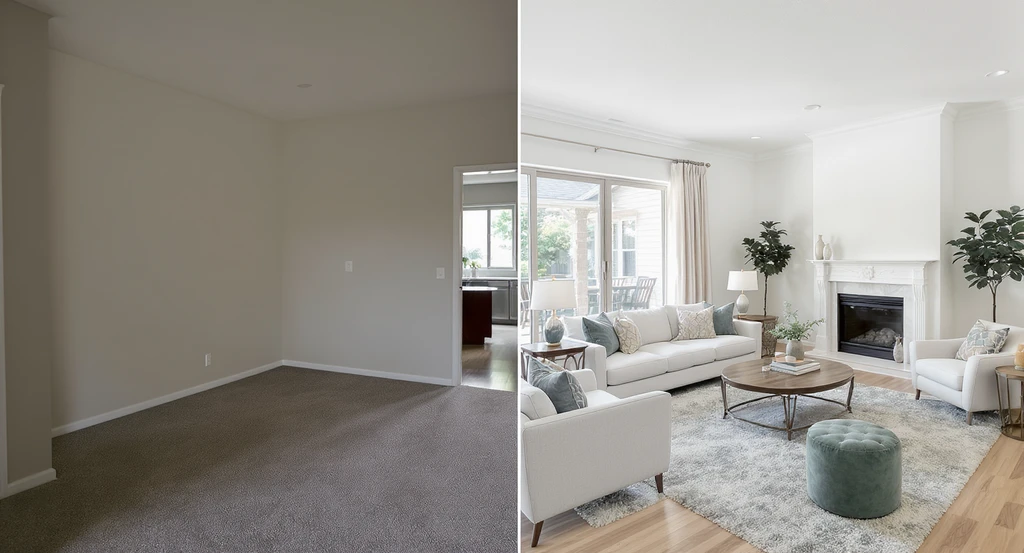
Confusing, empty rooms make it hard for home buyers to visualize property layout. This image shows how virtual staging helps bridge real estate’s visualization gap and improves listing clarity for visual thinkers and aphantasia.
Even minor errors can quietly undermine a listing’s impact:
- Over-edited or unrealistic visuals: Remove too much reality and buyers lose faith (as discussed here).
- Empty rooms without context: Make it hard for buyers to envision use or scale (learn more about how virtual staging addresses this).
- Fragmented image style: Inconsistent lighting, tone, or color across images disrupts the property’s flow.
- Missed layout connections: No floor plan or unclear room sequence leaves buyers guessing (why this kills engagement).
- Poor staging choices: Generic or AI-only layouts can ignore the subtleties that make a space relatable.
-
When expert services make the biggest difference
Some properties are especially challenging to convey online like vacant homes, unusual layouts, or dated interiors. Generic tools cannot always show potential or create emotional comfort. This is where human input shines: virtual staging tailored to local trends, realistic day-to-dusk transitions, floor plans that clarify flow, and editing that gently enhances without hiding reality. As we explored in our guide to virtual staging benefits, expertly executed visuals help buyers bridge the gap between what’s shown and what’s possible resulting in better engagement, higher confidence, and faster decisions.
Visualization Scenario
Imagine a buyer quickly scrolling on their phone, rooms look disconnected, the lighting varies, and it’s not clear if the living room connects to the kitchen. They swipe away. Now picture human-reviewed images: unified lighting, believable staging, a clear floor plan, and gentle enhancement. Suddenly, the property feels coherent and welcoming. That’s the power of human-centered, expert-designed visuals.
Frequently Asked Questions
- Why do home buyers struggle to visualize property layout?
- Most buyers are scanning for quick understanding—not just facts, but a sense of space and flow. Without clear images or acfloor plans, even simple layouts can become confusing (learn more about the visualization gap).
- What tools help overcome the visualization gap in real estate?
- Expert services blend virtual staging, floor plans, realistic photo enhancement, and 360 virtual tours. Human designers use these tools thoughtfully to give every buyer a better sense of layout and potential.
- How does virtual staging help buyers imagine living in a property?
- By placing realistic furniture and decor, virtual staging adds context, making empty rooms relatable—key for buyers who struggle with spatial imagination or aphantasia (see our staging comparison).
- What are the dangers of over-editing listing photos?
- Over-edited or artificial-looking visuals can lower buyer confidence and appear misleading. Moderation and realism build trust (understand why here).
- Why do listing photos need human review?
- Human experts spot details and context AI may miss: scale, natural flow, and visual trust. Their review ensures images are believable and presentation quality is high.
The smart path: Clarity, trust, and human perspective
A successful listing isn’t about making a property look perfect, it’s about minimizing confusion and helping buyers build a clear mental model quickly (see our thoughts on why overcoming the visualization gap matters). Human expertise adds a layer of honest refinement that automation can’t match: a careful review, attention to detail, realism, and a thoughtful sense of how buyers think. In an era of AI options, it’s still the human touch that creates the results people trust—and makes the difference between a skipped listing and a sold home.


