
TL;DR
The best kitchen backsplash isn't just about tile color or trend, it's about fixing your kitchen's biggest weakness. These 12 expert ideas will help you avoid common mistakes, visualize options, and choose a backsplash with confidence.
Why Most Backsplash Regrets Aren't About Tile
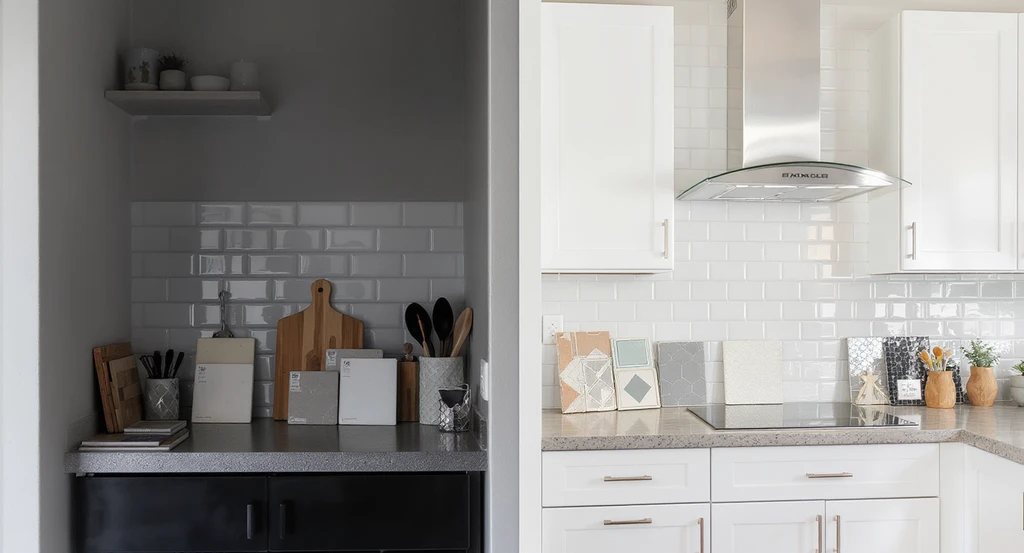
Visualizing backsplash options before remodeling helps avoid common mistakes in backsplash decisions. Choosing the best backsplash materials for small kitchens, using the one focal point rule for kitchen design, ensures you select a kitchen backsplash without regrets.
If you've ever felt overwhelmed in a tile showroom or worried your new backsplash might look out of place once installed, you're not alone. Many people discover their backsplash disappointment isn't caused by picking the wrong material, it's from missing the real design need of their kitchen. The truth is, a dark kitchen, a small space, or a cluttered room each need a different backsplash solution. The right choice isn't always the prettiest sample on the board, it's the one that brings your whole kitchen together. Human designers understand how light, space, and flow affect buyer and owner feelings in real life, which is why expert input still matters. We use experience, not just algorithms, to prevent common regrets and ensure each detail genuinely fits the space.
-
1. Subway Tile: The Fail-Safe for Changing Tastes
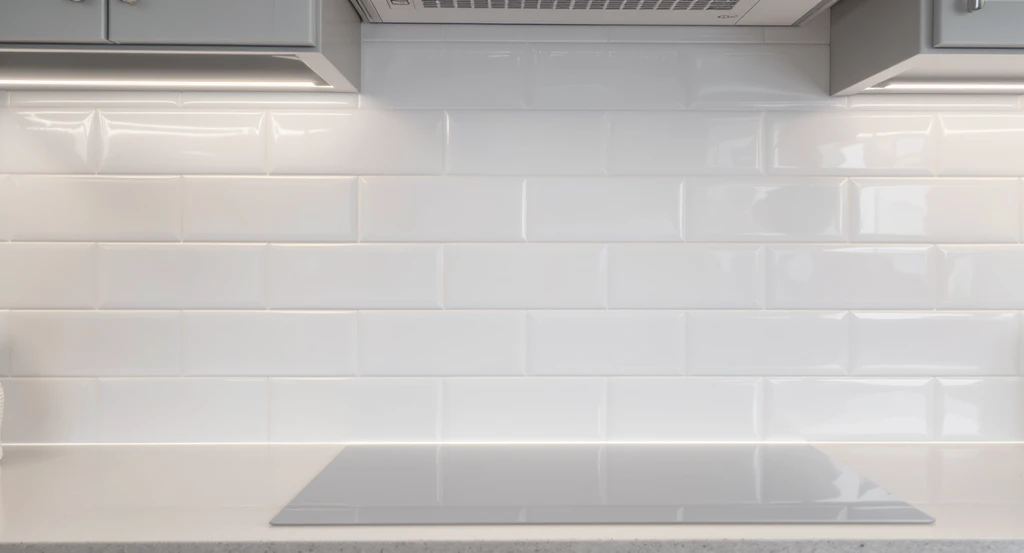
Testing grout samples on a classic subway tile backsplash helps avoid common mistakes in backsplash decisions and illustrates how to choose a kitchen backsplash without regrets by visualizing backsplash options before remodeling.
Subway tile is a timeless favorite because it works with almost any style and stands the test of time. If you're worried about making the wrong choice, this classic option can adapt as trends change. But don't overlook grout color, sometimes it affects the look even more than the tile itself. Human designers almost always test grout samples for a more realistic outcome. This approach minimizes the classic regret of picking a backsplash that quickly feels out-of-date. As we shared in our kitchen remodeling guide, getting these details right means fewer regrets down the road.
Expert Insight
A homeowner once fell in love with a bold backsplash tile in the showroom, only to find it clashed with their cabinets after installation. After consulting an expert, they realized a calmer marble slab unified the space and that mistake taught them to always consider the whole picture.
-
2. Marble Slabs: For Kitchens That Already Have Detail
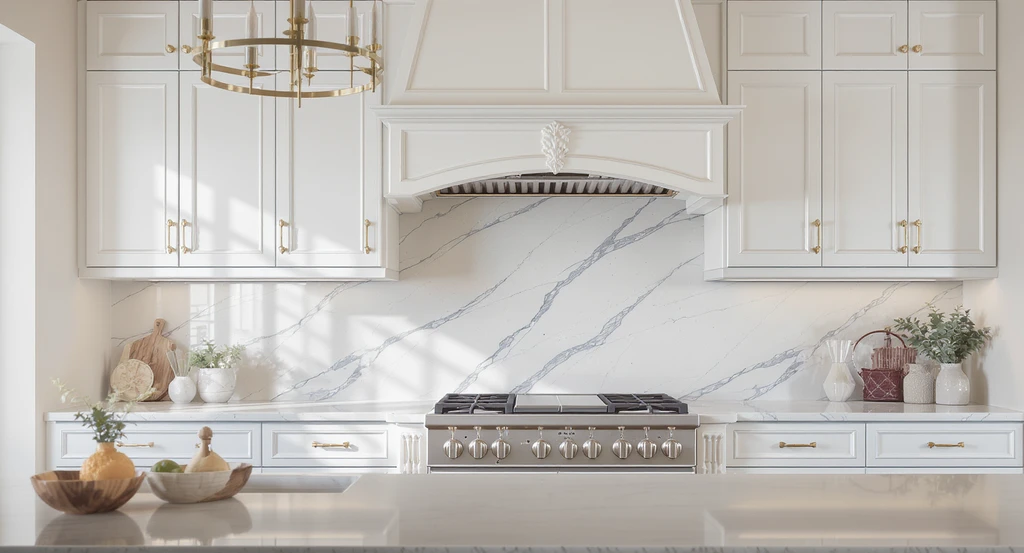
Choosing a single marble slab backsplash creates visual calm in kitchens with ornate cabinetry—demonstrating how to choose a kitchen backsplash without regrets by minimizing focal points and applying the one focal point rule for kitchen design.
If your kitchen already features ornate cabinetry, special hardware, or statement lighting, sometimes the best move is to keep the backsplash quiet. Marble slabs add elegance and visual calm, reducing the risk of creating too many focal points. Human experts know when a space needs less, not more, and can spot when a sample will feel overwhelming from across the room.
-
3. Quartz or Granite Extensions: Highlights Dramatic Counters
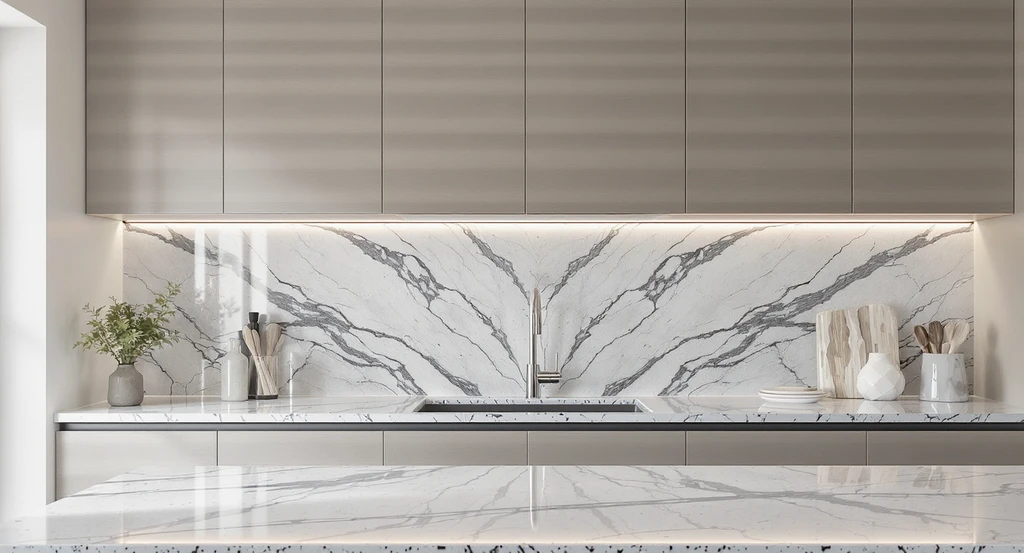
Experience a seamless kitchen look with quartz or granite countertop extensions as backsplashes—one of the best backsplash materials for small kitchens. Visualize backsplash options before remodeling and follow the one focal point rule for kitchen design success.
Stunning countertops deserve to be the star, so it's smart to extend their material up the wall. This achieves a seamless look and avoids the cluttered effect of competing surfaces. The connection between counter and backsplash is subtler than most people notice. That's where an experienced editor can balance veining and color changes so everything feels intentional.
-
4. Glass Tile: Brightens up Dark Kitchens
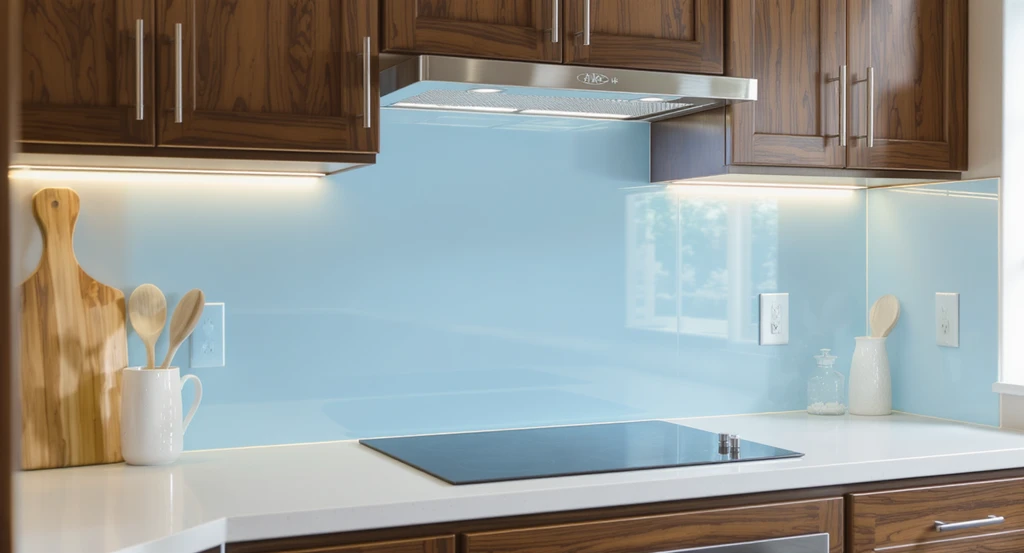
Choosing a glass tile backsplash with under-cabinet lighting visually brightens dark kitchens—best backsplash materials for small kitchens and the one focal point rule help you remodel without regrets.
If your kitchen feels dim, adding glass tile isn't just about choosing a lighter color, it amplifies light with its natural reflection. But without proper under-cabinet lighting, even the most beautiful glass tile can fall flat. A human touch ensures these factors work together, not against each other, making the whole kitchen feel brighter and more welcoming. Check our guide on small kitchen colors that make the space feel bigger for more ideas.
-
5. Textured Tile: Adds Depth to Flat Spaces
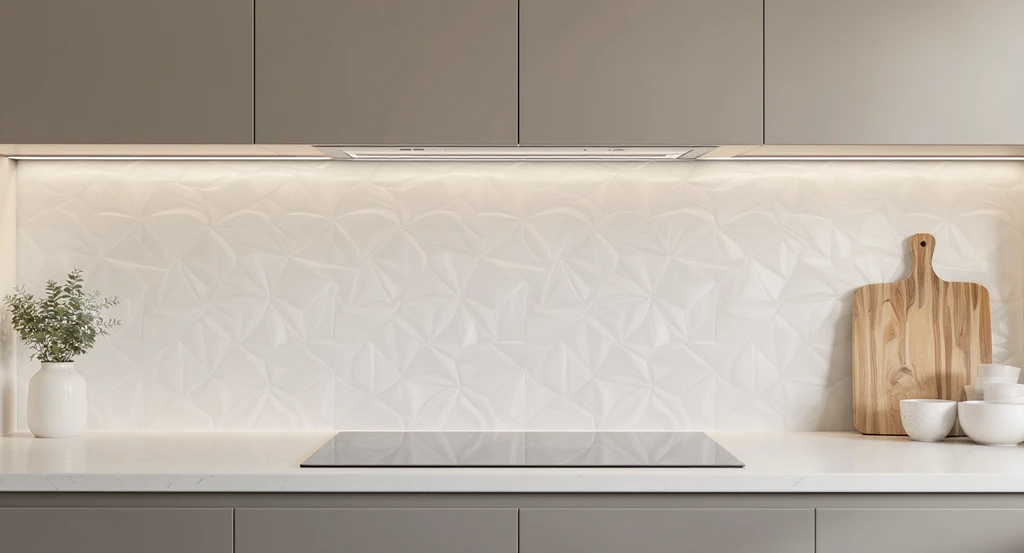
Textured tile backsplashes add depth to flat kitchen spaces, helping homeowners visualize backsplash options before remodeling and follow the one focal point rule for how to choose a kitchen backsplash without regrets.
When every surface in your kitchen is smooth, the room can feel lifeless. Subtle texture not only adds interest but also ages gracefully compared to some trendy colors. Humans recognize which types of texture look best from a distance versus up close. This is a small detail, but it's one that makes a kitchen feel "designed" rather than just decorated.
-
6. Mosaic Tile: Creates a Natural Focal Point
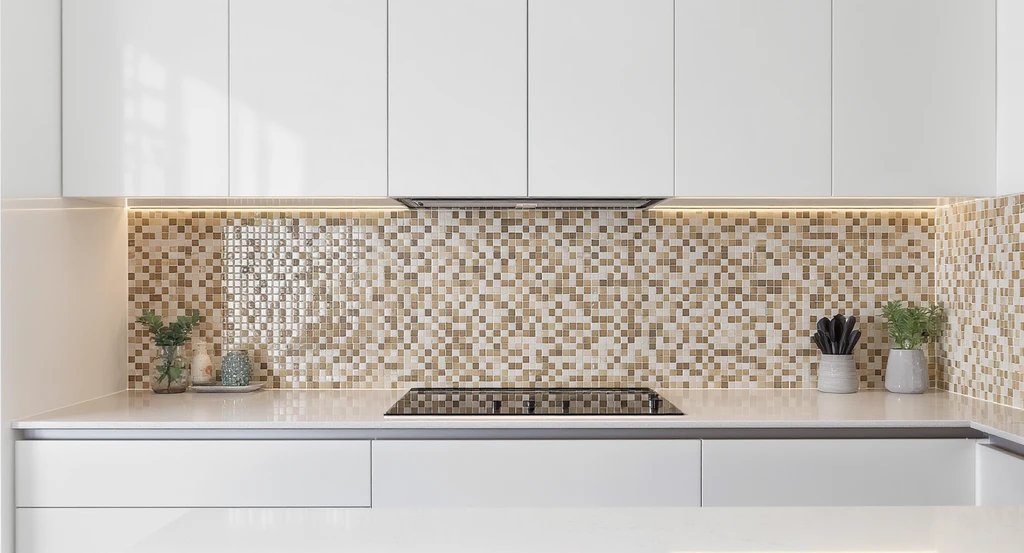
A mosaic tile backsplash creates a natural focal point in a contemporary kitchen. See how to choose a kitchen backsplash without regrets by visualizing backsplash options before remodeling, applying the one focal point rule for kitchen design, and considering the best backsplash materials for small kitchens.
If your kitchen feels forgettable, a mosaic backsplash can provide a much-needed visual anchor. However, more grout lines mean more cleaning—and that's something only an experienced designer will warn you about before installation. Choosing the right mosaic scale and color keeps the room balanced, especially when cabinets and counters are simple.
-
7. Moroccan or Encaustic Tile: Injects Personality
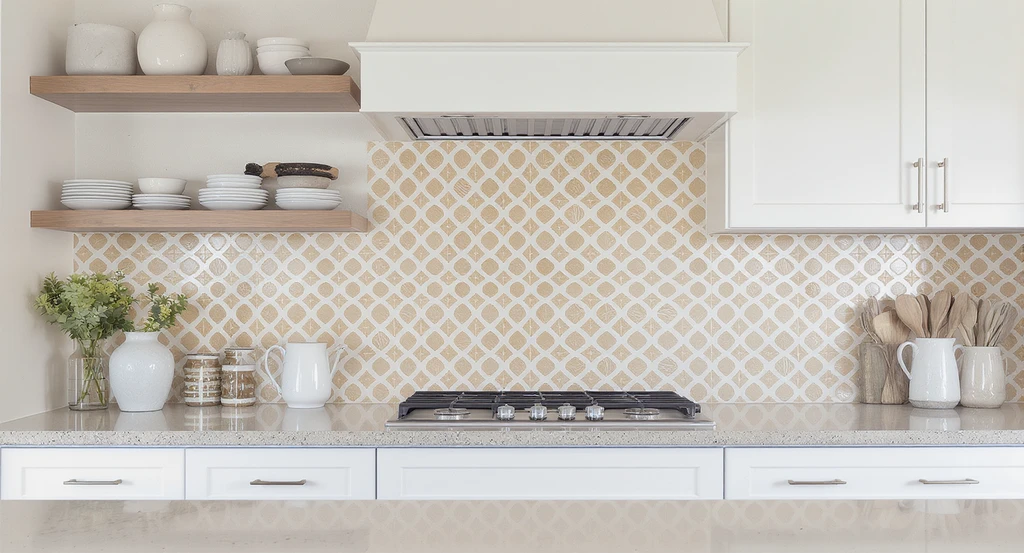
A Moroccan encaustic tile backsplash demonstrates the one focal point rule for choosing a kitchen backsplash without regrets, helping avoid common mistakes in backsplash decisions and visualizing stylish options before remodeling.
For those tired of safe choices, Moroccan or encaustic tiles can bring personality without being too busy. While patterns can sound risky, they rarely overpower a kitchen unless they're fighting with other bold elements. Designers use the 'one focal point' rule to ensure the room doesn't become chaotic—a consideration AI still struggles to judge. According to our overview of contemporary kitchen ideas, a single strong statement tile can elevate the whole mood.
-
8. Geometric Tile: Modernizes Without Loud Colors
Want a modern vibe but don't love bold colors? Geometric tiles update your kitchen simply through shape. Human designers understand that the line and angle of each tile change how the space feels, something that often gets lost in generic visualizations. This idea is especially strong in contemporary or transitional designs.
-
9. Terrazzo: Balances Playful and Polished
Terrazzo delivers a look that's lively yet still polished enough for any home. Its natural flecks connect colors already in the room, making the design feel intentional. It's a unique solution for those who find "safe" options dull but don't want anything overwhelming. An expert-eye helps match the right style to your kitchen's unique features.
-
10. Metallic Finishes: Prioritize Both Function and Style
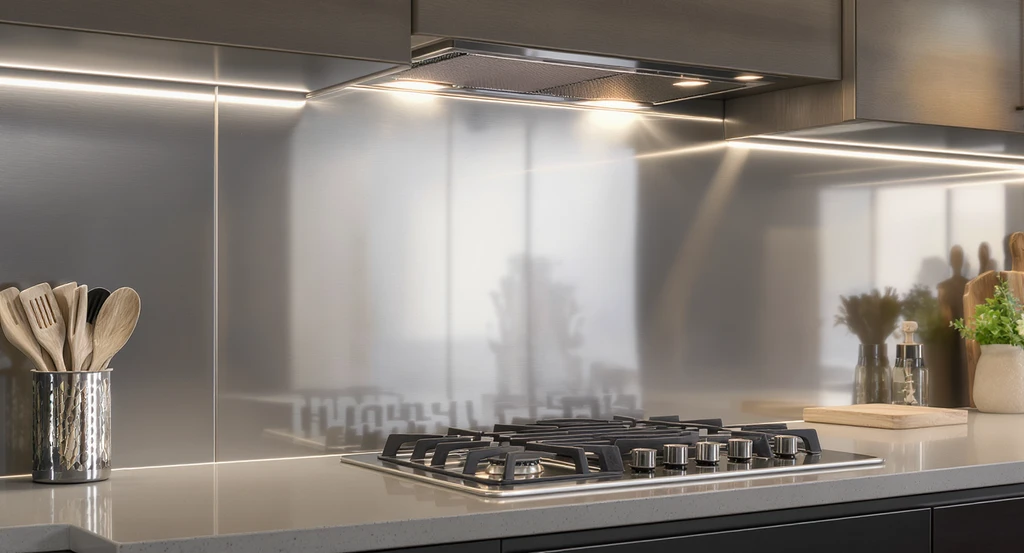
A stainless steel backsplash behind a cooktop demonstrates how to choose a kitchen backsplash without regrets by prioritizing both function and style—an essential tip for avoiding common mistakes in backsplash decisions and visualizing backsplash options before remodeling.
Backsplashes aren't just for looks, they're the kitchen's frontline against splatters and stains. Metallic options, like stainless or lacquered metals, are easy to clean and withstand daily use. Human-led projects recognize these functional realities and select finishes that handle fingerprints and wear based on your cooking habits, not only aesthetics.
-
11. Mirror Backsplashes: Make Small Kitchens Feel Larger
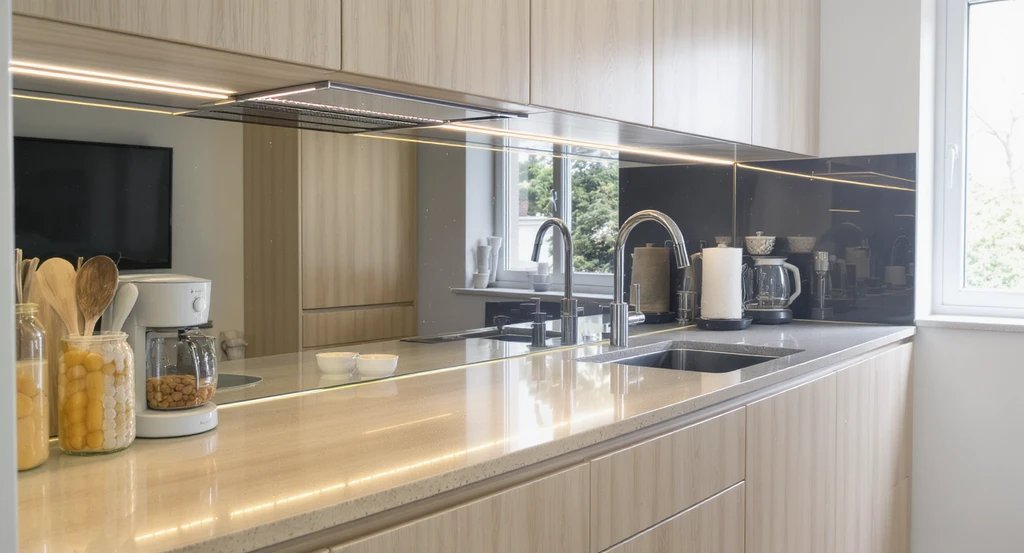
A mirror backsplash in a compact kitchen creates the illusion of more space, showing how to choose a kitchen backsplash without regrets. Avoid common mistakes in backsplash decisions by visualizing backsplash options before remodeling.
Mirrored backsplashes are one of the few materials that not only add light but also create the illusion of more space. They're ideal for compact kitchens. But, they're not perfect, fingerprints and splatters show up quickly, making honest, professional advice crucial. In small kitchens, even minor choices can impact how open or cramped the room feels. Discover more tips in our post on colors for small kitchens.
-
12. Peel-and-Stick Options: Test Before You Commit
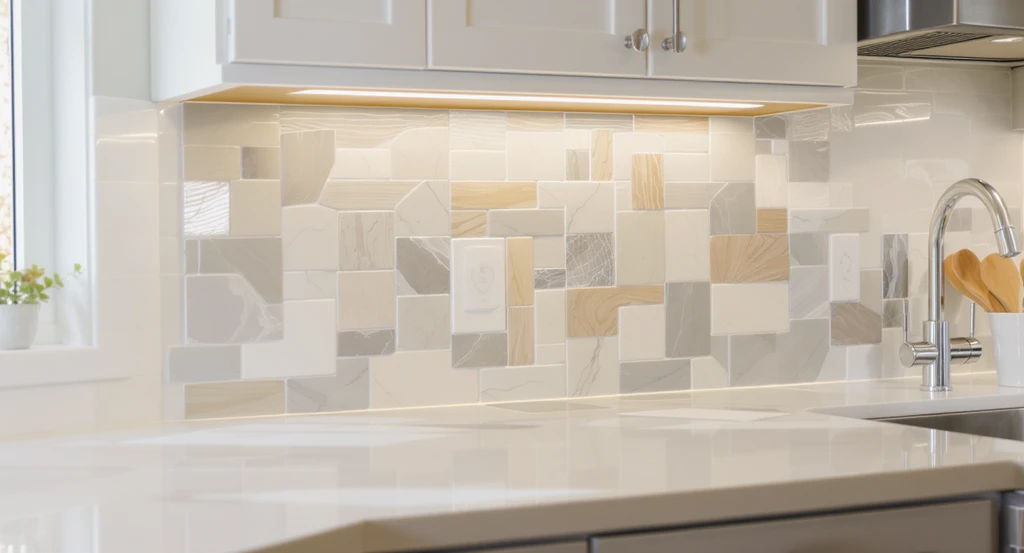
Peel-and-stick tile samples let you visualize backsplash options before remodeling, helping avoid common mistakes in backsplash decisions and ensuring you choose with confidence.
Uncertain about a big change? Peel-and-stick tiles let you see how a backsplash will actually look in your space before you commit. This prevents costly mistakes and gives you confidence when making permanent choices. Designers often use temporary samples to help homeowners visualize options on their actual walls and under their lighting.
-
Bonus: The One-Focal-Point Rule
A visually balanced kitchen usually has one feature that draws the eye—whether it's the backsplash, countertop, or lighting, but rarely all three. When everything fights for attention, the space feels busy and less inviting. Human experts use this rule to help clients avoid the 'cluttered' look that generic visualizers miss. Our advice is echoed in the kitchen staging guide (tip #1: one strong feature per room).
Visualization Scenario
Picture yourself toggling between sample tiles in-store and a photo of your kitchen. A designer overlays your top choice onto a snapshot of your space so you can see how light, size, and style interact making your decision easier and more confident.
Kitchen Backsplash FAQ
- How do I choose a kitchen backsplash without regrets?
Start by identifying your kitchen's main weakness, test options in your real lighting, and ask a human expert before making a decision. - What are some common mistakes in backsplash decisions?
Choosing before finalizing cabinets/counters, falling for a sample, too many focal points, or ignoring cleaning needs. - How can I visualize backsplash options before remodeling?
Use peel-and-stick samples or professional mockups to see designs in your own space before committing. - What are the best backsplash materials for small kitchens?
Mirror and glass tiles can reflect light and open up space, as described in our roundup on small kitchen colors. - What is the one focal point rule in kitchen design?
Pick a single main design element to stand out. Avoid kitchens where multiple features compete for attention. - Why does human expertise matter in choosing a backsplash?
Humans recognize proportion, flow, usability, and cleaning realities that generic visuals often miss.
How to Avoid Backsplash Regret: Look at the Whole Kitchen
A kitchen backsplash isn't just a style statement, it's the finishing touch that can unite your kitchen or make it feel off. Avoid the biggest mistake: choosing in isolation. Start by identifying what your space truly lacks. Test options together, and ask for expert input that considers the whole room: lighting, cabinetry, counters, and even flooring. Human judgment spots details algorithms miss, so your choice looks as good in daily life as it does in renderings. For more, explore our guides on what to know before remodeling and kitchen staging that buyers love.


