TL;DR
The kitchen work triangle, the balance between sink, stove, and refrigerator, remains crucial for efficient and comfortable kitchens. But there’s no substitute for human design expertise to create believable, functional, and visually appealing layouts that truly work for modern living. Here’s why thoughtfully-executed, expert-created kitchen visuals outperform generic solutions.
Why the Kitchen Triangle Still Needs a Human Touch
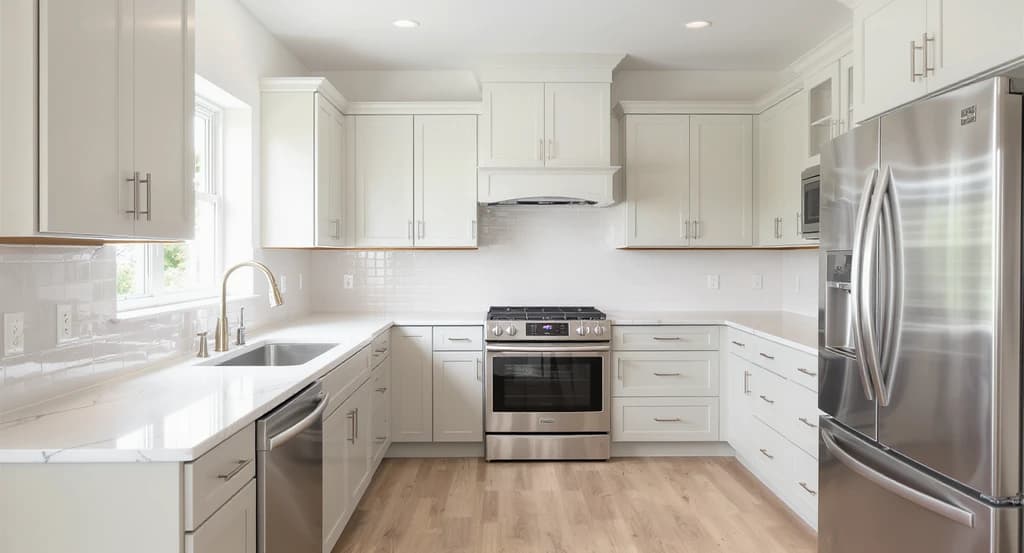
Smartly staged empty kitchen shows kitchen work triangle possibilities, perfectly visualizing kitchen potential in empty homes and blank kitchen spaces. Discover how to design a blank kitchen space efficiently by applying kitchen work triangle principles in unused rooms.
If you’ve ever looked at a staged or rendered kitchen and thought, “It looks modern, but something feels off,” you’re not alone. Many real estate agents, homeowners, and design professionals notice that even well-polished AI-generated kitchen visuals can fall flat, but they can’t always pinpoint why.
The answer often comes down to the subtleties of human expertise: understanding buyer psychology, workflow, practical usability, and the emotional comfort that a believable kitchen creates. The classic kitchen triangle, connecting the stove, sink, and fridge, is a great starting point. But only expert designers can visualize and stage this principle so it genuinely improves listing appeal, trust, and kitchen function, especially in empty homes or blank spaces.
Thoughtful, human-led design brings in proportion, realism, and practical flow, helping buyers see the true potential of any kitchen. Here’s how it makes a difference, especially when visualizing kitchen potential in empty homes or planning a renovation.
-
1. Realistic Flow Means Real Buyer Confidence
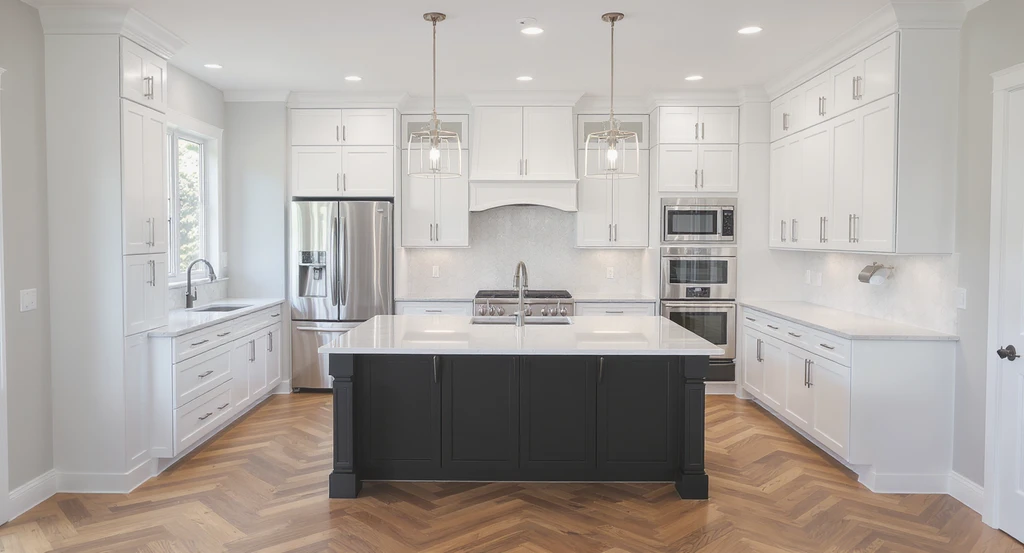
A modern kitchen layout visualizes how to design a blank kitchen space with an ideal work triangle, transforming unused kitchen areas efficiently and maximizing real buyer confidence through realistic flow.
The kitchen triangle isn’t just about drawing lines between the sink, fridge, and stove, it’s about how you move in the space every day. Human designers know that the size of each triangle leg (ideally 4–9 feet) and their unobstructed paths actually change how comfortable a kitchen feels (as explained in our post on contemporary kitchen ideas). They’ll spot when a fridge is too far or a stove blocks the work path, while automation often just fills a room with trend-driven layouts. For clients, this means fewer awkward bottlenecks and a space that feels instantly usable and credible, key for strong listing performance.
-
2. Believable Staging Brings Empty Kitchens to Life
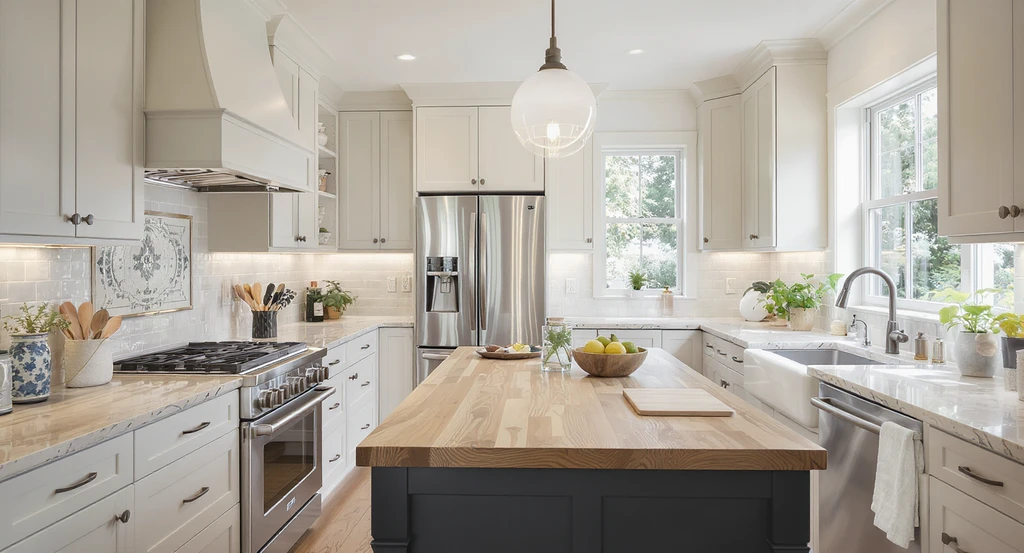
Visualizing kitchen potential in empty homes means realistic staging: a kitchen triangle layout with a prepping zone by the window shows how to design a blank kitchen space and transform unused areas with inviting, modern kitchen layout ideas.
Visualizing kitchen potential in empty homes is about more than adding cabinets or a digital plant. Human experts select finishes and layouts that match the property’s architecture, buyer demographic, and local tastes (see our advice on kitchen staging ideas that buyers love). They’ll work within the kitchen triangle but also create inviting focal points, like a prepping zone by the window or a functional island, that feel natural, not photoshop-perfect. This helps buyers imagine daily routines, which leads to stronger emotional connection and faster decisions.
-
3. Proportion, Perspective, and Practicality
It’s easy for automated visuals to misjudge scale, placing oversized islands or cabinets that crowd the triangle. Human designers understand spatial balance, real-world usability, and how every inch counts. Whether it’s maximizing a small galley kitchen or giving a luxury home an impressive flow, experts make sure every appliance, surface, and walkway fits comfortably within the triangle (and wider space). That translates to visuals buyers actually trust, key for listings reliant on kitchen upgrades or renovations.
-
4. Customizing for Modern Kitchen Needs
Today’s kitchens aren’t just for cooking, they’re social hubs, coffee corners, homework spots, and entertaining areas. Human expertise helps adapt the classic kitchen triangle (or switch to work zones) to support multiple users, extra appliances, or island-centric layouts, as outlined in our guide to contemporary kitchen ideas. This flexibility gives every listing a sense of authenticity that matches how buyers really live.
-
5. Material and Color Choice That Inspires (and Sells)
No automated tool can truly judge which cabinet facade, counter, or wall color will feel welcoming in your space. Expert editors curate materials and colors for kitchens based on buyer psychology, natural light, and what calls attention to space, making the kitchen not just functional, but irresistible. Want to know what materials work best for lasting appeal? Explore our expert guide on kitchen cabinet facades. For small spaces, consider color strategies from our favorite small kitchen color ideas to help rooms feel bigger and brighter.
-
6. Editing Out Visual Distractions for Focused Impact
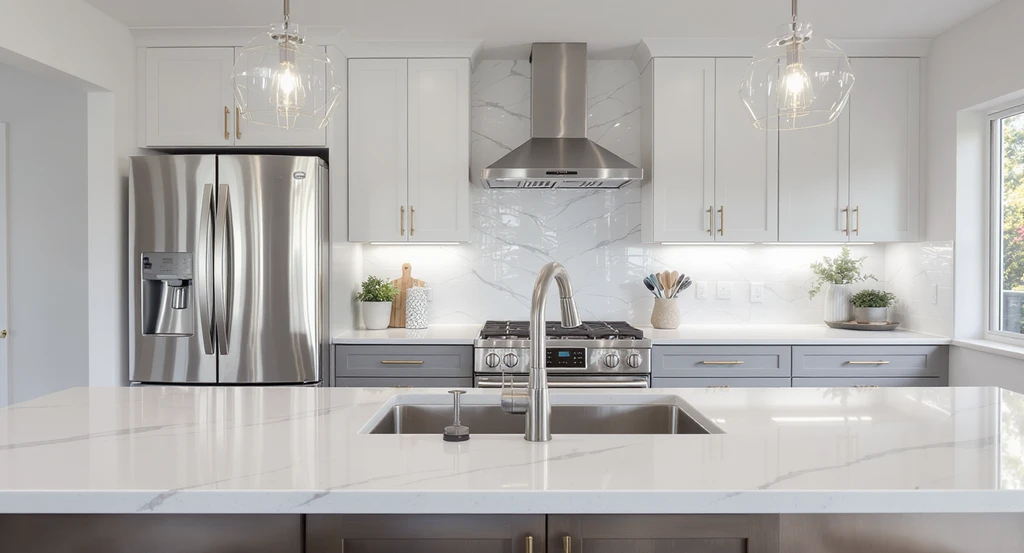
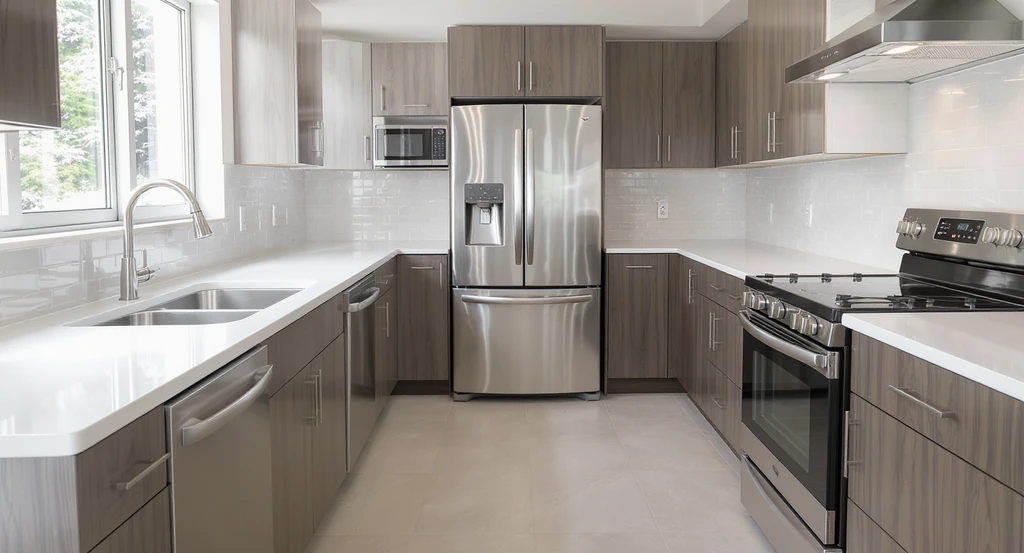
A staged modern kitchen highlights a clean work triangle design, perfect for visualizing kitchen potential in empty homes and transforming unused spaces efficiently.
One of the biggest mistakes in kitchen staging is clutter, be it unnecessary decor, mismatched stools, or digital artifacts that distract from the space’s true layout. A Styldod expert editor will remove objects and tune lighting so the kitchen triangle’s elements shine. That means clearer, more compelling listing photos and virtual tours, as seen in our kitchen staging recommendations.
-
7. From Blank Space to Modern Layout: Transforming Unused Areas Efficiently
Designing a blank kitchen means more than filling space, it’s about transforming unused kitchen areas efficiently for daily work and gathering. Experts take into account traffic patterns, storage needs, and flexible modern kitchen layout ideas for empty rooms to maximize engagement and usability. That’s the kind of thinking that creates kitchens buyers actually remember and return to.
-
8. Reliable Quality Control and Fewer Revisions
Human review means small but critical mistakes, like shadows on a fridge, odd lighting, or an unrealistic work triangle—don’t make it into the final image. Experienced editors deliver visuals that are not only beautiful, but honest and trustworthy. This leads to higher client satisfaction, smoother sales, and why clients return to expert services for consistently refined and realistic kitchen design presentations.
Kitchen Triangle FAQs, Answered by the Experts
- What is the kitchen work triangle in design?
- It’s a layout rule that optimizes movement between sink, stove, and refrigerator for efficient, comfortable cooking.
- Why do buyers respond better to human-staged kitchens?
- Because realistic layouts reflect daily life, making it easier to visualize themselves in the space—which improves engagement and trust.
- How does expert staging impact listing performance?
- Thoughtful design and visual clarity build buyer confidence and help listings stand out in crowded markets.
- Are there modern alternatives to the kitchen triangle?
- Yes. In larger or open-plan kitchens, designers often use work zones or flexible layouts tailored to client needs.
- Do materials and colors really make a difference?
- Absolutely. The right choices set the overall mood, influence buyers' perception of space, and show off the kitchen’s potential. See our guide to kitchen materials and color strategies for more ideas.
- Why do clients keep returning to expert visualization services?
- For consistency, realistic staging, high-quality results, and expert guidance that reduces revisions and headaches.
Takeaway: Why Human Expertise Wins for Kitchen Triangles
The kitchen triangle is a proven principle, but it takes human skill to design, visualize, and stage it realistically for today’s buyers. Only real experts combine proportion, flow, color, material, and purposeful design, turning blank kitchens into spaces buyers can trust and picture themselves living in. That’s the difference between a listing that feels generic and one that really connects, both online and in person.