TL;DR
Most people struggle with AI interior design because visuals online often don't reflect real-life constraints. AI works as a valuable decision tool when used to preview room layouts, furniture scale, lighting, and usability within your real home. Best results happen when these previews are grounded in real conditions, combined with human judgment and lifestyle needs.
Why People Struggle With AI Interior Design Results
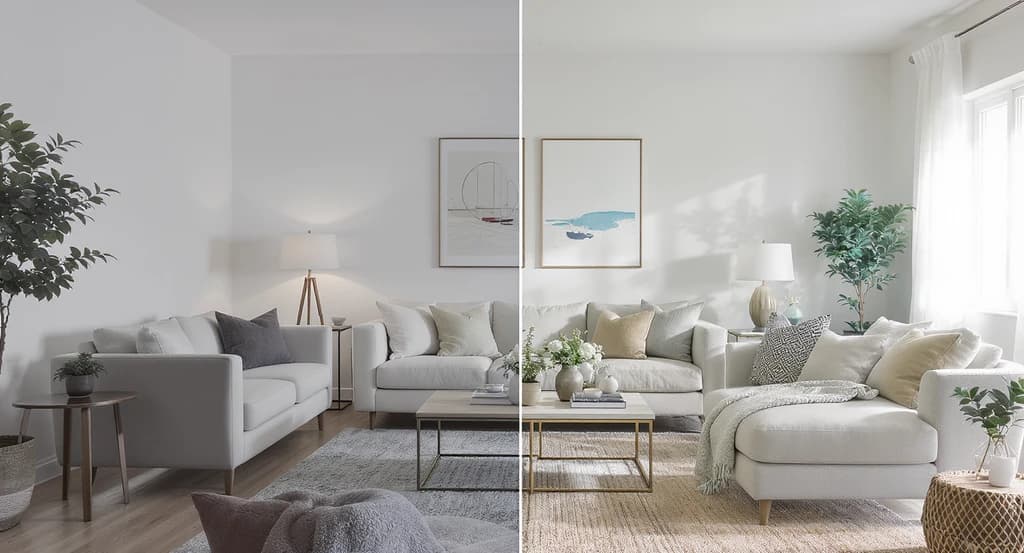
A real-world split-view: on the left, an AI-designed living room with perfect layout and lighting; on the right, the same space realistically arranged, highlighting the functional limitations of AI designed rooms and emphasizing why combining AI tools with human judgment ensures practical results in real homes.
AI interior design works best in real homes when it is used as a decision tool rather than an inspiration engine. The most successful outcomes happen when homeowners visualize layouts, furniture scale, lighting conditions, and movement patterns inside their actual spaces. AI creates possibilities; real-world context creates livable results.
Homeowners see beautiful AI-generated rooms everywhere: perfectly styled living spaces, dramatic lighting, and furniture layouts that look effortless. Yet many discover an uncomfortable reality after trying to recreate them. A room that felt luxurious online suddenly feels crowded, awkward, or impractical once daily life begins.
The problem is not the technology itself. The problem is that beautiful visuals rarely account for how real homes actually function. As a result, the transition from digital visualization to everyday living often creates disappointment.
This struggle is not simply about personal taste. It is about context. What works beautifully in AI renderings or social media inspiration can create frustration inside real, lived-in spaces.
The root cause is simple: AI-generated concepts and inspiration images often overlook practical realities such as circulation paths, changing natural light, storage requirements, and everyday routines. These invisible factors shape how a home feels and functions over time. Understanding this gap is essential for homeowners, interior designers, and real estate professionals looking to use AI interior design tools effectively.
-
Why AI Interiors Look Perfect Online But Fall Short in Real Homes
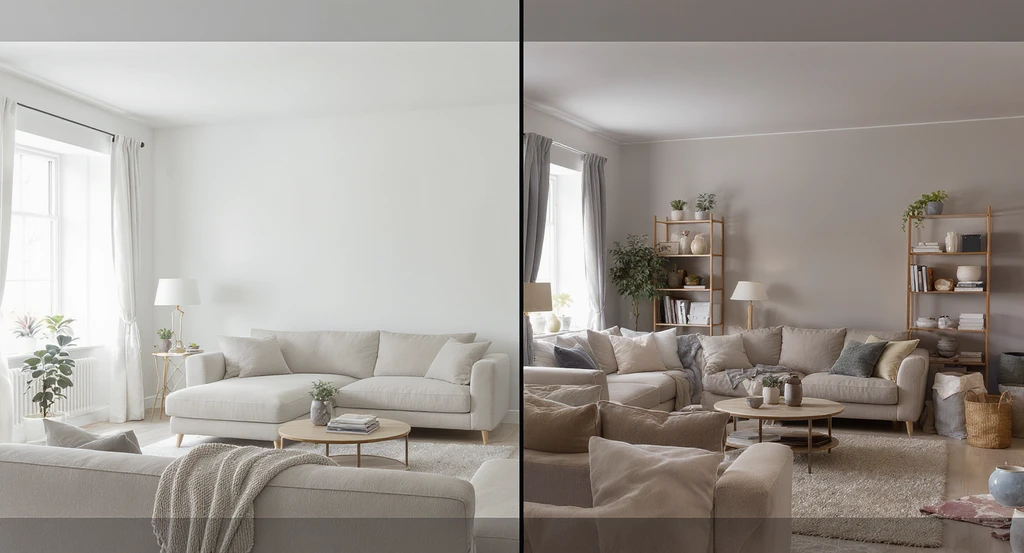
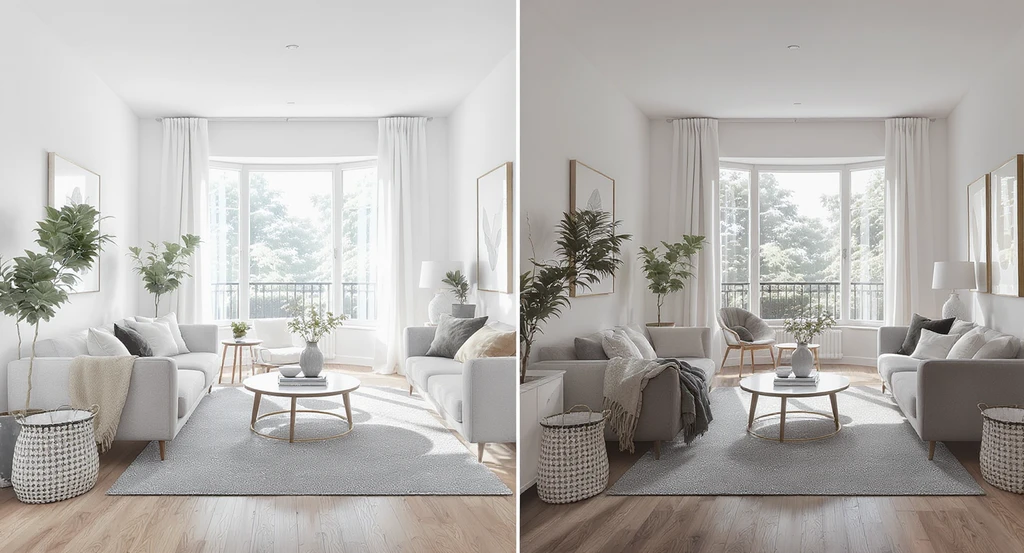
Editorial comparison of ai interior design vs real homes: AI visualization previews spacious, flawless rooms, while real home setups reveal actual space, storage needs, and practical constraints. Combining ai tools with human judgment prevents renovation mistakes and improves design success.
Social media and AI-generated interiors often optimize for visual impact rather than everyday comfort. Rooms designed to photograph beautifully may not support movement, storage requirements, changing light conditions, or real daily routines. The result is a growing gap between spaces that look impressive online and spaces that genuinely feel comfortable to live in.
Design regret often begins long before furniture even arrives. Homeowners frequently fall in love with AI-generated previews, only to discover later that a room feels crowded, movement becomes restricted, or the layout simply doesn't support everyday life.
What happened? The disconnect is context.
As explored in our analysis on AI vs interior designers, AI tools often generate rooms in idealized environments with oversized dimensions, perfect lighting, and minimal clutter. Real homes operate differently. Awkward corners, storage needs, family routines, and uneven lighting conditions all influence how a space functions in practice. These overlooked constraints often determine whether a room merely looks beautiful or actually works in everyday life.
Expert Insight
A homeowner fell in love with dramatic, AI-generated luxury living room concepts online. But when the same layouts were previewed inside their actual room, oversized furniture reduced movement and disrupted flow. By testing alternatives, a smaller layout maintained the style while working better for daily use, saving money and preventing frustration.
-
Decision Friction: Why Prediction Fails Without Visualization
Most homeowners unknowingly become architects inside their own heads. They collect inspiration photos, compare furniture dimensions, review floor plans, and try to mentally predict how an entire room will come together. Unfortunately, human brains struggle with spatial prediction. Small errors in perceived scale, spacing, or openness can create major problems once furniture arrives.
A sofa just a few inches too deep can disrupt circulation, reduce movement, or make an otherwise comfortable room suddenly feel cramped. Research in environmental psychology suggests people routinely misjudge spatial relationships when relying on imagination alone, particularly in unfamiliar environments. Visualization reduces uncertainty by turning abstract decisions into visible outcomes.
This is where AI visualization offers real value. Instead of mentally guessing how a room might work, users can see potential outcomes before making expensive commitments. However, this only works when the visualization reflects real conditions: actual room dimensions, lighting patterns, and everyday use, rather than stock imagery or idealized models.
For a deeper dive into how room-specific AI visualization works, explore how AI can truly design your room.
-
How Visualization Bridges the Decision Gap
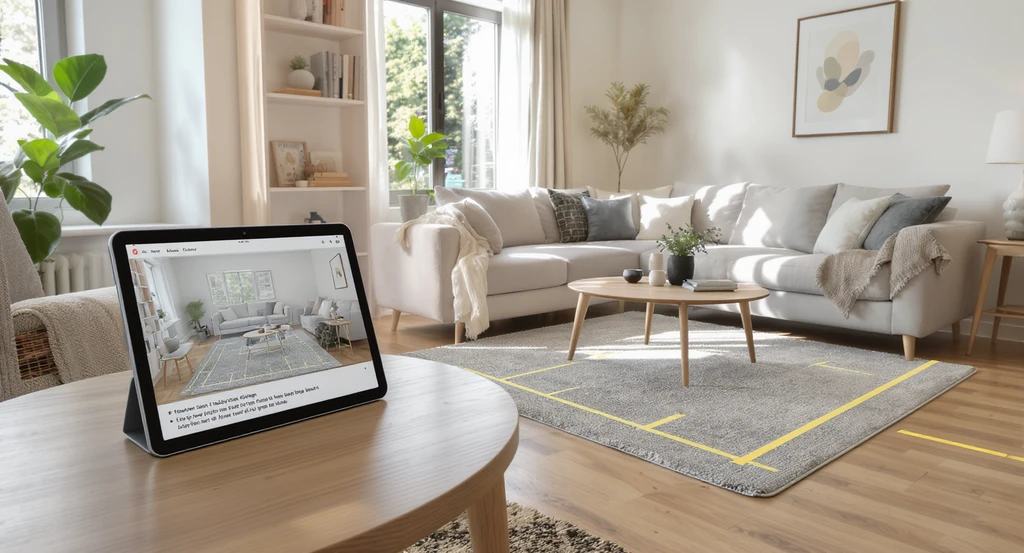
See how ai interior design vs real homes bridges the gap—visualizing digital layouts in your actual space helps homeowners test design decisions, check real-life limitations, and avoid renovation mistakes.
AI tools become most effective when used for room-specific previews rather than generic inspiration. This means uploading actual room photos or accurate measurements and using the tool to explore layout planning, furniture placement, and design styles within your real space.
Key benefits include:
- Layout validation: Reveals whether movement feels natural or whether furniture quietly creates friction in everyday routines.
- Scale checks: Shows furniture dimensions in real context, reducing guesswork and preventing oversized pieces from overwhelming a room.
- Fast style comparisons: Compare multiple design possibilities instantly before making expensive decisions.
- Visible consequences: Preview outcomes before spending, reducing uncertainty and helping prevent design regret.
Clarity improves decision-making and often leads to stronger outcomes. When homeowners can see possibilities instead of imagining them, confidence increases and costly mistakes become easier to avoid.
For a technical explanation, explore how AI room design tools actually work.
-
What AI Visualization Gets Wrong, and How to Correct It
AI excels at rendering appearance, but it often misses the factors that determine whether a space truly works in everyday life. Comfort, daily routines, durability, and personal preferences all influence how a room feels over time. AI cannot predict whether a chair feels uncomfortable after an hour of use or whether a layout becomes impractical for your lifestyle.
To close this gap, combine AI visualization with real-world validation:
- Test real samples: Layer AI previews with physical experiences such as sitting on a chair in-store, checking fabric samples, or viewing materials in person.
- Include other perspectives: Involve family members, clients, or other decision-makers to evaluate layout, comfort, and functionality.
- Seek professional input: If the project budget or design stakes are high, consider virtual or in-person guidance from a design professional.
This hybrid approach allows AI to narrow choices while experience validates final decisions. The goal is not perfect visuals. The goal is predictable comfort and fewer regrets after decisions are made.
-
Step-By-Step: Making AI Interior Design Work in Real Homes
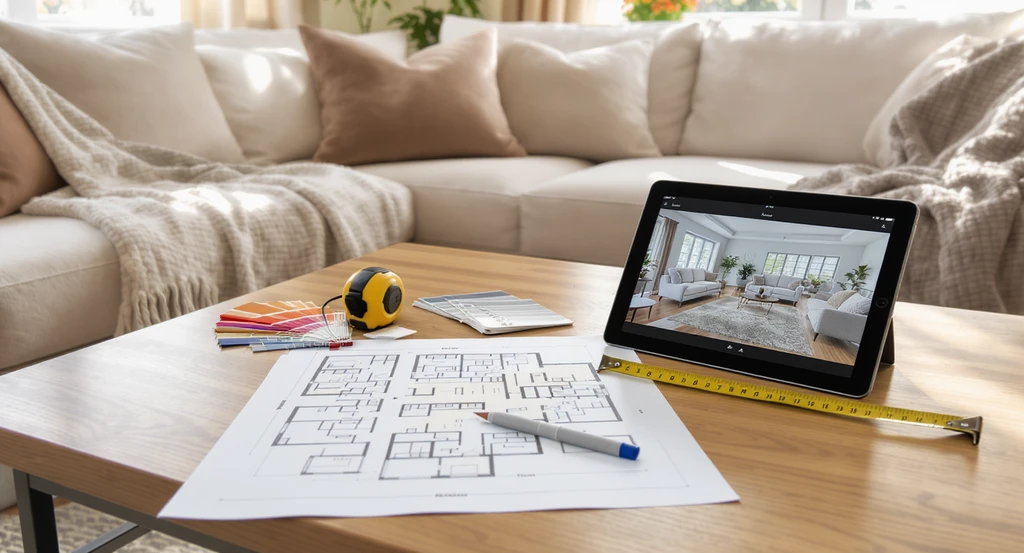
Combining ai interior design vs real homes, this setup illustrates how ai visualization helps homeowners avoid functional limitations of ai designed rooms by validating design choices with real-world measurements, samples, and human judgment.
Use this practical sequence to turn AI visualization into reliable, real-world design decisions:
- Upload real room data: Start with actual photos or accurate room measurements rather than generic inspiration images.
- Explore multiple possibilities: Preview several layout and style directions instead of choosing based on first impressions.
- Evaluate movement and flow: Focus on how people move through the space, not just how the room looks. Are pathways comfortable and unobstructed?
- Prioritize scale before style: Check furniture dimensions and spacing before focusing on colors, finishes, or trends.
- Include real-life needs: Factor in storage requirements, flexibility, family habits, and stakeholder preferences.
- Validate before purchasing: Test major decisions using real samples, material swatches, or professional design input before committing.
This process reduces decision friction by aligning visual ideas with everyday reality. For homeowners, interior designers, and real estate professionals alike, better previews often lead to fewer surprises and more confident decisions later.
Beautiful AI rooms create inspiration. Validation creates confidence.
-
Why Visualization Reduces Regret (And Improves Outcomes)
Much of renovation and design stress comes from uncertainty, fear of wasting money, irreversible choices, or expensive mistakes. Visualization reduces this by allowing users to react to visible, not imagined, outcomes. Seeing consequences directly means fewer surprises after moving in or installing furniture. As we explored in our guide to AI renovation tools, this clarity is valuable for both minor updates and major overhauls.
Visualization Scenario
Imagine uploading your living room photo and instantly comparing three layouts: minimal modern, warm organic, and contemporary luxury. One layout blocks movement. Another feels empty. The third is balanced. Visualization lets you confidently choose design directions before buying or renovating.
Frequently Asked Questions
- Does AI interior design work for small or awkward rooms?
- Yes, AI visualization is often most helpful in smaller or tricky spaces where layout, scale, and storage are hard to judge without seeing outcomes. Using real room images or measurements improves accuracy and decision confidence.
- Does AI replace interior designers?
- No. AI helps you visualize possibilities and test options quickly, but interior designers are essential for optimizing function, comfort, and adapting solutions to unique needs.
- Can AI predict if furniture fits or works at home?
- AI can preview scale and arrangement, revealing potential fit issues before you buy. Final choices should consider real-life comfort, material, and daily use.
- Why do AI-generated rooms look different from real homes?
- Many AI and inspiration images are created in perfect conditions—oversized rooms, ideal lighting, and minimal clutter—which are rarely present in actual homes. Realism improves when using real room images.
- Can visualization tools reduce renovation errors or regret?
- Yes, previewing designs visually lowers the risk of expensive mistakes and regret by turning assumptions into visible outcomes. This process helps users make more informed purchase and renovation decisions.
Summary: What Actually Works In Real Homes
AI interior design works best when it helps people make smarter decisions instead of chasing perfect inspiration. Real homes operate around movement, habits, storage, comfort, and daily routines. The most successful spaces are not the ones that look flawless online. They are the ones that continue working long after the photos are gone. Their value comes from previewing options within real-life constraints, then refining choices with human experience and lifestyle fit. The goal is not to copy perfect images, but to design for how spaces work every day. Visualization removes uncertainty. Better decisions, made before spending, lead to more functional and successful interiors.