
TL;DR
Most property listings don’t get ignored because of poor photos, but because buyers can’t quickly understand the layout. Human-designed floor plans fix this silent issue by bringing instant clarity and trust, resulting in better engagement and higher quality leads.
Why Do Great Listings Get Overlooked?

Without a clear floor plan, even perfect real estate photos can leave buyers confused—one reason why property listings get ignored online. This real living room setup illustrates how floor plans affect buyer interest and how to identify listing clarity problems early.
If you’ve ever spent hours perfecting listing photos and staging, only to see your online property get scrolled past, you’re not alone. It’s a real frustration in today’s market even strong homes with good visuals often don’t get traction. So, what’s going on? The answer is simple but powerful: buyers must quickly understand how a space fits together, or they quietly lose interest. You may have perfect photos, but if buyers can’t mentally connect the dots, your listing blends into the background. That’s where professionally-crafted floor plans especially those built with real human expertise make the difference.
-
Clarity: The Real Reason Listings Get Ignored
It’s easy to assume listings get ignored due to price, bad photos, or a poorly staged bedroom. But the most common issue is simply clarity. Online buyers need to create a mental map of a property within seconds, it’s how they process, compare, and feel confident moving forward. When a listing is visually appealing but structurally unclear, buyers hesitate. That hesitation, even for a few seconds, often means they move on. This is not about buyer disinterest; it’s about speed of understanding. As we discussed in our post on choosing the right floor plan, clarity is central to helping buyers connect emotionally and logically with a property.
Expert Insight
Recently, a real estate team upgraded a listing for a unique family home. Despite beautiful photos, it failed to attract viewings. After adding an expertly designed, easy-to-read floor plan, buyers quickly started asking about the layout, resulting in faster, more serious offers.
-
How Buyers Actually Decide: A Matter of Flow
Buyers rarely make decisions in neat steps. Instead, as they scroll and swipe, their minds are already searching for flow and function, how a home connects, how daily life would actually work in the space. A visually beautiful, well-lit living room can spark interest, but without context for how it relates to the bedroom or kitchen, buyers hesitate. They want to imagine daily routines, not just see rooms in isolation. If that flow isn’t obvious, buyers tune out before they even ask questions. According to our guide on what floor plan rendering really offers, this instant mental mapping is what sets standout listings apart.
-
The Silent Drop-Off: Why Photos Alone Don’t Convert
You might have invested in professional photography and pristine staging. Still, many serious buyers fade away without explanation. It’s easy to blame low traffic or think buyers aren’t serious, but often the true culprit is a subtle lack of clarity. Photos show isolated spaces like one gorgeous kitchen, a single inviting bedroom, but not how they connect. This makes it hard for buyers to answer core questions: How do I move between these spaces? Does the layout support my family’s needs? What’s the privacy like? That small barrier results in quiet drop-offs—buyers who like the look, but never ask for a viewing. As explored in our overview on floor plan mistakes, small gaps in clarity drastically reduce engagement levels.
-
Floor Plans: The Real Fix for Hidden Listing Problems
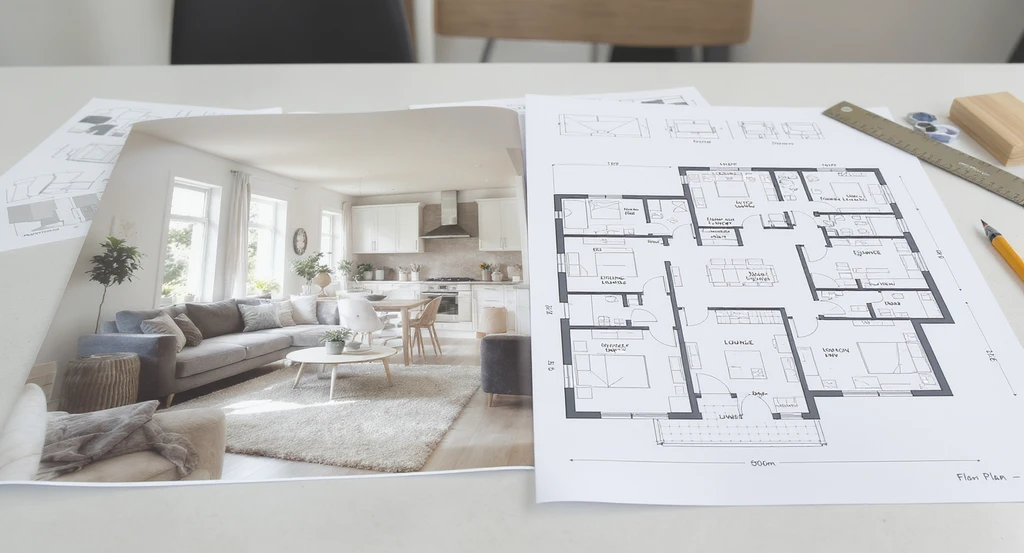
This side-by-side of a real modern living space and a matching 2D floor plan shows why property listings get ignored online and how floor plans directly address clarity problems. Accurate, designer-created floor plans help buyers quickly judge usability and improve listing appeal.
The power of a floor plan isn’t just accuracy, it’s accessibility. When created with careful human attention, floor plans translate the home’s flow, proportions, and connections in a way buyers trust instantly. They allow a viewer to mentally walk through the home, judging not just appearance but usability and daily experience. A well-designed floor plan answers the most important buyer questions before they’re even asked. This is especially true when it’s customized by experienced designers who know how to show actual usability, not just technical drawing. Learn more about choosing between 2D and 3D floor plans for your listing for an even more immersive experience.
-
Why Human Touch Matters Even More Now
AI-generated visuals can produce technically correct floor plans, but human designers go further by interpreting space in ways that match real buyer expectations. Human judgment ensures realistic proportions, context-appropriate flow, and layouts that reflect how people actually use homes.
Experienced editors and designers also catch subtle errors, prevent misleading depictions, and make sure the final result feels credible—not just accurate. These small design nuances significantly impact buyer trust, as buyers are highly sensitive to visual cues, even subconsciously.
That’s why clients often return to services built on expert human review, valuing consistency, reliability, and trustworthiness. As discussed in our overview of common floor plan mistakes, even minor layout confusion can lead to noticeable drops in buyer engagement.
-
What Happens When Listings Get the Floor Plan Right?
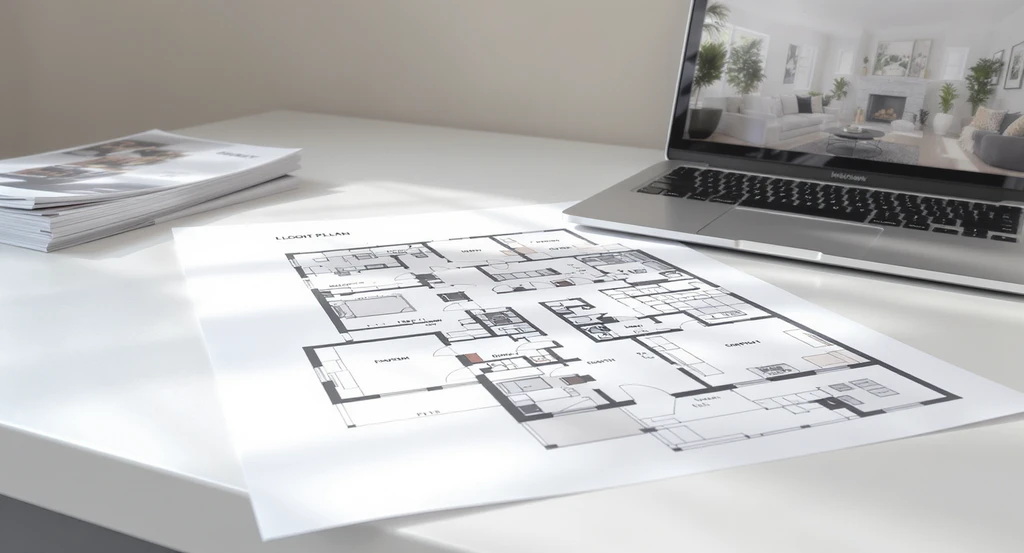
A well-presented floor plan alongside property photos demonstrates why property listings get ignored online and the impact of clarity in real estate photos on attracting serious buyers.
When listings are supported by clear, accurate, and thoughtfully designed floor plans, the quality of engagement improves instantly not just the quantity. You’ll see fewer casual browsers, but a higher proportion of serious, qualified buyers reaching out for viewings or making offers. Clear floor plans quickly filter buyers, letting the right prospects stay and reducing wasted conversations and visits. In fast-paced markets, this advantage becomes critical; buyers comparing multiple options can distinguish your listing with ease and confidence.
-
How to Know if Your Listing Has a Clarity Problem
Test this: Ask someone unfamiliar with your property to look at your listing for ten seconds. Can they explain how the home is arranged, how rooms connect, and whether the space fits various lifestyles? If not, your listing may have a clarity issue even if your photos are professional and your price is right. Clarity problems are not obvious design flaws; they’re subtle gaps between presentation and understanding. Addressing them with floor plans is the single most effective way to improve listing performance, as shown in our detailed review of the benefits of floor plan rendering in real estate.
Visualization Scenario
Imagine browsing two nearly identical listings online: both with bright, inviting photos. But only one has a simple, human-crafted floor plan that makes sense of every room, hallway, and open space. You instantly understand how you’d live there and naturally, you want to learn more.
FAQ
- Why do property listings get ignored online even with great photos?
- Because buyers can’t quickly grasp how rooms connect or how the space functions, causing them to move on without engaging.
- How do floor plans affect buyer interest?
- Floor plans make it easier for buyers to visualize flow and usability, creating instant clarity and comfort. Read more about floor plan benefits in our guide.
- What are common reasons real estate listings fail?
- Most failures are “silent”—caused by subtle confusion or lack of spatial clarity, not by obvious flaws or bad photography.
- How can I identify if my real estate photos have clarity problems?
- Ask if a first-time viewer could explain the home’s flow and usability after a quick look. If not, your listing may benefit from a professionally designed floor plan.
- Do human-designed floor plans really make a difference?
- Yes. Human experts interpret space with buyer psychology and real-world usability in mind, improving trust and engagement as explored in our post on floor plan mistakes.
Key Takeaway: Turn Confusion Into Confidence
Homes rarely lose buyers because they’re unappealing, it’s almost always because the space isn’t understood quickly enough. Floor plans bridge that gap, giving buyers an immediate sense of layout, flow, and daily usability. The result? Higher trust, stronger engagement, and serious interest from buyers who now see themselves in your property. Remember, clarity is not just detail, it’s the difference between being noticed and being ignored.


